
5 interesting things cannabis research has shown us in 2021

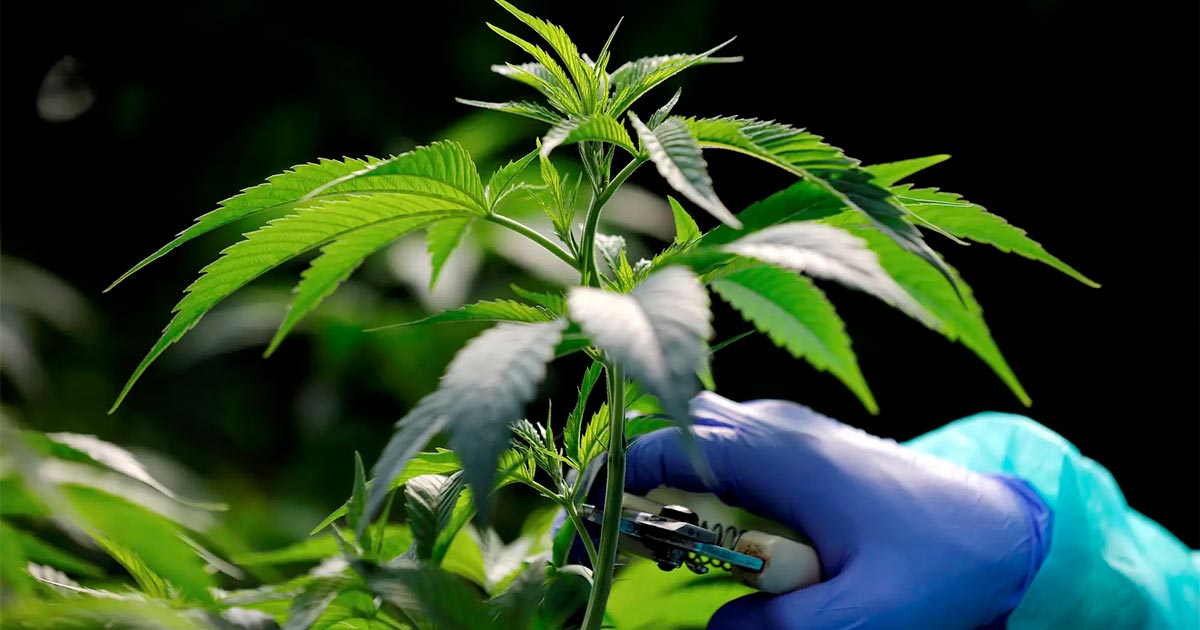
With the expansion of medical cannabis legalization, the need for continued research into this highly regulated plant has also increased. Public funding and private investment are growing, and global research is improving our understanding of cannabis's fundamental characteristics and its therapeutic potential.
Here are 5 interesting studies on cannabis published in 2021.
The neuroprotective effects of cannabis confirmed
Brazilian scientists tested The protective effects of CBD against stroke-induced damage in rats. CBD administered 30 minutes before the stroke, and then several hours after, protected against brain cell loss, structural damage, and subsequent memory impairments.
Although the protective effects of CBD have not yet been systematically tested in human clinical trials, these exciting results highlight the potential benefits of CBD for high-risk patients, such as those at risk of stroke or heart attack.
In another study, Spanish scientists have examined the protective and restorative effects of THC in demyelinating diseases. Myelin is an insulating substance that facilitates the speed of electrical signals in our cells. The destruction of myelin, as seen in diseases like multiple sclerosis, slows down the pace of communication in the nervous system and causes a range of impairments. Unfortunately, there is currently no effective strategy to recover myelin once it has been destroyed.
This study showed that THC stimulates remyelination by promoting the activity of cells called oligodendrocytes, which are responsible for the myelination of nerve cells, thereby improving behavioral function in a mouse model with demyelinated lesions.
Although several steps remain before these results can impact clinical practice, THC's ability to promote remyelination provides exciting mechanistic support for previous reports of patients with demyelinating diseases who benefited from cannabis.
Twin studies assess the causal effects of adolescent cannabis use
To better understand the effects of cannabis on adolescents, several studies have focused on the case of twins, which allows for the control of genetic and familial factors, since twins often have similar DNA and are exposed to the same family environment.
In the‘one of them, The effects of cannabis use in adolescence have been evaluated later in life, in adulthood, and more specifically, the existence of adult psychosis. The association between cannabis and psychosis disappeared when comparing twin siblings who did and did not use cannabis.
These results do not allow for a causal link to be established between adolescent cannabis use and the development of psychosis. Instead, they suggest that genetic or familial factors affect the brain in a way that increases the risk of developing psychosis while also promoting behavioral patterns that lead to higher levels of adolescent cannabis use.
A second study on twins using a similar approach failed to find a causal link between weekly cannabis use and engagement in physical exercise or physical health characteristics. Instead, scientists concluded that lower levels of exercise engagement, heart rate, and exercise were better explained by genetic factors and family behavioral patterns than by adolescent cannabis use.
The origin of the Skunk's smell revealed
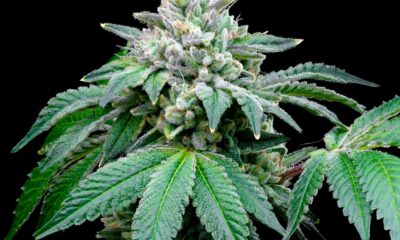
characteristic smell of cannabis comes from terpenes, and it is the combination of terpenes that gives each strain a unique scent. The origin of the familiar scent of Slunk, a historic cannabis strain, was previously unknown.
The culprit, identified by a team of scientists From the Californian company Abstrax Tech, it is 3-methyl-2-butene-1-thiol. The levels of this compound increase considerably at the end of the flowering phase and reach their maximum during maturation.
Given its structural similarity to compounds found in garlic, its health benefits can be further explored alongside other important terpenes, such as caryophyllene.
CBD can reduce aggression in shelter dogs
In a study A recent study conducted by Italian scientists involved giving abandoned dogs in a shelter CBD oil for 45 days, during which their aggressive behavior towards their handlers was evaluated. All dogs in the CBD-treated group tolerated it well without presenting any adverse effects.
Dogs treated with CBD showed a reduction in aggressive behaviors, and the benefits were most pronounced after 45 days of exposure. Stress-related behaviors were not affected by CBD in this particular study.
Although the strength of these conclusions is limited by the small sample size of the study – only 12 dogs per group – and the poorly balanced group assignments, it reveals a potential new therapeutic use of CBD for pets.
CBD has pain-relieving effects by acting directly in the brain
Most non-opioid analgesics work by reducing inflammation. Inflammation activates a specific set of sensory cells that send signals to the brain, activating a network of brain regions that together promote the sensation of pain.
Pain is generally reduced by blocking inflammation at the source of the injury, but it can also be relieved by disrupting the brain's pain processing network. The ideal treatment for pain would mitigate inflammation and disrupt pain processing in the brain without leading to opioid-like dependence, but blocking pain processing in the brain has proven difficult or to have negative consequences.
The advantages of CBD for pain relief have long been attributed to its anti-inflammatory effects. However, Iranian neuroscientists recently discovered that CBD also reduces pain by acting in a small region of the brain, the nucleus accumbens, which is involved in pain processing and response.
The group injected CBD directly into the nucleus accumbens of rats, thereby limiting its effect to the brain, and measured their pain sensitivity after a pain-inducing procedure. Rats treated with CBD showed reduced pain sensitivity, even though inflammation at the injury site was not blocked.
These results are important because they reveal that CBD can reduce pain by acting directly on the brain, and not just by reducing inflammation at the injury site. This study highlights the need for continued research into the effectiveness of CBD in treating chronic pain, where pain is no longer the result of inflammation, but of a malfunction in nerve signaling or brain processing.




















French medical cannabis remains stalled at the Ministry of Health

Things are heating up between Sherbinski and Doja

Cookies Ordered to Pay $61.5 Million in a Dispute with Its Investors

Frenchfarm is launching its B1G1 clearance sale + free gift

Czech Republic: CBD shops selling synthetic cannabinoids are in the police's crosshairs

Cannabis and CBD: French Drivers Can Now Lose Their License Even Without a Positive Test Result

Could CBN protect the aging brain? Scientists uncover a promising new mechanism

In Haute-Savoie, a town is trying to combat drug trafficking… with posters

3 French Companies Betting on Cannabis… Abroad

Nature Lab: The Alsatian brand that’s reinventing the CBD store, from Saint-Louis to Mulhouse and throughout France
-
 Cannabis and driving4 days ago
Cannabis and CBD: French Drivers Can Now Lose Their License Even Without a Positive Test Result
-
Cannabis in France1 week ago
Cannabis Legalization: The LFI Bill Has a Major Problem—THC
-
Cannabis in Europe2 weeks ago
Andorra Paves the Way for Medical Cannabis Cultivation
-
Cannabis in France2 weeks ago
Drought: Could Hemp Become the New Hope for French Farmers?
-
Cannabinoids1 week ago
What if CBD enhanced the effects of THC? A comprehensive analysis challenges a common misconception
-
Cannabis in the U.S.2 weeks ago
United States: Congress Rejects Ban on THC Derived from Hemp
-
Cannabis in Quebec2 weeks ago
Cannabis in Quebec: The 21-Year-Old Age Requirement in the Spotlight
-
Cannabis in the U.S.1 week ago
Medical cannabis: A U.S. study finds a 6.9% reduction in absences from work














You must be logged in to post a comment Login