UN appoints expert group to chart future of global drug policy


The Commission on Narcotic Drugs (CND) officially presented a a 19-member expert panel tasked with drafting recommendations for the 2029 review of international treaties on drug control. Although procedural in nature, this initiative could have far-reaching consequences for the cannabis regulation, risk reduction and broader trends in global drug policy.
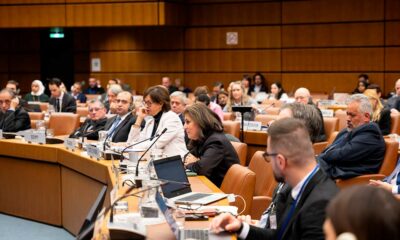
Announced at the 69th session of the CND in Vienna, its mandate is clear: to formulate «clear, specific, and actionable» recommendations» in order to improve the implementation of existing treaties before the 2029 deadline.
A strategic group with global influence
This expert group was established pursuant to Resolution 68/6, which aims to strengthen the international drug control system. It brings together experts acting in their personal capacity, from various regions and institutional backgrounds.
Ten members were selected directly by the CND, and five by the UN Secretary-General António Guterres, three from the International Narcotics Control Board and one from the World Health Organization. This structure ensures that the group incorporates perspectives from diplomacy, public health, and drug control enforcement.
The appointed experts include prominent figures from Europe, Asia, Africa, and the Americas, including representatives from countries such as Canada, Morocco, India, and the Netherlands. The group will be co-chaired by Allan Rock and Natalie Yu-Lin Morris-Sharma, whose appointment by acclamation finalized the group’s composition.
«I am convinced that the collective expertise and experience represented within this group will contribute to informed and constructive discussions in support of the Commission’s work,» said Andranik Hovhannisyan, president of the CND.
Here is the complete list of panel members
- César ARCE RIVAS (Paraguay)
- Pavel BÉM (Czech Republic)
- Yacine BOUMRAH (Algeria)
- Cornelis DE JONCHEERE (Kingdom of the Netherlands)
- Michael FARRELL (Australia)
- Alexis GOOSDEEL (Belgium)
- Olga GVOZDETSKA (Ukraine)
- Alberto HART (Peru)
- Adeeba KAMARULZAMAN (Malaysia)
- Natalie Yu-Lin MORRIS-SHARMA (Singapore)
- Jagjit PAVADIA (India)
- Virginia Patton PRUGH (United States of America)
- Allan ROCK (Canada)
- Milton ROMANÍ GERNER (Uruguay)
- Khaled SHAMAA (Egypt)
- Xiaojing SHAN (China)
- Elīna ŠTEINERTE (Latvia)
- Khalid TINASTI (Morocco)
- Renán VILLACÍS (Ecuador)
2029 in Sight: Cannabis and Treaty Flexibility Under Scrutiny
The creation of this group comes at a time when Differences in global drug policies are becoming more pronounced, particularly with regard to cannabis. While some jurisdictions continue to experiment with regulated markets, others are strengthening their prohibitionist approaches or prioritizing prevention and rehabilitation.
The expert group's future recommendations are expected to directly influence how issues such as the cannabis regulation, criminal justice reform and the flexibility of treaties will be addressed during the 2029 review. Observers believe that the balance of power within the group could determine whether the international system evolves or remains largely unchanged.
Indeed, the discussions during the Vienna session highlighted deep divisions. Some stakeholders called for stricter public health frameworks, while others questioned the effectiveness of long-standing enforcement strategies. These tensions are likely to shape the work of the expert group in the coming years.
Amid debates on public health and reform
Beyond the expert panel itself, the broader discussions at the CND highlighted a changing global landscape. Prevention, treatment, and rehabilitation were key themes, alongside ongoing debates on harm reduction.
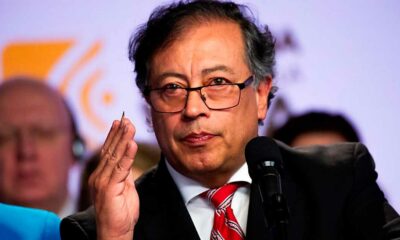
Voices from civil society and political circles continue to challenge the status quo. The Colombian President Gustavo Petro, for example, has criticized decades of supply-side crackdowns, arguing that large trafficking networks remain largely untouched.
At the same time, other stakeholders are calling for stricter regulations. Kevin Sabet, from Smart Approaches to Marijuana, the American Jean Costentin, advocated for a prevention-focused approach, stating, «The idea that we can safely regulate these substances has been a complete failure.»
















«Vincy Gold»: Humboldt Seed Company on the Hunt for Saint Vincent Sativas

Cronos Completes the Acquisition of CanAdelaar for 57.5 million euros

Cannabis with a "bloody" twist: Discover Sensi True Blood and Sensi Sangria, the two new strains from Sensi Seeds

Hemp: The Council of the EU Takes a Stand on New Production and Marketing Rules

Missouri's legal cannabis market accounts for 93 % of consumer spending

THC Gummies: How to Read a Certificate of Analysis Before Buying

British patients now have access to THCV-rich cannabis flowers

Spain: Medical Cannabis Is Coming to About 50 Hospitals

JIHE 2026: Japan’s Largest Trade Show Dedicated to Hemp and CBD Returns to Tokyo with More Than 100 Industry Players

New Caledonia: The Courts Clear the Way for the Return of CBD
-
 Business3 weeks ago
The legal cannabis market in New York exceeds 4 billion $ in revenue
-

 Cannabis in France4 weeks ago
Which countries legalized medical cannabis before France?
-
Cannabis in France1 week ago
France already has 3,000 cannabis retail outlets. None of them are legal.
-
Business4 weeks ago
South Korea is preparing to begin local production of medical cannabis to meet rising demand
-
Cannabis in the U.S.1 week ago
A DEA report confirms that there are no fatal cannabis overdoses
-
Cannabis in Thailand4 weeks ago
From the boom in dispensaries to a purely medical approach: Thailand is revising its cannabis policy
-
Cannabis and driving4 weeks ago
Medical Cannabis and Driving: New South Wales Ends Automatic Penalties for THC
-
Cannabis in France3 weeks ago
France’s Drug Policy Chief Defends Cannabis Prohibition... and Runs Into the Facts
















You must be logged in to post a comment Login