Trump advocates death penalty for drug traffickers

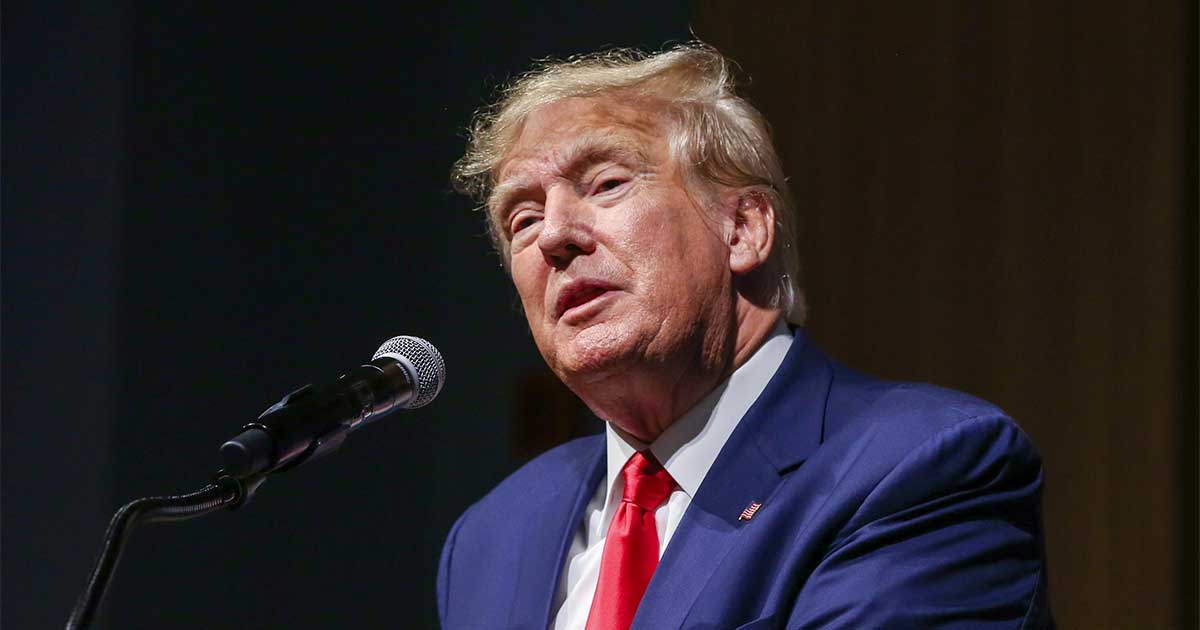
The Chairman Donald Trump once again reiterated his firm stance on drug-related crime, calling for the death penalty for those involved in the sale of illegal substances.
At a recent White House meeting with U.S. governors, Mr. Trump cited countries such as China, where the death penalty is applied to drug traffickers, as a model for the United States.
«If you notice, all the countries that have the death penalty don't have a drug problem, they execute drug dealers,» Trump said.
He also claimed that drug traffickers were responsible for countless deaths, pointing out that on average, each trafficker kills at least 500 people.
While acknowledging that it's unclear whether the country is ready for such a policy, Trump urged state leaders to consider it on a national level, stressing that he was personally «ready» to implement it.
His comments are met with skepticism, however, as there is no public data to back up his claim that countries with strict capital punishment laws have eradicated drug problems. The fentanyl crisis is largely supplied by synthetic ingredients exported from China.
A $200 million anti-drug campaign to reduce the use of psychoactive substances
In addition to his advocacy of the death penalty, Mr. Trump announced his intention to launch a vast public service announcement campaign aimed at reducing drug consumption. This initiative, estimated to cost 100 and 200 million dollars, is designed to make young Americans more aware of the dangers of fentanyl and other substances.
«When a young person watches this ad a few times, I really don't think they're going to take drugs,» said Trump, confident that this campaign will could reduce drug consumption of 50%.
A similar campaign had been proposed during his first term of office, focusing on the digital platforms, social media influencers and television advertising to dissuade young people from taking drugs. The effectiveness of these programs remains widely debated, with critics arguing that intimidation tactics are not the most effective approach.
Contradictions in Trump's stance on drug policy
Trump's call for severe penalties for drug traffickers contrasts with some of his past actions. In 2020, he pardoned Alice Johnson, a woman sentenced to life imprisonment for drug trafficking offences, subsequently naming it «czar of forgiveness» administration.
«Alice was in prison for doing something that today probably wouldn't even be prosecuted. She spent 22 years in prison,» Trump noted, highlighting what he considered an excessive sentence in her case.
This contradiction obviously raises questions about the consistency with which his administration would apply extreme penalties for drug-related crimes.
Donald Trump also recently pardoned Ross Ulbricht, the creator of the black market in Silk Road line, also accused of having attempted to order several murders, to thank the libertarian movement for supporting his campaign.
In his administration, Trump has appointed an anti-cannabis official to the position of General Counsel of the Department of Health and Human Services (HHS), a move welcomed by prohibition advocates who hope to derail the process of federal cannabis re-evaluation.
On the other hand, the new Secretary of Health, Robert F. Kennedy Jr., has always been in favour of cannabis legalization, but expressed concerns about the normalization of the high-potency cannabis products. After his confirmation, Mr. Kennedy remarked that cannabis use could have «truly catastrophic effects», while acknowledging that legalization at the state level made it easier to study its effects.
In the meantime Drug Enforcement Administration (DEA) has been tasked with reviewing the classification of cannabis, a process that could shape the future of federal cannabis policy. Visit Trump's choice to head the DEA has already established a link between cannabis consumption and an increased risk of suicide among young people, suggesting potential resistance to reform efforts.



















JIHE 2026: Japan’s Largest Trade Show Dedicated to Hemp and CBD Returns to Tokyo with More Than 100 Industry Players
New Caledonia: The Courts Clear the Way for the Return of CBD

The Brazilian medical cannabis market continues to grow

Morocco: Three Cannabis-Based Medications Approved for the Treatment of Epilepsy

Canopy Growth Receives New EU-GMP Certification to Strengthen Its Presence in Europe

Three years after legalizing medical cannabis, Albania continues to establish regulations for it

The first plant-based medical THC spray arrives in the United Kingdom

Medical Cannabis in Germany: THC Prices Vary by a Factor of 12

France already has 3,000 cannabis retail outlets. None of them are legal.

Morocco's exports of legal cannabis have expanded to 15 countries
-
 Business2 weeks ago
The legal cannabis market in New York exceeds 4 billion $ in revenue
-

 Cannabis in France4 weeks ago
Which countries legalized medical cannabis before France?
-
Business4 weeks ago
South Korea is preparing to begin local production of medical cannabis to meet rising demand
-
Cannabis in France4 days ago
France already has 3,000 cannabis retail outlets. None of them are legal.
-
Cannabis in Thailand4 weeks ago
From the boom in dispensaries to a purely medical approach: Thailand is revising its cannabis policy
-
Cannabis in the U.S.5 days ago
A DEA report confirms that there are no fatal cannabis overdoses
-
Cannabis and driving3 weeks ago
Medical Cannabis and Driving: New South Wales Ends Automatic Penalties for THC
-
Cannabis in France3 weeks ago
France’s Drug Policy Chief Defends Cannabis Prohibition... and Runs Into the Facts
















You must be logged in to post a comment Login