United States: new test to differentiate industrial hemp from cannabis

The legalization of hemp in the United States has confused federal drug enforcement agents (DEA). They have difficulty distinguishing between hemp and cannabis, and stopped shipments of hemp on several occasions.. To meet this new challenge, the DEA posted an advertisement for the creation of a field device capable of differentiating the two plants. One company answered his call.
A DNA test for cannabis
This company is Digipath, a testing, data and media company working in the cannabis industry, has developed, in collaboration with VSSL, a handheld device capable of distinguishing between hemp and cannabis. The company has just filed a patent for this device. Digipath is thus responding to the DEA's call for tenders.
Yet experts had warned that the precision of the 0.3% THC limit posed a problem for non-laboratory testing. Has Digipath found a way to combine accuracy and portability? Not quite. In fact, the device doesn't measure THC concentration, but plant DNA.
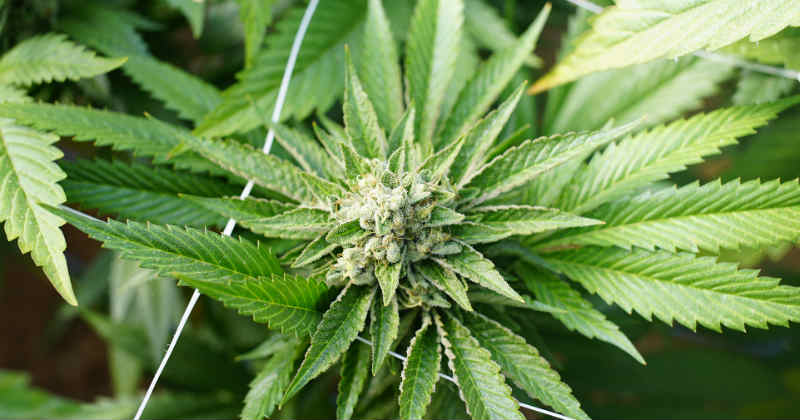
Although cannabis and hemp come from the same species (Cannabis Sativa), they have been cultivated and bred by man for different characteristics. Hemp plants have been selected and worked to produce strong fibers for textiles and other materials, or to produce more seeds for use in oil and food. Cannabis, on the other hand, has been cultivated for its medicinal properties and psychoactive effects, so its flowers are stickier, bigger and have more trichomes.
These differences are easily visible with a DNA test, which shows the plant's genotype. In any case, this is what Digipath offers with its Field Testing Kit which company CEO Todd Denkin describes as a mix between 23 and Me (genetic tests for humans) and a paternity test for plants. «In two minutes, our test can determine the nature of the plant sample and to which class it belongs (drug-type CBD or drug-type THC) » explains Todd Denkin.
The main difference between hemp and cannabis is that their genetics will cause them to produce higher levels of CBD or THC. The Digipath test therefore examines the genotype of plants to classify them into one category or another. However, this technique has its limits, as there are hemp varieties designed to produce CBD but with THC levels exceeding the regulatory 0.3%. Should we then abolish the arbitrary 0.3% THC limit in hemp and propose another method of differentiation? Measuring such a precise limit outside the laboratory remains a challenge, and one that Digipath does not directly address.













Proposition 215, 30 Years Later: When Cannabis in California Was a Movement, Not an Industry

Village Farms Expands Cannabis Production in the Netherlands while its European Business Jumps by 75%

Bedrocan's bankruptcy delays medical cannabis reform in the Netherlands

Where to Buy Affordable CBD in 2026? Our Tips for Making the Right Choice

"No authorization, no organic certification for CBD products," rules the European Court of Justice

Denmark Revises Medical Cannabis Prices Following Errors

Silent Seeds introduces its CB2 gummies: a new generation of THC-free wellness products

2,800-Year-Old Cannabis Seeds Discovered in Siberia

2026 U.S. Midterm Elections: A Major Victory for Cannabis Legalization

The United Kingdom is set to ban THCA and HHC
-
 Business3 weeks ago
Cronos Completes the Acquisition of CanAdelaar for 57.5 million euros
-
Cannabis in France4 weeks ago
France already has 3,000 cannabis retail outlets. None of them are legal.
-
Cannabis in Quebec2 weeks ago
Cannabis: What France Could Learn from Quebec, Eight Years After Legalization
-
Cannabis in the U.S.4 weeks ago
A DEA report confirms that there are no fatal cannabis overdoses
-
Cannabis in France4 weeks ago
CBD in France: Traceability, Retail Stores, THC and Driving… What the New Bill Proposes
-
Business4 weeks ago
Tilray is accelerating its operations in Europe thanks to a license in Portugal
-
Cannabis in New Zealand2 weeks ago
Chronic Pain: New Zealand Is Testing Cannabis to Improve Sleep
-
CBD4 weeks ago
October 2026 CBD Highlights: 10 Strains and Hash to Discover from 5 French Producers












You must be logged in to post a comment Login