
United States: new test to differentiate industrial hemp from cannabis

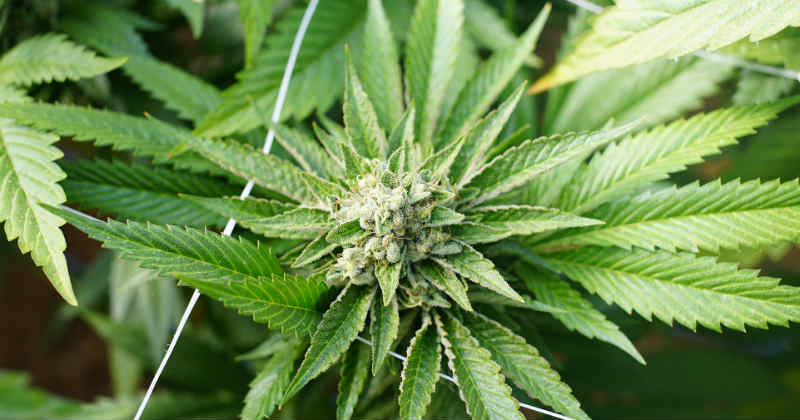
The legalization of hemp in the United States has confused federal drug enforcement agents (DEA). They have difficulty distinguishing between hemp and cannabis, and stopped shipments of hemp on several occasions.. To meet this new challenge, the DEA posted an advertisement for the creation of a field device capable of differentiating the two plants. One company answered his call.
A DNA test for cannabis
This company is Digipath, a testing, data and media company working in the cannabis industry, has developed, in collaboration with VSSL, a handheld device capable of distinguishing between hemp and cannabis. The company has just filed a patent for this device. Digipath is thus responding to the DEA's call for tenders.
Yet experts had warned that the precision of the 0.3% THC limit posed a problem for non-laboratory testing. Has Digipath found a way to combine accuracy and portability? Not quite. In fact, the device doesn't measure THC concentration, but plant DNA.
Although cannabis and hemp come from the same species (Cannabis Sativa), they have been cultivated and bred by man for different characteristics. Hemp plants have been selected and worked to produce strong fibers for textiles and other materials, or to produce more seeds for use in oil and food. Cannabis, on the other hand, has been cultivated for its medicinal properties and psychoactive effects, so its flowers are stickier, bigger and have more trichomes.
These differences are easily visible with a DNA test, which shows the plant's genotype. In any case, this is what Digipath offers with its Field Testing Kit which company CEO Todd Denkin describes as a mix between 23 and Me (genetic tests for humans) and a paternity test for plants. «In two minutes, our test can determine the nature of the plant sample and to which class it belongs (drug-type CBD or drug-type THC) » explains Todd Denkin.
The main difference between hemp and cannabis is that their genetics will cause them to produce higher levels of CBD or THC. The Digipath test therefore examines the genotype of plants to classify them into one category or another. However, this technique has its limits, as there are hemp varieties designed to produce CBD but with THC levels exceeding the regulatory 0.3%. Should we then abolish the arbitrary 0.3% THC limit in hemp and propose another method of differentiation? Measuring such a precise limit outside the laboratory remains a challenge, and one that Digipath does not directly address.















Medical Cannabis and Driving: New South Wales Ends Automatic Penalties for THC

China's Yongji Health Takes Control of Tasmanian Botanics

Autism and Cannabis: Results from the First Placebo-Controlled Trial of NTI164

Which countries legalized medical cannabis before France?

From the boom in dispensaries to a purely medical approach: Thailand is revising its cannabis policy

South Korea is preparing to begin local production of medical cannabis to meet rising demand

In the United States, cannabis use among high school students has reached an all-time low

Medical cannabis use surges by 64 % in Denmark

Canopy Growth Enters the U.K. Market with Four Canadian Strains

CBD: Full-Spectrum Extracts Under Threat in Greece
-
 Cannabis and driving2 weeks ago
Cannabis and CBD: French Drivers Can Now Lose Their License Even Without a Positive Test Result
-
Cannabis in France3 weeks ago
Cannabis Legalization: The LFI Bill Has a Major Problem—THC
-

 Cannabis in France1 day ago
Which countries legalized medical cannabis before France?
-
Cannabis in the Netherlands2 weeks ago
One year after the launch of the Dutch cannabis experiment, the first trends are emerging
-
Cannabis in France2 weeks ago
French medical cannabis remains stalled at the Ministry of Health
-
Cannabis in Argentina1 week ago
Argentina Opens Its Market to Hemp Flowers Containing 1% of THC
-
Business2 weeks ago
The United Kingdom Is Moving Closer to a Regulated CBD Market
-
Cannabis in France1 week ago
Rima Hassan: When «Drugs» Become a Political Weapon














You must be logged in to post a comment Login