Study: Legalization of cannabis in the United States, the examples of Colorado and Washington State

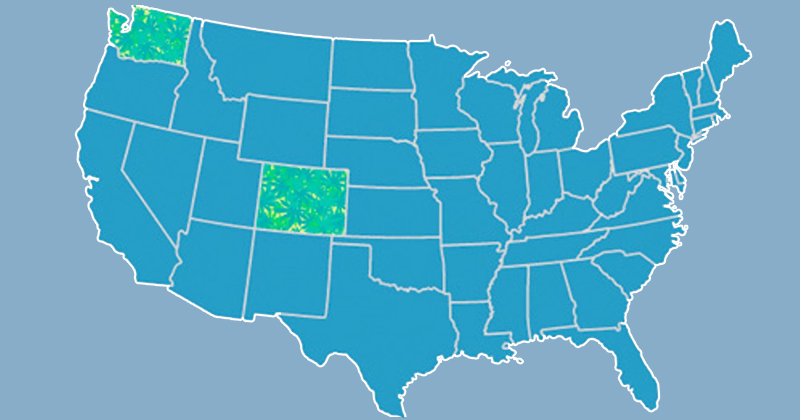
In line with Cannalex, the French Institute of International Relations (IFRI) publishes his study on the initial trends in cannabis legalization in the states of Colorado and Washington, analyzing in particular the impacts on public health, the economy, and crime.
Two States, a Common Goal, Different Applications
The IFRI study begins by noting that, despite the fact that than the United States Although they had been the leading advocates of cannabis prohibition throughout the 20th century, several states have begun to reverse this trend.
California was the first state to legalize medical cannabis in 1996, and Colorado and Washington legalized recreational cannabis use in 2012, following directives issued by Barack Obama and the Cole Memo to de-prioritize the fight against the medical cannabis market.
The nine states that have currently legalized cannabis are all working toward the same goals:
- open up the cannabis market without sending a message of tolerance to young people
- maximize government revenue without stimulating consumption
- Tax cannabis without setting the price too high or too low
- strike the right balance between the medical and recreational markets
- crack down on the black market in order to weaken criminal organizations
The cannabis regulation models However, they vary from state to state. In the study under consideration, Colorado’s regulatory framework was established in the rush that followed the referendum vote to legalize cannabis, whereas Washington State had previously taken the time to reflect on the issue and ultimately implemented a more cautious regulatory framework than Colorado’s.
Effects on Public Health
The main public health concern is the cannabis use among young people post-legalization. Neither state has seen an increase in consumption among young people; in fact, there has even been a decrease
Conversely, adults seem to be showing greater interest in cannabis. In addition to a simple statistical increase, the study notes a shift from tobacco and alcohol use to cannabis use, noting that this trend will need to be confirmed later with more data.
Cannabis is becoming increasingly mainstream, with both a decline in the perception of risk and a very wide range of products available, from dried flowers to concentrates, including edibles and cosmetics.
New at-risk groups are beginning to emerge: tourists, young children who accidentally consume cannabis, and pets.
Overall, requests for addiction treatment (for cannabis and alcohol) are trending downward among young people but upward among adults, in line with the rising trend in consumption.
Economic Consequences
Tax revenue from the cannabis industry already exceeds that from the tobacco industry. In terms of jobs, legalization benefits the entire economy thanks to jobs related to the cannabis industry.
However, the actual impact on GDP is small, though the effects are more significant than expected.
Impact on Crime
Researchers currently have relatively little historical perspective on crime data, but they note that the black market still exists, particularly for the poorest people, who are sold lower-quality marijuana.
The study notes that the price drop resulting from legalization «is expected to help eliminate the black market in the coming years,» as well as its tendency to fuel states that still enforce cannabis prohibition.
The cartels have shifted their focus to opioids (such as fentanyl or heroin) and are supplementing the legal supply of OxyContin with inexpensive heroin.
Petty crime has shifted its focus to the trafficking of stolen cars and violent robberies, likely due in part to heroin addicts who find themselves forced to finance their addiction any way they can.
New types of crime have also emerged, targeting cannabis businesses (theft of plants, robberies, etc.), which are expected to decline as the sector becomes more integrated into the banking system.
The statistical increase may also be due to a shift in police priorities, as law enforcement has moved away from focusing on simple cannabis use and toward more serious offenses.
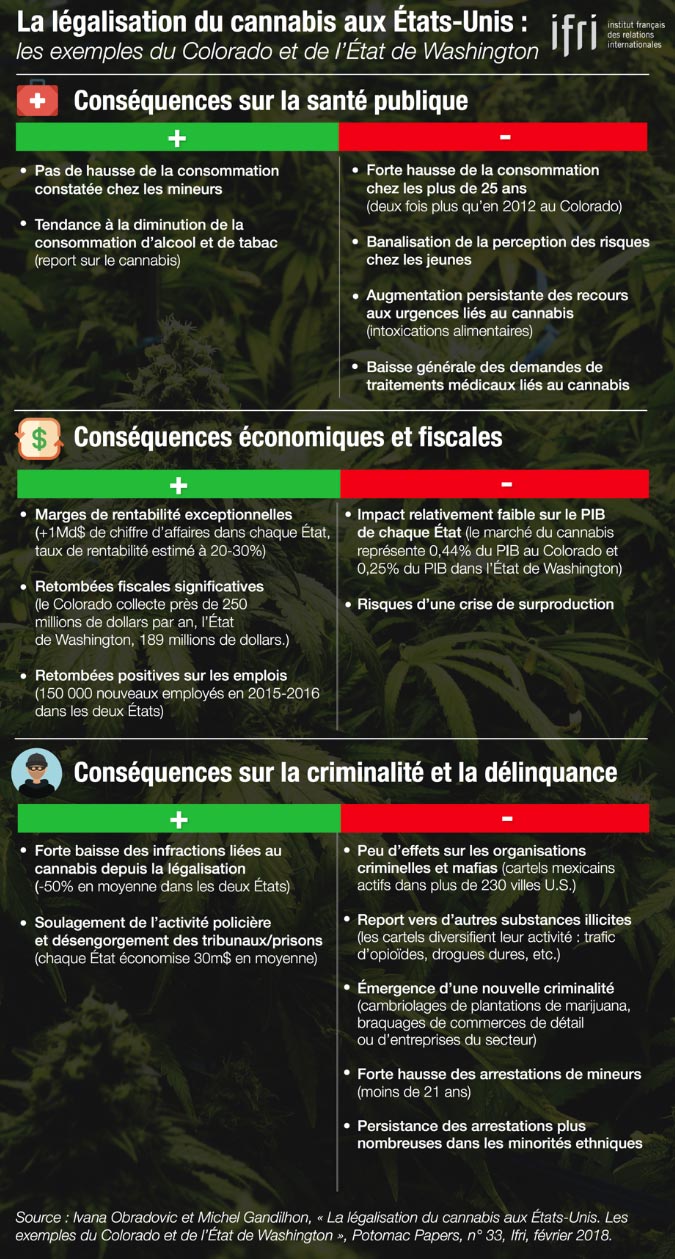
INFRI has also published an infographic summarizing the full study, which we present below.













Germany: Pharmacists Propose a Pilot Program to Sell Recreational Cannabis in Pharmacies

France Is More Reluctant to Legalize Cannabis Than the EU Average, According to a New EUDA Survey

Scientists Create Cannabinoid-Free Hemp

MediPharm is preparing to launch its cannabis inhaler in Europe

Sensi Seeds and High Times are teaming up to launch five new cannabis strains

Brains Bioceutical is aiming for the Nasdaq with a valuation of $750 million

CBD in French Polynesia: Sublingual Oils Soon to Be Available Over the Counter

Cannabis legalization in Mexico returns to the Senate after five years of political deadlock

Massachusetts Gives the Green Light to Drive-Thru Cannabis Sales

Finland Wants to Legalize Cannabis Based on the German Model
-
 Cannabis in Quebec4 weeks ago
Cannabis: What France Could Learn from Quebec, Eight Years After Legalization
-
Cannabis in New Zealand4 weeks ago
Chronic Pain: New Zealand Is Testing Cannabis to Improve Sleep
-
Cannabis in France4 weeks ago
Dr. Pascal Douek, a tireless advocate for medical cannabis in France, has died
-
Cannabis in France4 weeks ago
Medical cannabis: The Greens introduce two amendments to accelerate its widespread adoption
-
Cannabis in Canada4 weeks ago
A Canadian study reveals the pleasant psychotropic effects of high-dose CBD
-
Studies on cannabis4 weeks ago
More THC, barely any additional effects: A new study challenges common assumptions about the potency of cannabis
-
Cannabis in Argentina4 weeks ago
The Argentine province of Chubut is creating its own framework for medical cannabis
-
Cannabis in France3 weeks ago
Medical Cannabis: Patients Issue a Formal Notice to the Government to Break the Deadlock

















You must be logged in to post a comment Login