
Study: Legalization of cannabis in the United States, the examples of Colorado and Washington State

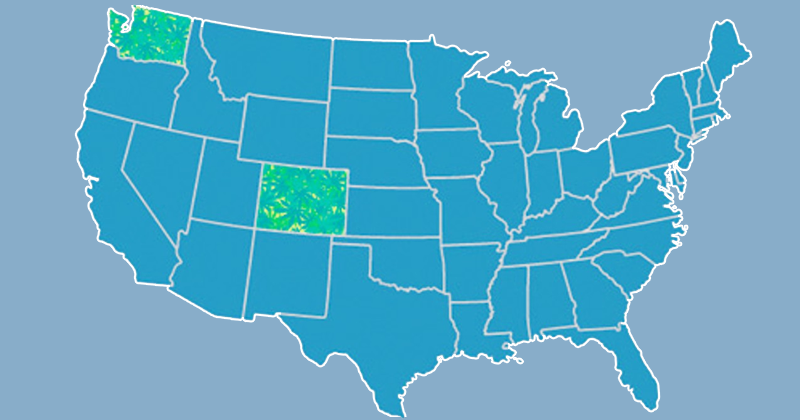
In line with Cannalex, the French Institute of International Relations (IFRI) publishes his study on the initial trends in cannabis legalization in the states of Colorado and Washington, analyzing in particular the impacts on public health, the economy, and crime.
Two States, a Common Goal, Different Applications
The IFRI study begins by noting that, despite the fact that than the United States Although they had been the leading advocates of cannabis prohibition throughout the 20th century, several states have begun to reverse this trend.
California was the first state to legalize medical cannabis in 1996, and Colorado and Washington legalized recreational cannabis use in 2012, following directives issued by Barack Obama and the Cole Memo to de-prioritize the fight against the medical cannabis market.
The nine states that have currently legalized cannabis are all working toward the same goals:
- open up the cannabis market without sending a message of tolerance to young people
- maximize government revenue without stimulating consumption
- Tax cannabis without setting the price too high or too low
- strike the right balance between the medical and recreational markets
- crack down on the black market in order to weaken criminal organizations
The cannabis regulation models However, they vary from state to state. In the study under consideration, Colorado’s regulatory framework was established in the rush that followed the referendum vote to legalize cannabis, whereas Washington State had previously taken the time to reflect on the issue and ultimately implemented a more cautious regulatory framework than Colorado’s.
Effects on Public Health
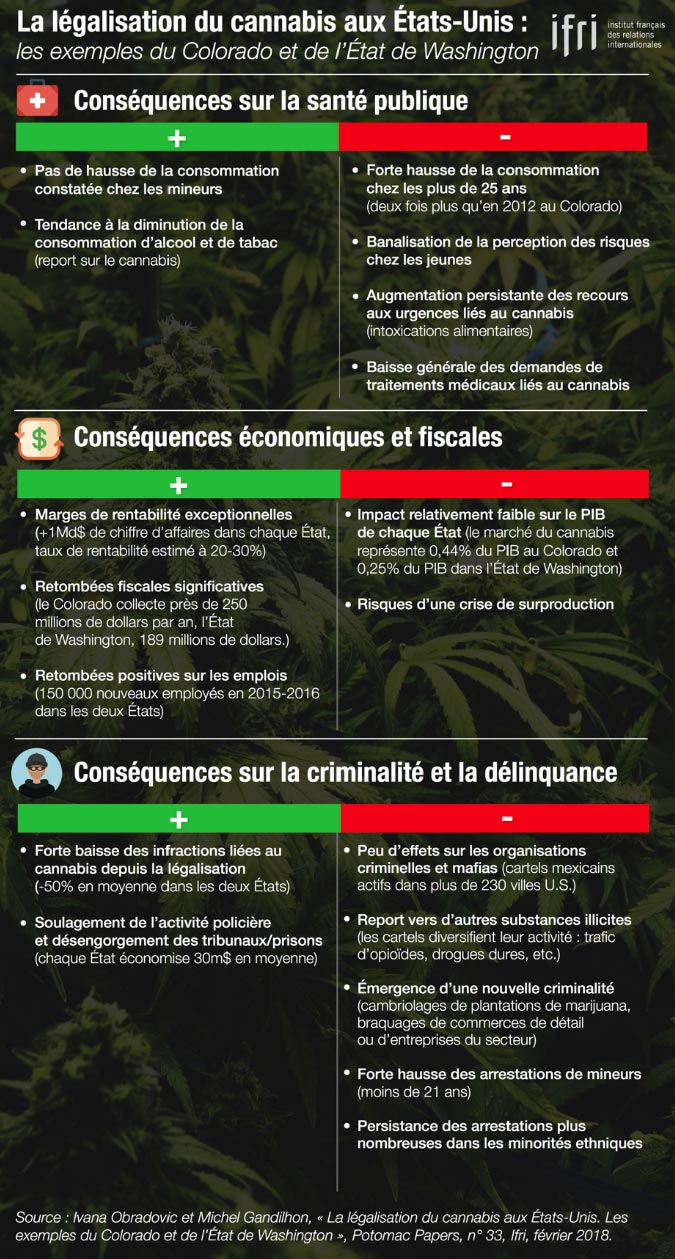
The main public health concern is the cannabis use among young people post-legalization. Neither state has seen an increase in consumption among young people; in fact, there has even been a decrease
Conversely, adults seem to be showing greater interest in cannabis. In addition to a simple statistical increase, the study notes a shift from tobacco and alcohol use to cannabis use, noting that this trend will need to be confirmed later with more data.
Cannabis is becoming increasingly mainstream, with both a decline in the perception of risk and a very wide range of products available, from dried flowers to concentrates, including edibles and cosmetics.
New at-risk groups are beginning to emerge: tourists, young children who accidentally consume cannabis, and pets.
Overall, requests for addiction treatment (for cannabis and alcohol) are trending downward among young people but upward among adults, in line with the rising trend in consumption.
Economic Consequences
Tax revenue from the cannabis industry already exceeds that from the tobacco industry. In terms of jobs, legalization benefits the entire economy thanks to jobs related to the cannabis industry.
However, the actual impact on GDP is small, though the effects are more significant than expected.
Impact on Crime
Researchers currently have relatively little historical perspective on crime data, but they note that the black market still exists, particularly for the poorest people, who are sold lower-quality marijuana.
The study notes that the price drop resulting from legalization «is expected to help eliminate the black market in the coming years,» as well as its tendency to fuel states that still enforce cannabis prohibition.
The cartels have shifted their focus to opioids (such as fentanyl or heroin) and are supplementing the legal supply of OxyContin with inexpensive heroin.
Petty crime has shifted its focus to the trafficking of stolen cars and violent robberies, likely due in part to heroin addicts who find themselves forced to finance their addiction any way they can.
New types of crime have also emerged, targeting cannabis businesses (theft of plants, robberies, etc.), which are expected to decline as the sector becomes more integrated into the banking system.
The statistical increase may also be due to a shift in police priorities, as law enforcement has moved away from focusing on simple cannabis use and toward more serious offenses.
INFRI has also published an infographic summarizing the full study, which we present below.









CBD is said to promote athletic recovery, without improving performance

294 cannabis clubs in Chile: a booming movement with uneven distribution

Chronic Sciatica: New York Approves First Clinical Trial of a THC-Based Medication

United States: The DEA is accelerating the integration of medical cannabis at the federal level

Florida is nearing one million patients using medical cannabis

Uruguay Revives Its Plan to Allow Tourists to Legally Access Cannabis

In Brazil, researchers are developing an innovative CBD eye drop

Autism: Medical Cannabis Is Linked to Reduced Anxiety

The $28 billion U.S. hemp market remains under threat

Jamaica Eases Small Farmers' Access to the Cannabis Market
-
 Business6 days ago
The legal cannabis market in New York exceeds 4 billion $ in revenue
-

 Cannabis in France2 weeks ago
Which countries legalized medical cannabis before France?
-
Business2 weeks ago
South Korea is preparing to begin local production of medical cannabis to meet rising demand
-
Cannabis in the Netherlands4 weeks ago
One year after the launch of the Dutch cannabis experiment, the first trends are emerging
-
Cannabis in Thailand2 weeks ago
From the boom in dispensaries to a purely medical approach: Thailand is revising its cannabis policy
-
Cannabis in France4 weeks ago
French medical cannabis remains stalled at the Ministry of Health
-
Cannabis in Argentina3 weeks ago
Argentina Opens Its Market to Hemp Flowers Containing 1% of THC
-
Cannabis and driving2 weeks ago
Medical Cannabis and Driving: New South Wales Ends Automatic Penalties for THC

















You must be logged in to post a comment Login