
CANNALEX: international comparison of cannabis regulation experiences

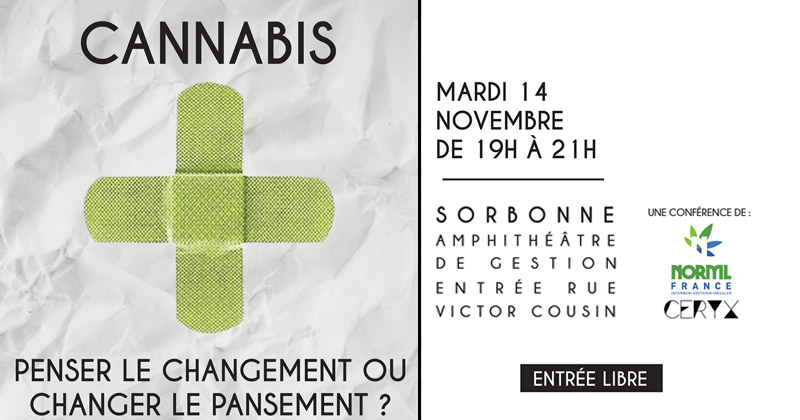
On Friday, October 6, the final presentation of Cannalex—an international comparison of different approaches to cannabis regulation in Colorado, Washington State, and Uruguay—was held in the Foch Auditorium at the École Militaire in Paris.
The project, launched in 2015, was carried out by the National Institute for Advanced Studies in Security and Justice (INHESJ) in partnership with the French Observatory on Drugs and Drug Addiction (OFDT) and with financial support from the Higher Council for Strategic Training and Research (CSFRS).
The basic approach is interesting. The three countries/states began the process of legalizing cannabis around the same time, around 2012, which means we now have initial findings on the consequences of this legislative reform. The research combined literature reviews and field surveys to capture the reality of the situation as accurately as possible. The goal was not so much to pass judgment on the validity of these reforms, but rather to measure their short-term effects.
Key Points of the Conference
The main conclusions of the conference were therefore:
- The various legalizations of cannabis have taken place in a favorable context, with either decriminalization already in place and/or access to medical cannabis, both of which have greatly contributed to the acceptance of cannabis. Regulatory models, however, have varied.
- The legalization of cannabis did not lead to an increase in consumption among young people, or rather the opposite. This downward trend among younger people contrasts with an increase in consumption among those 25 and older.
- The cannabis-related hospitalizations have increased, with a social cost that has not yet been measured
- Cannabis companies are calling for a legal framework, but they know very well how to get around it when necessary (e.g., advertising)
- The economic impact in the U.S. is significant; taxes collected there are already higher than those on alcohol in Colorado. Since Uruguay is not approaching legalization from an economic perspective, the impact is less significant.
- Little impact on crime, but the police and the justice system are finally focusing their efforts on issues other than mere cannabis use
- And finally, it would seem that the perfect model—one that takes into account public health, safety, and economic concerns—has not yet been found, if indeed such a model even exists
If you’d like to explore this topic in greater depth, please refer to the various documents published by the OFDT:
- Summary of Initial Results (5 p.)
- Cannalex in 10 Questions (4 p.)
- Final Summary Report (70 p.)
- Press Release (2 pages)
And what do we think?
CANNALEX’s main goal is to provide objective insight to the people who are currently making decisions regarding cannabis. And in that regard, it has been successful.
It is worth noting, in passing, the presence in the auditorium of LREM Representative Eric Pouillat, a member of the «fact-finding mission tasked with assessing the impact of applying the fixed-fine procedure to the offense of illicit drug use,» as well as former MILDT Director Etienne Apaire, with disastrous results when it comes to drug policy (though he did acknowledge this).
On the other hand, for anyone with even a passing interest in the subject, the pro-reform groups and we ourselves provide less valuable information.
Ultimately, it is regrettable that none of the members of Cannalex truly understand cannabis itself. Their emphasis on rising THC levels is particularly indicative of this ignorance.
Yes, people in the U.S. love dabbing, with extracts containing 80-90-99% of THC. At the same time, some users consume very small amounts, and dispensaries offer strains with low THC levels. CBD is also widely used—in wax, e-liquid, or creams—though this isn’t usually mentioned.
We also learned that the THC content of Uruguayan marijuana sold in pharmacies was 15% (It's at 2%), and that clubs in the same country were offering varieties priced at 25 or 30%. That’s certainly possible, but is it really the norm?
It will be interesting, however, to see how the various stakeholders handle this information. And if CANNALEX ever needs cannabis experts, we’re all for a CANNALEX 2 🙂













Newsweed Launches Its Own AI
A new tax of 0.5% could disrupt the hemp industry in Canada

Medical Cannabis and Driving: New South Wales Ends Automatic Penalties for THC

China's Yongji Health Takes Control of Tasmanian Botanics

Autism and Cannabis: Results from the First Placebo-Controlled Trial of NTI164

Which countries legalized medical cannabis before France?

From the boom in dispensaries to a purely medical approach: Thailand is revising its cannabis policy

South Korea is preparing to begin local production of medical cannabis to meet rising demand

In the United States, cannabis use among high school students has reached an all-time low

Medical cannabis use surges by 64 % in Denmark
-
 Cannabis and driving3 weeks ago
Cannabis and CBD: French Drivers Can Now Lose Their License Even Without a Positive Test Result
-

 Cannabis in France3 days ago
Which countries legalized medical cannabis before France?
-
Cannabis in France3 weeks ago
Cannabis Legalization: The LFI Bill Has a Major Problem—THC
-
Cannabis in the Netherlands2 weeks ago
One year after the launch of the Dutch cannabis experiment, the first trends are emerging
-
Business4 days ago
South Korea is preparing to begin local production of medical cannabis to meet rising demand
-
Cannabis in Argentina2 weeks ago
Argentina Opens Its Market to Hemp Flowers Containing 1% of THC
-
Cannabis in France2 weeks ago
French medical cannabis remains stalled at the Ministry of Health
-
Cannabis in Thailand3 days ago
From the boom in dispensaries to a purely medical approach: Thailand is revising its cannabis policy














You must be logged in to post a comment Login