United Nations criticizes cannabis legalization worldwide

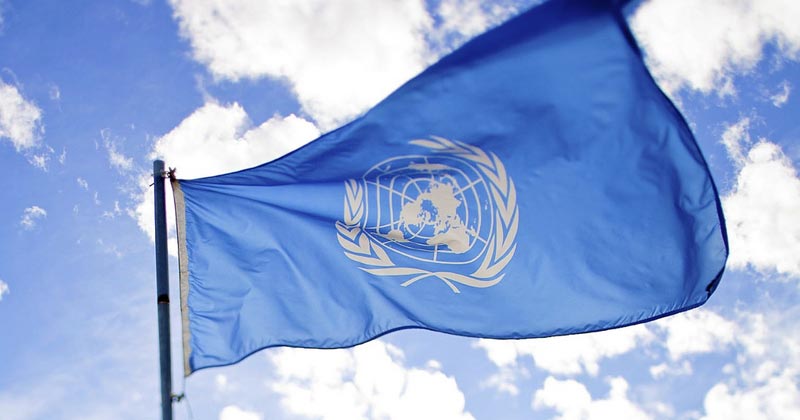
The United Nations International Narcotics Control Board (INCB) has released its 2017 report, The INCB is the world's leading authority on the legalization of drugs, studying the evolution of various issues such as the sale and use of drugs around the world, and suggesting solutions to a number of problems. While the INCB openly calls for a more humane approach to drug prohibition, it rejects and condemns experiments in cannabis legalization.
Introducing the report, INCB President Viroj Sumyai describes the role of the agency and international drug policy.
«Drug policies must follow an approach that seeks to promote the health and well-being of mankind. The three international drug control conventions provide a broad scope for the international community to achieve this goal.»
But in the report, the INCB specifically points out that the 1961 Narcotics Convention restricts the legalization of drugs and only authorizes the medical and research use of substances including cannabis. The agency disapproves by name cannabis reforms in Uruguay, Canada, the United States, Jamaica and the Netherlands, which are (at last) seeking to legal cannabis production.
«The INCB reiterates that any measure that authorizes the use of cannabis for non-medical purposes is in violation of article 4, paragraph (c) and article 36 of the 1961 Convention, and article 3, paragraph 1 (a) of the 1988 Convention. INCB also reiterates that limiting the use of controlled substances to research or therapeutic purposes is a fundamental principle to which no derogation is permitted in the 1961 Convention.»
In addition, the INCB report looks at the opioid epidemic in the USA, but also in Europe and Australia, and calls for the opening up of addiction treatment options, while decrying «limited access to health insurance [which] continues to impede the management of addiction and the provision of adequate care and treatment» in the USA. Quite comical when you consider that cannabis is used in the USA to treat opiate addiction.
We had already asked ourselves the question how Canada could comply with international conventions while legalizing cannabis. The answer was simple: either prove that legalization posed no public health concerns and get the Convention amended, or withdraw from it. Or they could say that signed conventions are only binding on those who wish to abide by them, and that the INCB's sole role is to publish an annual report.








JIHE 2026: Japan’s Largest Trade Show Dedicated to Hemp and CBD Returns to Tokyo with More Than 100 Industry Players

New Caledonia: The Courts Clear the Way for the Return of CBD

The Brazilian medical cannabis market continues to grow

Morocco: Three Cannabis-Based Medications Approved for the Treatment of Epilepsy

Canopy Growth Receives New EU-GMP Certification to Strengthen Its Presence in Europe

Three years after legalizing medical cannabis, Albania continues to establish regulations for it

The first plant-based medical THC spray arrives in the United Kingdom

Medical Cannabis in Germany: THC Prices Vary by a Factor of 12

France already has 3,000 cannabis retail outlets. None of them are legal.

Morocco's exports of legal cannabis have expanded to 15 countries
-
 Business2 weeks ago
The legal cannabis market in New York exceeds 4 billion $ in revenue
-

 Cannabis in France4 weeks ago
Which countries legalized medical cannabis before France?
-
Business4 weeks ago
South Korea is preparing to begin local production of medical cannabis to meet rising demand
-
Cannabis in France4 days ago
France already has 3,000 cannabis retail outlets. None of them are legal.
-
Cannabis in Thailand4 weeks ago
From the boom in dispensaries to a purely medical approach: Thailand is revising its cannabis policy
-
Cannabis in the U.S.5 days ago
A DEA report confirms that there are no fatal cannabis overdoses
-
Cannabis and driving3 weeks ago
Medical Cannabis and Driving: New South Wales Ends Automatic Penalties for THC
-
Cannabis in France3 weeks ago
France’s Drug Policy Chief Defends Cannabis Prohibition... and Runs Into the Facts
















You must be logged in to post a comment Login