
Russia: the Council for Culture and Art plans to regulate the distribution of rap music because it glorifies drugs

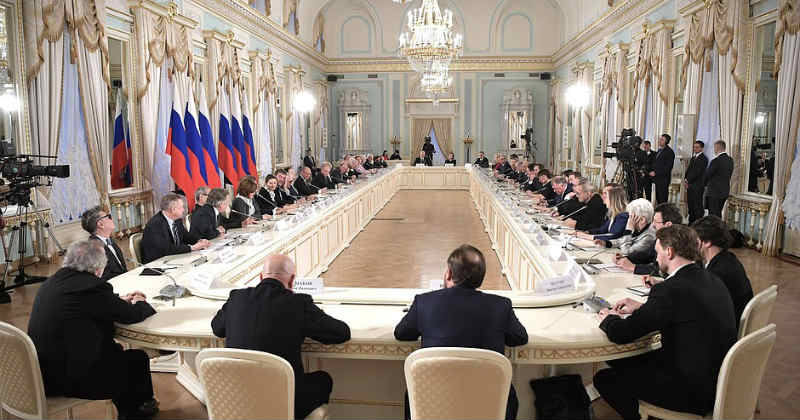
During the the meeting of the Council for Culture and the Arts Last Saturday in St. Petersburg, Vladimir Putin and the members of the Council discussed a variety of topics with a view to defining the national cultural program for the coming year. Among these topics, music producer Igor Matvienko mentioned rap and the culture surrounding it, and the idea was raised to «regulate» its distribution with the aim of reducing drug use.
Is Rap a Public Health Problem?
According to Igor Matvienko, rap is based on three pillars: drugs, sex, and protest. It is not «a Russian invention» but stems from American gangster culture and has spread thanks to globalization and the rapid development of the Internet. «It’s impossible to reverse the trend; it would be like trying to turn back the flow of a river with a net. It’s impossible. It’s a global trend,» explains Matvienko.
According to him, state-run Russian radio stations should not broadcast these songs and their provocative messages, but competition from the Internet is too strong. Indeed, artists today no longer rely on traditional media and instead gain fame through the Internet, where they build their communities of fans and listeners. «The same goes for bloggers, who can get away with anything online, including obscene language. It’s impossible to do that in state-run media. It may therefore be necessary to achieve equal rights for traditional media,» he adds.
By «equality,» Igor Matvienko means a form of liberalization of speech in traditional media alongside regulation of Internet content. He justifies this «regulation» on the grounds of protecting children and addressing drug use issues. «I am particularly concerned about drugs,» Putin says. «That is the path to a nation’s decline.» «If it’s impossible [to stop rap], then it will have to be managed and regulated in some way,» he adds. Igor Matvienko proposes a form of “content labeling.” Unfortunately, the Russian government’s tradition of censorship and questionable practices suggest that some form of content censorship is likely. Despite the globalization of the Internet, some countries, such as China, still maintain control over what is published online.
It is true that References to drugs in hip-hop culture are common But it is debatable whether they are anything other than a reflection of existing consumer trends. In any case, beyond the public health issue, rap is particularly problematic for governments with authoritarian tendencies because it is increasingly establishing itself as a means of political protest. In Thailand, for example, a rap video denouncing the dictatorship The video has garnered millions of views on YouTube. In Turkey, rapper Ezhel was arrested for statements in which he clearly admitted to regularly using cannabis. His first imprisonment sparked a wave of support that led the courts to acquit him. In Russia, it was the rapper Husky—who is highly critical of the authorities—who was arrested for «hooliganism» and then released just as a benefit concert was being organized in Moscow.







CBD is said to promote athletic recovery, without improving performance

294 cannabis clubs in Chile: a booming movement with uneven distribution

Chronic Sciatica: New York Approves First Clinical Trial of a THC-Based Medication

United States: The DEA is accelerating the integration of medical cannabis at the federal level

Florida is nearing one million patients using medical cannabis

Uruguay Revives Its Plan to Allow Tourists to Legally Access Cannabis

In Brazil, researchers are developing an innovative CBD eye drop

Autism: Medical Cannabis Is Linked to Reduced Anxiety

The $28 billion U.S. hemp market remains under threat

Jamaica Eases Small Farmers' Access to the Cannabis Market
-
 Business5 days ago
The legal cannabis market in New York exceeds 4 billion $ in revenue
-

 Cannabis in France2 weeks ago
Which countries legalized medical cannabis before France?
-
Business2 weeks ago
South Korea is preparing to begin local production of medical cannabis to meet rising demand
-
Cannabis in the Netherlands4 weeks ago
One year after the launch of the Dutch cannabis experiment, the first trends are emerging
-
Cannabis in Thailand2 weeks ago
From the boom in dispensaries to a purely medical approach: Thailand is revising its cannabis policy
-
Cannabis in France4 weeks ago
French medical cannabis remains stalled at the Ministry of Health
-
Cannabis in Argentina3 weeks ago
Argentina Opens Its Market to Hemp Flowers Containing 1% of THC
-
Cannabis and driving2 weeks ago
Medical Cannabis and Driving: New South Wales Ends Automatic Penalties for THC

















You must be logged in to post a comment Login