
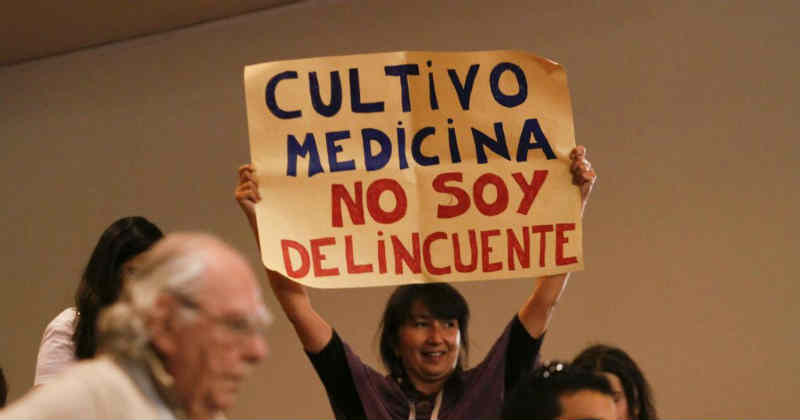
294 cannabis clubs in Chile: a booming movement with uneven distribution


Chilean cannabis clubs have proliferated over the past decade, but their expansion has followed a particularly uneven geographic pattern.
A new scientific study identifies 294 cannabis organizations recorded between 2015 and 2024, more than two-thirds of which are concentrated around Santiago, raising questions about regional inequalities and access to medical marijuana.
Published in the Journal of Cannabis Research, this study, entitled Cannabis Social Clubs in Chile: Spatiotemporal Dynamics and Center-Periphery Inequalities in the Global South, provides a detailed overview of how cannabis-related organizations have developed within Chile’s uncertain regulatory environment.
Santiago dominates the cannabis club scene in Chile
Researchers have identified 294 cannabis social clubs (CSCs) spread across Chile's 16 administrative regions, using official registration records, online searches, and census data.
Their findings reveal significant geographic disparities. The Santiago metropolitan area on its own 198 clubs, or 67.3% of the national total. Within the capital, the municipality of Santiago leads the way with 74 registered organizations, followed by the affluent neighborhood of Las Condes, which has 61 of them.
Elsewhere, the numbers are significantly lower. Valparaíso has 16 associations, while La Araucanía and Los Lagos each have 12. The Atacama Region has only two.
The geographic imbalance is even more evident at the municipal level: cannabis clubs have been identified in only 71 of Chile's 345 municipalities, or 20.61 TP3T of the national territory.
Regional capitals also attract a disproportionate share of organizations, suggesting that the concentration observed in Santiago extends to the entire Chilean urban network.
A Record Increase in Cannabis Club Registrations in 2024
The study reports a significant acceleration in the formalization of cannabis associations. Only one club was registered in 2015, compared with 36 in 2018. After several years of fluctuations, registrations reached an all-time high of 71 new organizations in 2024, which is the highest annual figure for the period under review.
In 2023 and 2024 combined, there were a total of 100 registrations.
This expansion coincided with changes to Chilean cannabis legislation, including Law No. 21,575, enacted in 2023, which amended the provisions regarding cultivation and personal or medical use.
Researchers suggest that greater legal certainty may have encouraged organizations to formalize their activities. However, the study’s descriptive methodology does not allow for the establishment of a direct causal link. And the surge in registrations has reinforced existing geographic concentrations rather than fundamentally redistributing the clubs across the country.
Access to medical cannabis remains unequal
The expansion of cannabis social clubs in Chile is part of in a complex legal context. Although the country recognizes certain therapeutic uses of cannabis, collective cultivation and distribution remain subject to regulatory uncertainty.
Many associations operate as nonprofit organizations, managing cultural activities collectively and sometimes requiring medical documentation from prospective members.
Their uneven distribution raises broader questions about the’access to medical cannabis, especially for patients living outside major cities.
The figures, adjusted for population, provide further insight. The sparsely populated Aysén region has 6.1 clubs per 100,000 residents aged 15 and older, compared with a national average of 1.9.
Nevertheless, researchers have identified a general trend toward the concentration of formal organizations in more affluent urban areas.
Could cannabis regulation help address regional inequalities?
The Evolution of the Legislative Debate in Chile, who recently joined the far right, could determine how the associative model will develop. A 2025 Bill on Cannabis Regulation proposes to recognize collective culture, with provisions regarding membership limits and geographic restrictions.
The study’s authors also recommend establishing a national registry, providing support to organizations in underserved communities, and studying distribution through the Chilean pharmacy network community-based.
Such measures would aim to address geographic disparities rather than simply increase the number of registered organizations.






















294 cannabis clubs in Chile: a booming movement with uneven distribution

Chronic Sciatica: New York Approves First Clinical Trial of a THC-Based Medication

United States: The DEA is accelerating the integration of medical cannabis at the federal level

Florida is nearing one million patients using medical cannabis

Uruguay Revives Its Plan to Allow Tourists to Legally Access Cannabis

In Brazil, researchers are developing an innovative CBD eye drop

Autism: Medical Cannabis Is Linked to Reduced Anxiety

The $28 billion U.S. hemp market remains under threat

Jamaica Eases Small Farmers' Access to the Cannabis Market

Faced with resistance from Aurora, Curaleaf raises its offer by 25%
-
 Business5 days ago
The legal cannabis market in New York exceeds 4 billion $ in revenue
-
Cannabis and driving4 weeks ago
Cannabis and CBD: French Drivers Can Now Lose Their License Even Without a Positive Test Result
-

 Cannabis in France2 weeks ago
Which countries legalized medical cannabis before France?
-
Business2 weeks ago
South Korea is preparing to begin local production of medical cannabis to meet rising demand
-
Cannabis in the Netherlands4 weeks ago
One year after the launch of the Dutch cannabis experiment, the first trends are emerging
-
Cannabis in Thailand2 weeks ago
From the boom in dispensaries to a purely medical approach: Thailand is revising its cannabis policy
-
Cannabis in France4 weeks ago
French medical cannabis remains stalled at the Ministry of Health
-
Cannabis in Argentina3 weeks ago
Argentina Opens Its Market to Hemp Flowers Containing 1% of THC

















You must be logged in to post a comment Login