
The $28 billion U.S. hemp market remains under threat

Theamerican hemp industry is approaching a deadline which could bring about lasting changes in the industry. A new federal definition of the hemp, which is set to take effect on December 11, could drive a large portion of the products containing THC or CBD derived from hemp, threatening thousands of businesses and jobs in the process.
The measure is intended to close a regulatory loophole created by the 2018 Farm Bill, which had legalized hemp at the federal level. But for industry professionals, the THC threshold set is so low that it would not apply solely to psychoactive products: a significant portion of the traditional CBD market could also disappear.
From the 2018 Farm Bill to the Rise of Hemp-Derived THC
In 2018, the U.S. Congress legalized hemp containing no more than 0.3% of delta-9-THC on a dry weight basis. Championed in particular by the Republican senator from Kentucky Mitch McConnell, the reform was intended, above all, to promote the development of an agricultural sector centered on hemp fibers, food, and wellness products.
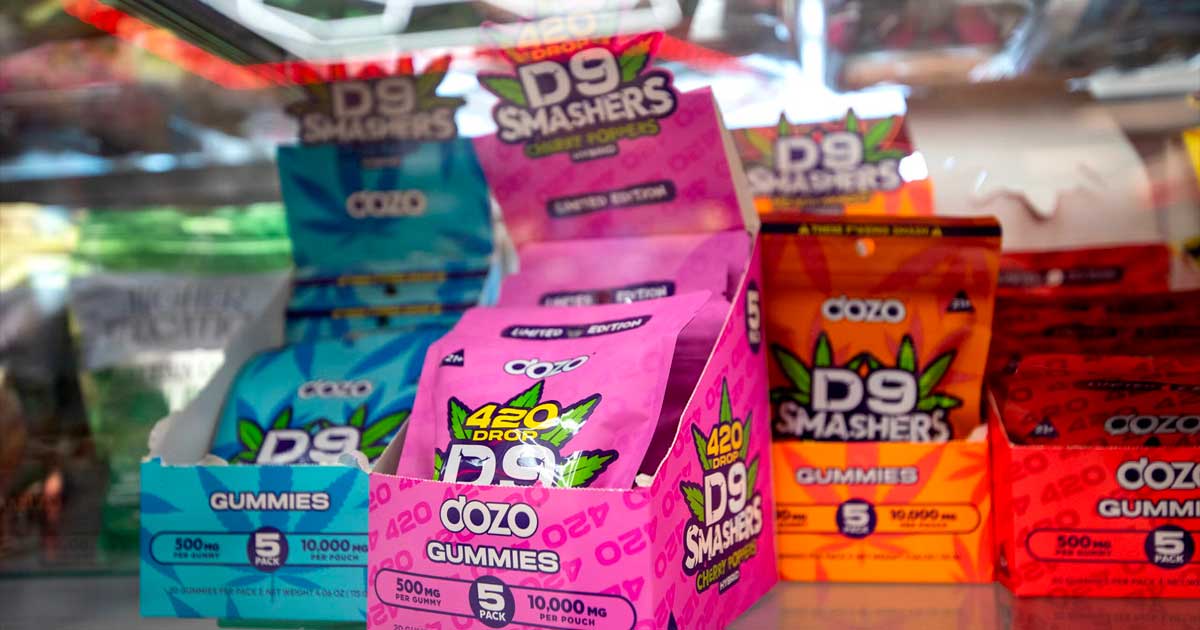
But the wording of the text opened the door to the sale of gummies, beverages, vaping products, and other items containing cannabinoids derived from hemp, some of which produce psychoactive effects while technically meeting the federal definition of hemp.
A particularly dynamic market has thus developed alongside state-regulated cannabis markets—sometimes in direct competition with them, often in states where cannabis is not yet legal. These products have even made their way into convenience stores and general retailers, prompting several states to adopt their own restrictions in the absence of a uniform federal framework.
Congress now intends to close this loophole. The new rule limits hemp-derived products to 0.4 milligrams of total THC per container. Its entry into force, originally scheduled for November, has been postponed to December 11, giving the industry a few more weeks to try to secure an amendment to the text.
$28.3 billion and 225,000 jobs at risk
The potential economic impact is considerable. According to Whitney Economics, a firm specializing in the analysis of the cannabis and hemp markets, the new rules could threaten $28.3 billion in retail sales, approximately 225,000 jobs and up to $2.1 billion in potential tax revenue for the states.
Some companies are already anticipating that their business might come to an end. In North Carolina, Nicholas Hohns, founder of Deutermann Farms, had deliberately limited its investments, having anticipated for several years that the federal authorities would intervene.
«When I started seeing THC-infused edibles »For sale… I told myself: «I have between 18 months and two years to make money in this industry,»" said Mr. Hohns. “There’s no way the government is going to sit idly by and let us do this when hemp was supposed to be used for producing fibers, plastics, building materials, and rope.”
The uncertainty is already having tangible effects. In Wisconsin, the cannabis beverage manufacturer Drinkin’ Buds has suspended production, while other companies are considering shifting to non-cannabinoid products.
CBD, a collateral victim
The debate goes far beyond just psychoactive substances containing THC derived from hemp. Industry representatives warn that the 0.4-milligram limit per container could also make certain products illegal non-psychoactive CBD products, including the oils, dyes and others topical products.
In Oregon, the consequences are already beginning to be felt. Oregon CBD Company plans to shut down its CBD business, while the cannabis dispensary—operated by the same owner but subject to a different regulatory framework—will remain open.
For Seth Crawford, a co-owner of Oregon CBD Seeds, said the repercussions could affect the entire supply chain.
«This law essentially puts an end to the hemp industry,» he said.
His company supplies a significant portion of the hemp seeds grown in the United States. While cultivation will certainly continue, demand may drop if processors are no longer able to manufacture products that comply with the new federal requirements.
«CBD-based products that people hope to give to their dogs to relieve their arthritis, or to their elderly parents, who suffer from pain that can be alleviated by some of these cannabinoids, will no longer be available,» he said.
Regulate rather than ban?
Faced with this deadline, the’hemp industry is now trying to convince Congress to adopt less restrictive regulations. Among the proposals being advocated are a ban on the sale of psychoactive products to those under 21, limits on THC per package, and a ban on imported cannabinoids.
Proponents of stricter federal regulations, on the other hand, believe that intervention had become necessary. Psychoactive products derived from hemp have flourished in an environment that is far less restrictive than that imposed on state-regulated cannabis markets. Operators in these markets particularly criticize competition that benefits from less stringent tax, health, and trade regulations.




















Autism: Medical Cannabis Is Linked to Reduced Anxiety

The $28 billion U.S. hemp market remains under threat

Jamaica Eases Small Farmers' Access to the Cannabis Market

Faced with resistance from Aurora, Curaleaf raises its offer by 25%

Massachusetts: 71.1% of voters want to keep cannabis legal

All Our Tips for Finding a Reliable CBD Store

Uncertainty surrounding Bedrocan threatens the supply of medical cannabis flowers to Danish patients

"Light" Cannabis in Italy: The ban on hemp flowers will be delayed until February 2027 pending a ruling by the Constitutional Court

The legal cannabis market in New York exceeds 4 billion $ in revenue

France’s Drug Policy Chief Defends Cannabis Prohibition... and Runs Into the Facts
-
 Cannabis and driving4 weeks ago
Cannabis and CBD: French Drivers Can Now Lose Their License Even Without a Positive Test Result
-

 Cannabis in France2 weeks ago
Which countries legalized medical cannabis before France?
-
Business2 weeks ago
South Korea is preparing to begin local production of medical cannabis to meet rising demand
-
Cannabis in the Netherlands3 weeks ago
One year after the launch of the Dutch cannabis experiment, the first trends are emerging
-
Cannabis in Thailand2 weeks ago
From the boom in dispensaries to a purely medical approach: Thailand is revising its cannabis policy
-
Cannabis in Argentina3 weeks ago
Argentina Opens Its Market to Hemp Flowers Containing 1% of THC
-
Cannabis in France3 weeks ago
French medical cannabis remains stalled at the Ministry of Health
-
Cannabis and driving2 weeks ago
Medical Cannabis and Driving: New South Wales Ends Automatic Penalties for THC
















You must be logged in to post a comment Login