
Portugal: Left-wing parties work on therapeutic and recreational legalization of cannabis

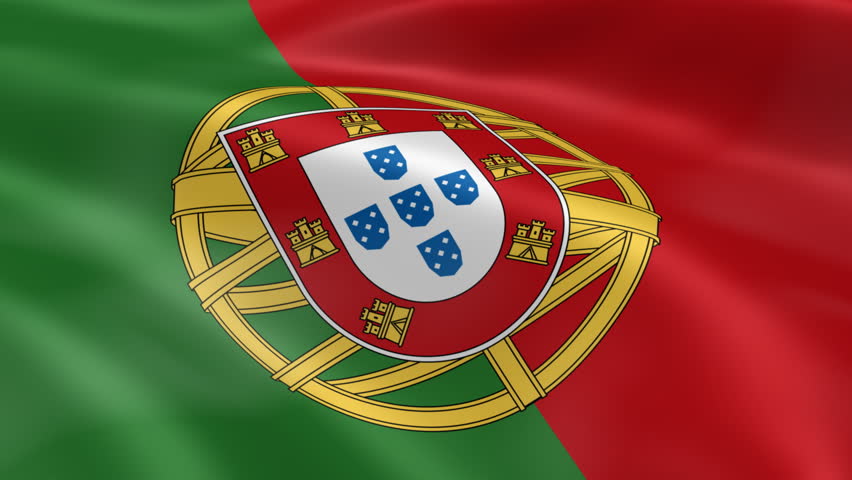
The «Bloco de Esquerda» (BE), Portugal’s radical left-wing party should offer In 2017, two cannabis bills. The first bill will focus on the use of medical cannabis, and the second will address recreational cannabis. They are expected to be supported by the PSD, which in 2015 proposed the legalization of personal cultivation and social cannabis clubs. At the time, these proposals were rejected by the ruling party.
The MP Moisés Ferreira says: «We are working on a two-pronged project: on the one hand, the therapeutic use of cannabis, and on the other, its recreational use. We want to find the appropriate legal and legislative solutions.» According to him, «There is sufficient scientific evidence of the beneficial effects of cannabis; a doctor should be able to prescribe this substance, and it should be available at pharmacies.».
The Downside of Decriminalization
The Member of Parliament Paula Santos from the Portuguese Communist Party wants these two issues to be clearly distinguished. « »There are more and more people requesting cannabis-based treatment, but there is also a growing demand on health services to help people overcome drug addiction.” This member of parliament would like to specify cannabis dosages more precisely for each medical condition rather than relying on a single product.
On the recreational front, the radical left has not yet decided on which model to adopt. «We are paying close attention to what is happening in Catalonia, but in the meantime, the U.S. is offering us a different model, and we are currently analyzing it.».
Portugal faces the same issue as France regarding the use of cannabinoids in medicine. The country has authorized the distribution of Sativex for a certain type of multiple sclerosis, and, as in France, this treatment is still not available in pharmacies. However, Infarmed, the national authority for medicines and health products, acknowledges that the unavailability of Sativex is due to «a lack of diversification in the therapeutic applications of this treatment.» Miguel Guimares, president of the Portuguese Medical Association, announced today in Publico that the College of Physicians will conduct an in-depth study of the issue of medical cannabis.
Portugal’s neutral regulatory environment is attracting cannabis entrepreneurs. GW Pharmaceuticals has already established its subsidiary Green Hearth there, and the Canadian company Tilray and another Israeli firm have already filed applications with Infarmed to set up operations in Portugal.
Théo Caillart






Argentina Opens Its Market to Hemp Flowers Containing 1% of THC

The French Socialist Party still doesn't know how to approach the legalization of cannabis

Science in the City International: Paris at the Heart of Transatlantic Scientific and Medical Dialogue

Christine Fréchette is alienating Quebec’s cannabis industry

Rima Hassan: When «Drugs» Become a Political Weapon

From Marathons to Ultratrails: How Extreme Running Affects the Endocannabinoid System

Four days of THC may make breast cancer less aggressive, according to a new study

Medical Cannabis: 14 Organizations Finally Call for Enforcement of the Law

One year after the launch of the Dutch cannabis experiment, the first trends are emerging

High Ground: The Crash of a Plane Full of Marijuana That Made History in Yosemite
-
 Cannabis and driving1 week ago
Cannabis and CBD: French Drivers Can Now Lose Their License Even Without a Positive Test Result
-
Cannabis in France2 weeks ago
Cannabis Legalization: The LFI Bill Has a Major Problem—THC
-

 Cannabis in the Netherlands5 days ago
One year after the launch of the Dutch cannabis experiment, the first trends are emerging
-
Cannabis in France6 days ago
French medical cannabis remains stalled at the Ministry of Health
-
Business5 days ago
The United Kingdom Is Moving Closer to a Regulated CBD Market
-
Cannabis in Europe2 weeks ago
Andorra Paves the Way for Medical Cannabis Cultivation
-
Cannabis in France2 weeks ago
Drought: Could Hemp Become the New Hope for French Farmers?
-
Cannabis in Argentina2 days ago
Argentina Opens Its Market to Hemp Flowers Containing 1% of THC












Jacques-Pierre Bernard
10 February 2017 at 8:12 a.m.
Yes, the penalties are far too severe, and consumers and distributors resume using or selling the product as soon as they can—if they haven’t already stopped doing so.
However, legalization is not without its problems either.
Let's just take a look at what's happening in Colorado, where medical and recreational cannabis were legalized fairly recently.
Here are some of the consequences, according to the September 2016 Rocky Mountain report from Colorado (www.rmhidta.org):
«…The number of cannabis-related traffic fatalities rose by 62 percent, from 71 to 115, after recreational cannabis was legalized in 2013…»
«… In 2009, in Colorado, the number of cannabis-related deaths involving drivers who tested positive for cannabis accounted for 10 percent of all traffic fatalities. In 2015, that number doubled to 21 percent…»
How much did these drivers consume? We don’t know yet. Therefore, just as with alcohol and psychotropic drugs, we should exercise moderation when using these products.