Will the UN change the classification of cannabis?

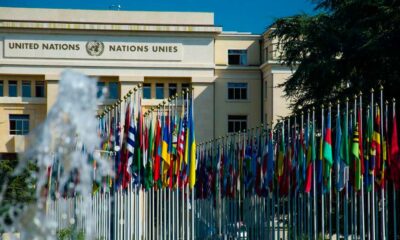
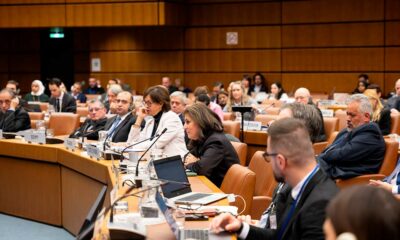
At its 63rd session from December 2 to 4, the United Nations Commission on Narcotic Drugs (CND) could, if it reaps the vote of a simple majority at a virtual meeting based in Vienna, accept a recommendation from the World Health Organization (WHO) to remove the cannabis and its resin from Schedule IV of the 1961 Single Convention on Narcotic Drugs.
TheCND adopts this recommendation would recognize the medical possibilities of cannabis, which are today limited to research by the presence of cannabis in Schedule IV, a classification that requires the highest levels of international control and brings together «substances that [...] are particularly susceptible to abuse and adverse effects and have little or no therapeutic usefulness».
Cannabis and its resin are also listed in Schedule I, which also requires a high level of international control but facilitates research, and would remain there.
In January 2019, after the WHO had evaluated the scientific literature, the organization had recommended that the CND remove cannabis from Schedule IV precisely because of its «therapeutic potential» and the belief that it is not «particularly likely to produce adverse effects similar to the effects of other Schedule IV substances.»
A vote is scheduled for December 2, with postponements still possible. Visit proposal is supported in particular by by the European Union, Switzerland, Canada, the United States, certain Latin American countries and Australia.
Votes for 6 recommendations
From December 2, 6 WHO recommendations will be put to the vote of the CND. The vote had been postponed until March 2020 to give CND member states time to «clarify the implications and consequences of, and reasoning behind, these recommendations».
The recommendations suggest :
- Removing cannabis and cannabis resin from Schedule IV of the 1961 Convention
- Moving dronabinol (synthetic THC) from Table II of the 1971 Convention to Table I of the 1961 Convention
- Moving THC from Table I of the 1971 Convention to Table I of the 1961 Convention
- Removing cannabis extracts and tinctures from Schedule I of the 1961 Convention
- Removing CBD preparations containing -0.2% THC from international control
- Add dronabinol preparations to Schedule III of the 1961 Convention
The highly technical proposals are sometimes a source of confusion, particularly when it comes to CBD. As explained above, A vote against this proposal would not place CBD under international control, as CBD itself is not listed in any of the international drug control conventions.
While the proposal attempts to address the issue of trace THC in plant-derived CBD by setting a limit of 0.2% THC, it does not specify how THC is to be measured, which could lead to confusion.
Some countries could vote against the recommendation on CBD due to technical details linked to the way the proposals were drafted, and ask the WHO to propose a revised version.














Medical Cannabis in Germany: THC Prices Vary by a Factor of 12

France already has 3,000 cannabis retail outlets. None of them are legal.

Morocco's exports of legal cannabis have expanded to 15 countries

Aurora Cannabis Doubles Its Production Capacity in Germany

Tilray is accelerating its operations in Europe thanks to a license in Portugal

Boston will host the 10th annual State of the Cannabis Industry Conference on October 26

A DEA report confirms that there are no fatal cannabis overdoses

A British patient is challenging the NHS's refusal to reimburse medical cannabis

October 2026 CBD Highlights: 10 Strains and Hash to Discover from 5 French Producers

CBD in France: Traceability, Retail Stores, THC and Driving… What the New Bill Proposes
-
 Business2 weeks ago
The legal cannabis market in New York exceeds 4 billion $ in revenue
-

 Cannabis in France3 weeks ago
Which countries legalized medical cannabis before France?
-
Business3 weeks ago
South Korea is preparing to begin local production of medical cannabis to meet rising demand
-
Cannabis in Thailand3 weeks ago
From the boom in dispensaries to a purely medical approach: Thailand is revising its cannabis policy
-
Cannabis and driving3 weeks ago
Medical Cannabis and Driving: New South Wales Ends Automatic Penalties for THC
-
Cannabis in Argentina4 weeks ago
Argentina Opens Its Market to Hemp Flowers Containing 1% of THC
-
Autism3 weeks ago
Autism and Cannabis: Results from the First Placebo-Controlled Trial of NTI164
-
Cannabis in France2 weeks ago
France’s Drug Policy Chief Defends Cannabis Prohibition... and Runs Into the Facts

















You must be logged in to post a comment Login