
Mexico's Supreme Court puts an end to cannabis prohibition


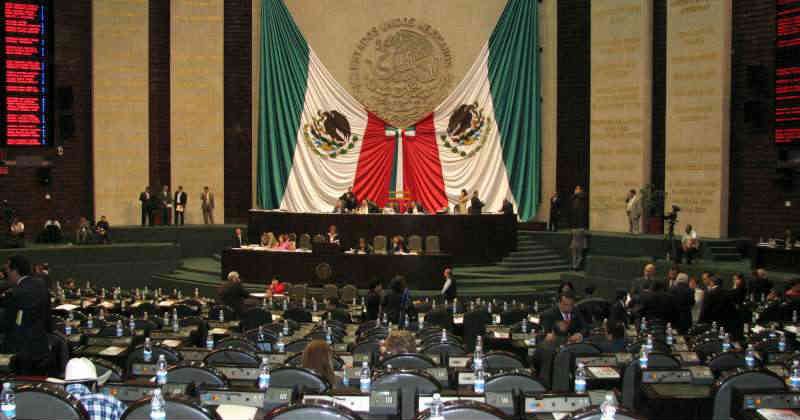
While the Mexican government was considering the possibility of legalizing cannabis, In fact, it was the Mexican judiciary that effectively ended the ban through judicial precedent on Wednesday. It ruled that the ban was unconstitutional in two new judgments, as it had already done in three previous cases. However, Mexican law stipulates that after five similar rulings, the Supreme Court’s verdict becomes law. As a result, the consumption and possession of cannabis for personal use are now legal in Mexico.
The first case
In 2015, a citizens’ group called the Mexican Society for Responsible and Tolerant Self-Consumption (SMART), consisting of four people, brought the issue before the Supreme Court. Since they were not consumers themselves, the initiative by SMART’s two lawyers, activist, and accountant was purely activist in nature, with the goal of changing the country’s prohibitive laws that fuel and enrich criminal organizations. The defense of the case was based on a provision in the Mexican Constitution: the right to the free development of the personality. This is equivalent to a right to autonomy; every individual has the right to engage in any activity, even if it is harmful to their own health, as long as it concerns only them and does not endanger others.
This right to autonomy had been recognized in that initial ruling, which therefore declared the absolute ban unconstitutional. The four plaintiffs were thus granted the right to grow cannabis, in unlimited quantities, for their personal use. This first trial had significant repercussions because it opened a legal loophole that made it possible to legally challenge the concept of prohibition.
Today, the ban was declared unconstitutional following these fourth and fifth rulings. «The fundamental right to the free development of personality allows individuals of legal age to decide—without interference—what recreational activities they wish to engage in and protects the actions necessary to carry out that choice,» the Supreme Court stated in a press release. It further adds that certain dangerous substances must be regulated but that the effects of cannabis do not justify an absolute ban on its use.
The First Chamber reaffirms the unconstitutionality of the absolute ban on recreational marijuana use and incorporates case law: https://t.co/szeayG5vbs pic.twitter.com/EmhfBOlqZe
- Suprema Corte (@SCJN) October 31, 2018
All Mexicans are therefore now entitled to possess, consume, and cultivate cannabis for personal use. In accordance with the right to free development of the personality, «legalization» applies only to personal use of cannabis and does not include its commercial sale. This issue must be addressed by the government, which now has 90 days to reform cannabis laws.
The reform
Since national laws conflict with the Supreme Court’s interpretation of the Constitution, they must be amended within 90 days. The Court of Justice’s decision is currently only theoretical; it must be enacted into law before it can be enforced. In practical terms, this means that consumers can still be arrested, but if they are prosecuted, they will prevail in court (provided the case involves only personal use and does not involve the sale of cannabis). Personal use of cannabis is therefore legal de facto but not de jure.
The question now is: which model of legalization will Mexico choose? Will the government authorize the sale of cannabis, and if so, how will it regulate it? Will it opt for a state monopoly or a private market? As Steve Rolles, a political analyst at the Foundation Transform Drug Policy, For now, «the situation is more or less similar to the 'grow-and-give' model in place in Washington, D.C., and in the Vermont«It is possible that the government will stick to this, simply enforce the Court of Justice’s ruling, and not authorize the sale of cannabis.”.
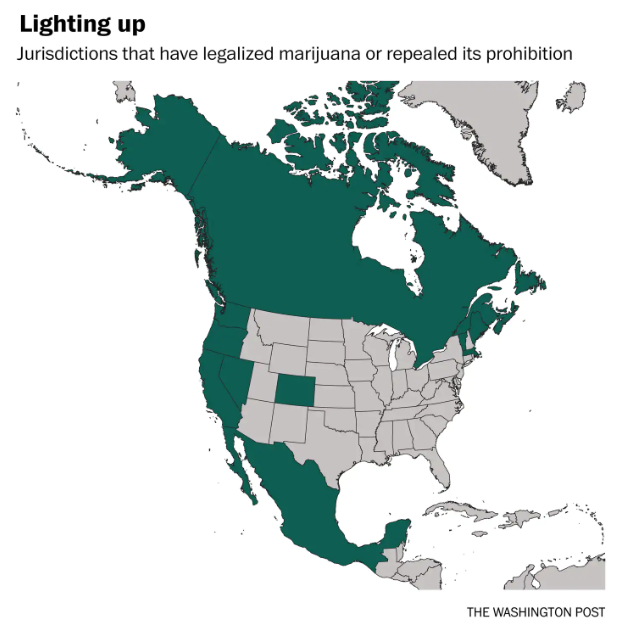
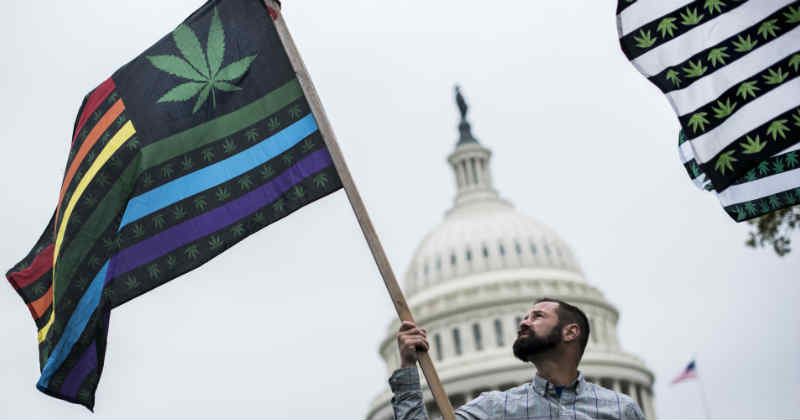
In a press release from the Foundation, Steve Rolles notes: «The legalization of cannabis in Mexico now means that one can travel the entire length of North America’s West Coast, from the Canadian Arctic Circle to the Mexican border with Guatemala, without ever leaving a jurisdiction where cannabis is legal.» The United States, now caught between two national jurisdictions where cannabis is legal, may well yield fairly quickly to internal and external pressures pushing for federal legalization of cannabis on U.S. soil. It is already likely that the issue will be addressed more extensively during the new Congress, which is set to be renewed by next week’s midterm elections. A Democratic victory could be decisive although now a majority of Republicans also support legalization.










One year after the launch of the Dutch cannabis experiment, the first trends are emerging

High Ground: The Crash of a Plane Full of Marijuana That Made History in Yosemite

The United Kingdom Is Moving Closer to a Regulated CBD Market

Mexico's Supreme Court Authorizes Cannabis-Infused Edibles for Personal Use

French medical cannabis remains stalled at the Ministry of Health

Things are heating up between Sherbinski and Doja

Cookies Ordered to Pay $61.5 Million in a Dispute with Its Investors

Frenchfarm is launching its B1G1 clearance sale + free gift

Czech Republic: CBD shops selling synthetic cannabinoids are in the police's crosshairs

Cannabis and CBD: French Drivers Can Now Lose Their License Even Without a Positive Test Result
-
 Cannabis and driving5 days ago
Cannabis and CBD: French Drivers Can Now Lose Their License Even Without a Positive Test Result
-
Cannabis in France1 week ago
Cannabis Legalization: The LFI Bill Has a Major Problem—THC
-
Cannabis in Europe2 weeks ago
Andorra Paves the Way for Medical Cannabis Cultivation
-
Cannabis in France2 weeks ago
Drought: Could Hemp Become the New Hope for French Farmers?
-
Cannabis in France1 day ago
French medical cannabis remains stalled at the Ministry of Health
-

 Business13 hours ago
The United Kingdom Is Moving Closer to a Regulated CBD Market
-
Cannabinoids2 weeks ago
What if CBD enhanced the effects of THC? A comprehensive analysis challenges a common misconception
-
Cannabis in the U.S.2 weeks ago
United States: Congress Rejects Ban on THC Derived from Hemp













You must be logged in to post a comment Login