
Antigua and Barbuda to legalize cannabis for medical, scientific and religious purposes

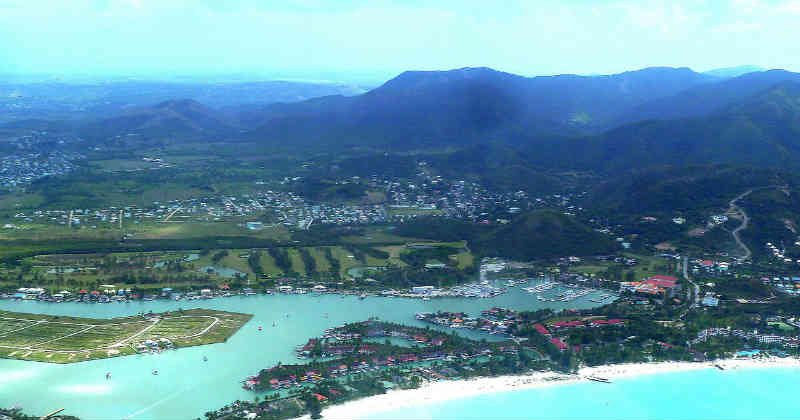
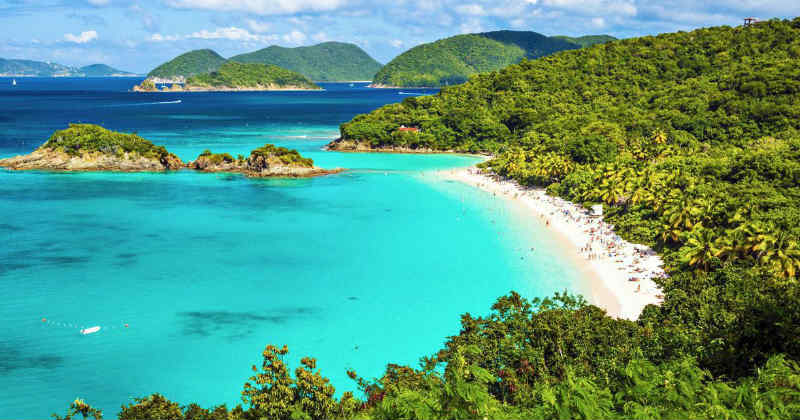
Antigua and Barbuda, a Caribbean archipelago, is in the process of finalizing a bill to legalize cannabis for religious, medical, and scientific purposes, but not for recreational use. Possession of less than 15 grams and 4 feet of cannabis has already been decriminalized. The text mentions patients’ right to access medication, the economic benefits associated with the creation of a new industry, and the right to freely practice one’s religion, with particular reference to the Rastafari community. He also points out the waste of public time and money spent on criminalization, as well as its social consequences, including discrimination against Rastafarians.
Provisions of the law
The bill establishes a government agency responsible for administering the new national cannabis industry, the Medicinal Cannabis Authority. It must maintain a registry of patients, healthcare professionals, and religious communities registered for cannabis use as described in the provisions of the law. It is responsible for establishing and enforcing regulations pertaining to the cultivation, processing, production, distribution, import, and export of medical cannabis, as well as for overseeing the supply chain. The government reserves the right to amend or revoke certain regulations.
This is the Medicinal Cannabis Authority which will grant the licenses, the various types of which are described below:
- License for the cultivation of medical cannabis (planting, harvesting, drying, trimming, packaging)
- License for a medical cannabis dispensary (location)
- Special License to Dispens Medical Cannabis (Individual)
- Licenses for medical cannabis lounges: spaces dedicated to cannabis use by patients
- License for medical cannabis testing laboratories that will conduct qualitative and quantitative analyses of medical cannabis to ensure compliance with the standards established by the Medicinal Cannabis Authority.
- License for the cultivation and processing of medical cannabis
- License to Manufacture Cannabis-Infused Products
- License for the Transportation of Medical Cannabis
- License for Research on Medical Cannabis
- License for the Import and Export of Medical Cannabis
A medical cannabis program
Individuals who wish to obtain the medication must get a prescription from a healthcare provider registered with the Medicinal Cannabis Authority. They will then receive a card that will allow them to obtain their medication at a dispensary. The cannabis and cannabis products sold there will come exclusively from licensed producers and processors and will have first undergone the appropriate quality tests at a specialized laboratory.
The medical cannabis program will cover the following conditions:
- cancer-related pain
- nausea caused by chemotherapy
- Parkinson's disease
- multiple sclerosis
- certain forms of epilepsy, including Dravet syndrome
- post-traumatic stress disorder
- autoimmune diseases such as AIDS and rheumatoid arthritis
- autism
- glaucoma
- Alzheimer
- Crohn's disease,
- Hepatitis B
- as well as anxiety, sleep disorders, and chronic pain.
The list may be expanded to include licensed healthcare professionals who are registered with the authorities and approved by the ministry.
The Creation of a New Industry
The state’s political representatives are well aware of international trends and the global growth of the medical cannabis industry. The text also specifies that the country intends to engage in discussions with reputable multinational cannabis companies by offering them the opportunity to establish some of their operations in the archipelago. This is also what is currently being done by Bermuda, another archipelago in the Caribbean. Through these «strategic partnerships,» the country would reap significant financial benefits in the form of taxes, as the medical cannabis industry is generally heavily regulated and taxed. The government plans to impose a 15% tax on the sale of medical cannabis and cannabis-derived products, as well as a 25% tax on exports. The government also plans to invest in the industry to generate revenue in the form of dividends.
Respect for Religions
The state constitution is supposed to guarantee the «protection of freedom of conscience,» which stipulates that all citizens must be able to freely practice their religion. However, for Rastafarians, cannabis is a sacred plant that is an integral part of religious rituals and daily life. The prime minister has, in fact, apologized for the discrimination this community has faced as a result of the criminalization of cannabis use. Decriminalization was an initial response to this social injustice, but under this new law, a special religious license will be granted to religious communities and practitioners to guarantee their right to consume cannabis as part of their beliefs.
Licenses granted for religious purposes exclude all commercial and financial activities related to cannabis. A license may be granted to an individual, in which case that person is no longer subject to the quantity restrictions established by decriminalization measures; however, licenses are primarily granted to sacramental dispensaries. These establishments will be authorized to distribute cannabis to members of religious organizations. They must comply with the same regulations as medical cannabis dispensaries but may operate only as nonprofit organizations.
What's the status of the bill?
The bill was approved on its third reading by the House of Representatives and must now undergo a final debate before becoming law. Prime Minister Browne has decided to organize a final public consultation involving Rastafarians and healthcare professionals on November 23: «We invite the various stakeholders to come and share their views on the bill (…) over the next 10 days, after which we will hold our final debate and pass the bill into law.».
For some, however, certain aspects of the law are not ideal. For example, sacramental dispensaries are only allowed to distribute 15 grams per member. According to Kiyode Erasto Straker, a member of a Rastafarian community, said, «For Rastas, these limits are a joke.» «We drink cannabis, we eat it, we make oils and other products from it. I applaud the effort, but we expect much more. I think the government should at least follow Jamaica’s example. Anything less is unacceptable.». Jamaica Since March 20, 2015, it has permitted the possession of 57 grams of cannabis and the cultivation of 5 plants per person.








Contest: Win a trip to Quebec to experience the hemp harvest firsthand

Bedrocan on Hold Amid Uncertainty Over Medical Cannabis

Newsweed Launches Its Own AI
A new tax of 0.5% could disrupt the hemp industry in Canada

Medical Cannabis and Driving: New South Wales Ends Automatic Penalties for THC

China's Yongji Health Takes Control of Tasmanian Botanics

Autism and Cannabis: Results from the First Placebo-Controlled Trial of NTI164

Which countries legalized medical cannabis before France?

From the boom in dispensaries to a purely medical approach: Thailand is revising its cannabis policy

South Korea is preparing to begin local production of medical cannabis to meet rising demand
-
 Cannabis and driving3 weeks ago
Cannabis and CBD: French Drivers Can Now Lose Their License Even Without a Positive Test Result
-

 Cannabis in France6 days ago
Which countries legalized medical cannabis before France?
-
Cannabis in France3 weeks ago
Cannabis Legalization: The LFI Bill Has a Major Problem—THC
-
Cannabis in the Netherlands2 weeks ago
One year after the launch of the Dutch cannabis experiment, the first trends are emerging
-
Business6 days ago
South Korea is preparing to begin local production of medical cannabis to meet rising demand
-
Cannabis in Thailand6 days ago
From the boom in dispensaries to a purely medical approach: Thailand is revising its cannabis policy
-
Cannabis in Argentina2 weeks ago
Argentina Opens Its Market to Hemp Flowers Containing 1% of THC
-
Cannabis in France2 weeks ago
French medical cannabis remains stalled at the Ministry of Health













You must be logged in to post a comment Login