

What can we expect from cannabis worldwide in 2019?

After decades of prohibition and taboo, cannabis has taken center stage and is the subject of international debate. While its recreational use remains controversial, its many medical and industrial applications are increasingly recognized. The year 2018 was by far the year the most important This rediscovery of cannabis was just the beginning. 2019 is already shaping up to be an eventful year. Every sector of the industry is set to experience significant growth. Here are a few predictions for what promises to be a pivotal year: 2019.
Medical cannabis
International recognition
Recognition of cannabis’s therapeutic properties is growing as more states legalize it medical cannabis. In 2019, the WHO, which had previously convened a committee of experts whose findings were submitted to it, will publish its recommendations for the reassessment of cannabis in international treaties.
Already legal in many countries in the Americas and Europe, medical cannabis will also be a topic of debate in parts of the world that are less advanced on this issue, such as Asia and Africa or France, not only for its therapeutic benefits but also for its economic potential.
The issue of medical cannabis cultivation and export will be crucial to the development of a global medical cannabis industry. For now, many countries import their medical cannabis from Canada which, along with the Netherlands and Coming soon: Israel, the only countries that export medical cannabis.
A possible reclassification of cannabis in the United States
As of now, 33 of the 50 U.S. states have legalized medical cannabis. Political and public pressure on current laws could well lead to changes, at least to allow for more research. Alex Wasyl, the CEO of Nexien BioPharma, hopes that in 2019, cannabis will be removed from the Schedule 1 from the list of Controlled Substances so that it can be «developed, studied, approved, regulated, and prescribed like any other drug.» It is also the opinion of the Director of the U.S. Public Health Service, Jérôme Adams, who recently called for the reclassification of cannabis, which is still classified under the most restrictive category at the federal level. In addition, in 2019, the the National Institutes of Health’s HEAL initiative, will investigate the pain-relieving properties of cannabis in an effort to find a solution to the opioid epidemic plaguing the United States.
More scientific innovation
While THC and CBD are the most studied and most mainstream, research and innovation will gradually begin to focus on other, lesser-known components of cannabis. For example, to less common cannabinoids (THCV or CBG) in the plant or to terpenes (the chemical compounds responsible for the smell and taste of cannabis).
New discoveries Further research into the potential of cannabis components is expected and will lead to the development of more effective medicinal formulations. These discoveries will be driven by the growing commercial and marketing interest in cannabis within the pharmaceutical industry and will be accompanied by a surge in patent applications.
Recreational cannabis
More states will legalize recreational cannabis
For now, the list of countries that have actually legalized recreational cannabis is short, as there are only two: Uruguay and Canada. However, it is likely to grow in 2019 since Luxembourg and Mexico plan to board the boat. It’s a safe bet that More U.S. states will also legalize recreational cannabis in 2019. For now, there are only 11 of them, but according to Graham Boyd, director of A New Approach to the CAP, ...they will be in the majority within two years.
With a new wave of legalization in Canada, flower sales are set to decline
In October 2019, Canada will legalize edibles and concentrates which will lead to a new wave of investment, speculation, and product development. Health Canada has already published the first drafts of regulations on this issue. As these new products enter the market, flower sales are likely to decline significantly. Significant investments have already been made in one category in particular: cannabis-infused beverages. The market is estimated to be worth $600 million in 2022.
The persistence of the black market
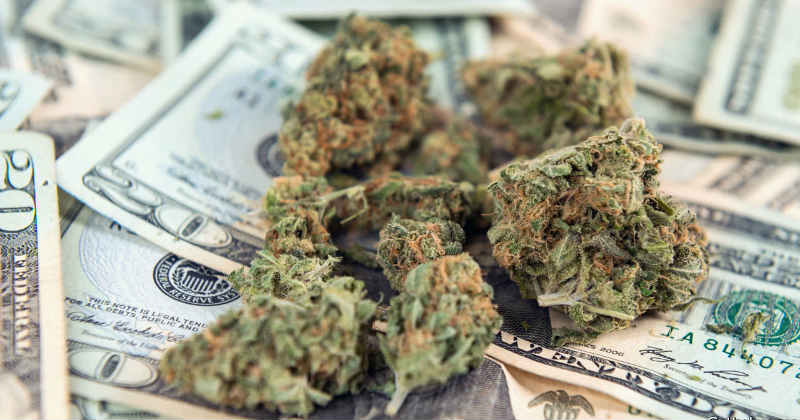
The goal of cannabis legalization is to eliminate the black market by replacing the supply of illicit products with a regulated product. However, in most places where cannabis is legal, regulatory policy choices—particularly regarding taxes—do not make the legal market attractive. The legal market is therefore limited in its ability to draw entrepreneurs and consumers away from the illicit market.
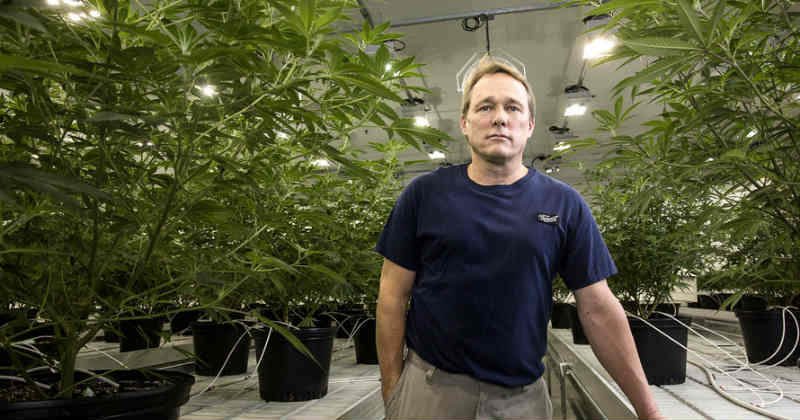
For Bill Levers, a California farmer (Beard Bros Pharms): «Unless they [the regulators] lower barriers to entry and reduce the amount of greed and taxes, they will fuel the black market, and the legal market will fail.» This situation is particularly acute in California, where Illegal growers are already a dime a dozen in the mountains of the Emerald Triangle for decades, but also in Canada in provinces such as Quebec where regulations are too restrictive.
Generally speaking, either the retail price of legal cannabis—if it is not competitive—will drive consumers back to the black market, or competition from the black market will lead to a drop in prices that will put legal businesses out of business. In addition to regulations, the issue of shortages and mismatch between supply and demand is also a factor contributing to the persistence of the black market.
Business / Stock Market
Industry leaders will stand out
According to Khurram Malik, CEO of Biome Grow, a Canadian producer, 2019 will be the year cannabis moves from theory to practice. Companies will have to demonstrate the quality of their strategy and their product with concrete figures. A divide will then emerge between profitable companies and those that are not, between those with a solid development plan and those without one. The latter will go bankrupt. This «return to reality» will be all the more pronounced as investors will now invest in the most profitable companies. Capital will flow toward these companies, strengthening their leadership position. There will therefore be fewer companies, but they will be more successful.
A surge in product innovation and the transfer of expertise across industries
According to Mike Gorenstein, CEO of Cronos Group, who recently concluded a partnership with the tobacco company Altria : «Overall, for the industry, 2019 will be marked by product innovation. We’re seeing an influx of specialists and creative people from other industries—whether food, beverage, tobacco, or cosmetics—who are joining the sector and working with cannabis experts to develop new products.».
The trend will therefore be toward the transfer of expertise from more traditional industries (and the political world (sometimes) and the emerging cannabis industry. This prediction is already coming true, since’A former Coca-Cola executive has just joined the management team at Charlotte’s Web. Among the upcoming innovations, we can envision the development of new low-dose products to attract new consumers.
More and more companies will be listed on Canadian and European stock exchanges
In the United States, funding issues are encouraging companies to go public in Canada. According to George Archos, CEO of Verano Holdings, This strategy was already a major trend in 2018, and it will continue to be so if federal restrictions on banks—which prevent them from investing in cannabis—remain in place. A bipartisan bill could be a game-changer in 2019: the STATES ACT.
This would protect the state cannabis industry from federal interference, allowing it to secure financing from banks. Another potential trend in 2019 is the increase in initial public offerings (IPOs) in Europe by overseas companies. The IPO of Danish producer StenoCare was a resounding success: the company’s value nearly quadrupled at the outset, and its shares are still trading at double their initial value. The Australian company Little Green Pharma, For example, it plans to go public in Frankfurt in 2019.
Industrial hemp
The United States is set to become a major player in the hemp industry
Since January 1, Hemp is legal in the United States at the federal level and, by extension, hemp-derived CBD is too (even if the FDA is less enthusiastic). Until now, CBD products—which are growing in popularity in the United States—were made from imported hemp or cannabis (and were therefore not legal outside the state of production). Today, with the legalization of hemp cultivation, the CBD industry can grow domestically and be traded within the country, thereby creating a unified national market estimated at $22 billion in the coming years. The United States, with its significant agricultural sector, will also be able to export its hemp worldwide, thereby competing with China and Europe, currently the leading hemp producers. Given the many derivatives of hemp and its growing popularity, trade in the product will intensify, and the United States is positioning itself for a leading role in this market.
The acquisition of European hemp producers by Canadian companies
Europe is a major producer of hemp. For example, it holds a large number of patents on hemp plant genetics. Hemp is used to make textiles, building materials, and plastic substitutes for the automotive market. With the rise of CBD, industrial hemp is taking on a new dimension, and a wellness sector dominated by cosmetics and food is developing. The European market is doubly attractive because hemp production there is already significant and well-established, and the unified market of some 500 million consumers offers clear commercial advantages. Thus, for large Canadian companies, the acquisition of European hemp growers is timely. This trend began in 2018 and is likely to accelerate significantly in 2019.
New opportunities
Hemp has many applications: it is used in the textile, automotive, and construction industries. New applications are constantly being discovered, such as replacing graphene—a carbon crystal prized for its countless qualities (high strength, high thermal conductivity, excellent electrical conductivity)—which is used in the manufacture of batteries and superconductors. The cost of producing graphene is currently high. Its synthesis through graphite extraction is a difficult and expensive process. However, scientists at the University of Alberta in Canada have succeeded in producing graphene nanosheets by heating and compressing hemp fibers. Hemp could therefore be used to make batteries and superconductors. This would reconcile Elon Musk with his soft spot for weed.
Cannabis and Well-being
The CBD Boom
Bethany Gomez, the research director at Brightfield Group considers the explosion of CBD-derived products to be one of the biggest trends of the coming year: «You can’t go anywhere without hearing about or seeing CBD—on the shelves of thousands of retailers, in the pages of popular newspapers such as the Wall Street Journal and Vogue or on celebrities» Instagram feeds… and within the medical community.” This CBD boom will lead to innovations and diversification in terms of products (cosmetics, pet products, beverages, fitness products, food) as well as a consolidation of the cannabis industry sector dedicated to CBD and its derivatives. The latter can be derived from THC-rich cannabis or hemp. For legal reasons, it is generally extract hemp. This boom will therefore enable the hemp industry to diversify and gain greater recognition.
Hemp is set to take the cosmetics industry by storm
Cannabis is appearing more and more frequently on the labels of cosmetic products. These products are made from hemp/CBD, which is touted for its many benefits in cosmetics. Major retailers have already begun marketing these products, and this trend is set to grow in 2019. The fact that cannabis is now finding its way into everyday products is contributing to its normalization.
In France, where law enforcement agencies are conducting an unofficial war against CBD retailers, Mildeca (to remain consistent with his statement) clarified that «this practice could constitute a criminal offense of incitement to use narcotics.» In France, therefore, it would only be possible to make CBD-based cosmetics from the seeds or stems of the hemp plant—a niche already being exploited, for example, by the Breton company Ho Karan.
CBD: The Latest Trend in Food
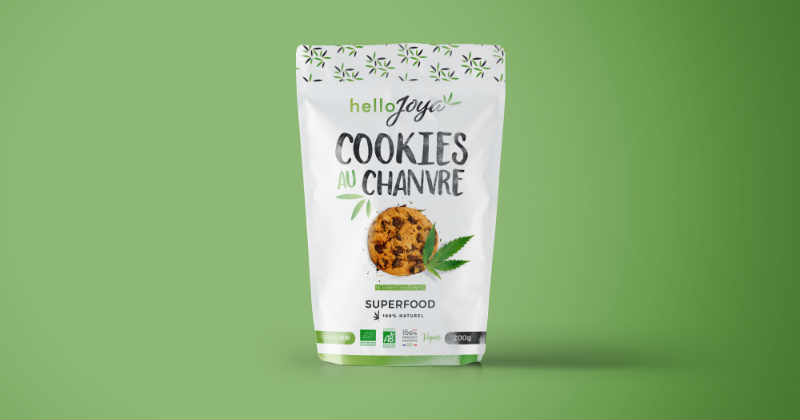
CBD is already shaping up to be a major food trend in 2019. He is known to have many benefits as a dietary supplement. However, despite being legal by default, the inclusion of CBD in food products faces some resistance from state health authorities. Austria has banned him in the food industry. Spain as well. In the United States, the law prohibits its use in food because the compound is also an active ingredient in certain medications (Epidiolex); however, following the legalization of hemp, the FDA is working to remove these legal barriers.














The «cannabis» fine raised to 500 euros under the RIPOST Act

Sacha Baron Cohen Brings Ali G Back to Life During a Surprise Appearance at Wimbledon

Botswana Paves the Way for Commercial Hemp Cultivation

The First Authorized Medical Cannabis Cultivation in the Canary Islands

Germany Ends Public Health Insurance Coverage for Medical Cannabis Flowers

Cannabis Legalization in Pennsylvania Once Again on Hold

Democratic senators are reviving a bill to legalize cannabis at the federal level in the United States

A THC:CBD oil shows promising results in reducing agitation in people with dementia

San Francisco Allows «Cannabis Cafés»

Kenya Denies Rastafarians the Right to Use Cannabis
-

 Cannabis in Europe4 weeks ago
Bosnia and Herzegovina Continues to Roll Out Medical Cannabis Following Its Legalization
-
Cannabis in France4 weeks ago
France Submits the Long-Awaited Decree on the Reimbursement of Medical Cannabis to the Council of State
-
Cannabis in the U.S.4 weeks ago
The DEA Begins Hearings on the Federal Rescheduling of Cannabis
-
Business3 weeks ago
China Invests $10 Million in Medical Cannabis in Lebanon
-
Cannabis in Thailand4 weeks ago
Thailand Threatens Cannabis Shops with Severe Penalties
-
Cannabis in Australia2 weeks ago
South Australia is working to identify more water-efficient hemp varieties
-
Exchange4 weeks ago
Glass House will be the second U.S. cannabis company to list on the New York Stock Exchange
-
Cannabis in Africa2 weeks ago
Kenya Denies Rastafarians the Right to Use Cannabis















You must be logged in to post a comment Login