Intensive cannabis cultivation: a danger for the environment?

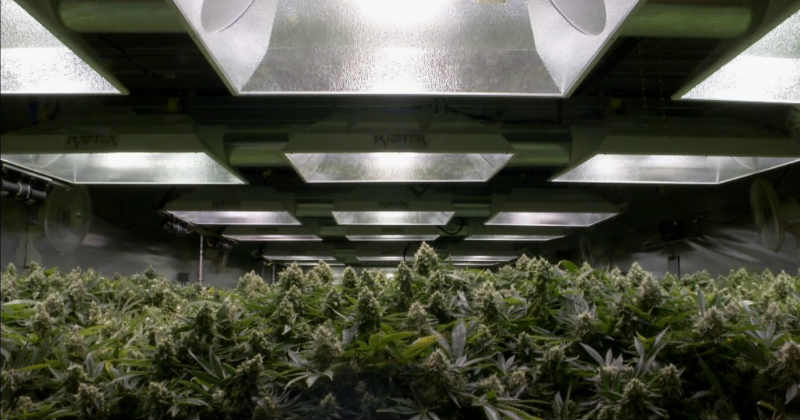
Growing hemp in open fields requires little water and no pesticides. For cannabis, on the other hand, modern cultivation methods seek to maximize every aspect of its growth, with numerous external inputs. Whereas the cannabis market is booming and with a massive industry on the horizon, can cannabis still be considered environmentally friendly?
High water and energy consumption
For the most important cannabis producers on the market, indoor cultivation is obviously the most profitable method, as it is not subject to the vagaries of the climate and allows optimum control of product quality. However, this method, used for example by the Canadian market leaders Aurora and Canopy, is energy- and water-hungry. With constant artificial light, air conditioners and dehumidifiers, the production infrastructures, which can cover millions of square meters, consume thousands of dollars in electricity every month.
According to Werner Antweiler, Professor of Business and Environmental Economics at the University of British Columbia, this is a worrying fact: “The carbon footprint could be quite significant given the intensive production methods”. In the United States, research conducted by the University of California, Berkeley, estimates that American production facilities account for a total of 1% of the country's annual electricity consumption, and emit approximately 50 million tonnes of greenhouse gases.
Cannabis production is also water-intensive, and could therefore prove problematic in certain regions. Selina Lee-Andersen, an environmental lawyer based in Vancouver, points out that a cannabis plant needs around 22 liters of water a day: “you can imagine that this could be a major problem in places like California, which are prone to drought”.
In view of these facts, the cannabis production industry could stand in the way of the environmental objectives set by governments. Canada, for example, has pledged to reduce its greenhouse gas emissions by 30% by 2030, which, according to environmentalists, should involve restructuring agriculture in order to reduce the sector's carbon footprint.
Opting for greener methods
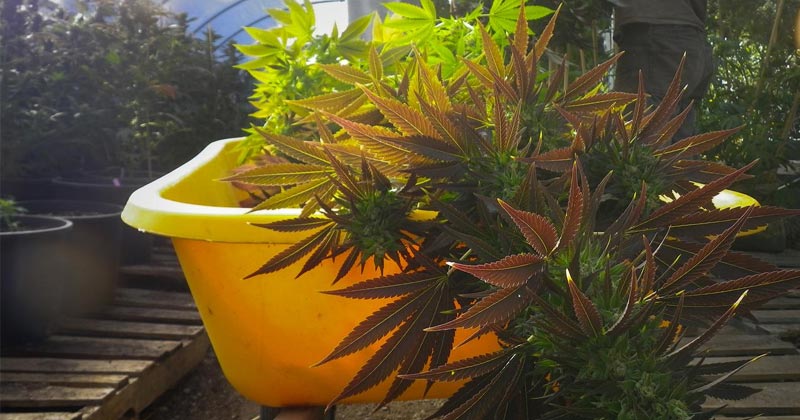
There are alternative methods to indoor production, although less profitable in terms of production. The Cannabis plant adapts very well to natural constraints and can be easily grown outdoors. It also requires virtually no addition of pesticides and herbicides. Outdoor cultivation moderates production energy requirements thanks to natural light, air quality and rainwater. The drawbacks of this method are that production quality is less controllable and cultivation is impossible in winter, which can be problematic in terms of yield.
Another alternative is greenhouse cultivation, which maintains year-round production while reducing the need for air conditioning and light. This is the method adopted by Hydropothecary Corp. a Quebec-based producer committed to sustainable cultivation, which only grows under glass.
“In summer, we hardly need any electricity because the days are so long and the sun is so strong,” explains Terry Lake, the company's vice-president. The company also uses software that calculates precisely how much water each plant requires, enabling it to store any excess and distribute water accordingly to avoid wastage. The advantages of this type of production do not, however, stand up to the constraints of winter.
The cannabis law in Canada does not report any production standards at federal level, but companies like Aurora are still trying to reduce their environmental impact by experimenting with (more) responsible techniques such as LED lighting systems or intelligent irrigation systems.












The United States Bans «Non-Natural» Synthetic Cannabinoids; THC Remains Legal Until December 11

Morocco's first CBD medication for epilepsy hits pharmacy shelves

November 2026's CBD Highlights: 10 Flowers and Rosins to Discover from 5 French Producers

Vanuatu is still trying to get its medical cannabis sector off the ground after years of delays

Snoop Dogg Opens His Cannabis Club in Barcelona

In Texas, Democrats and Republicans are beginning to find common ground on the legalization of cannabis

Proposition 215, 30 Years Later: When Cannabis in California Was a Movement, Not an Industry

Village Farms Expands Cannabis Production in the Netherlands while its European Business Jumps by 75%

Bedrocan's bankruptcy delays medical cannabis reform in the Netherlands

Where to Buy Affordable CBD in 2026? Our Tips for Making the Right Choice
-
 Business3 weeks ago
Cronos Completes the Acquisition of CanAdelaar for 57.5 million euros
-
Cannabis in France4 weeks ago
France already has 3,000 cannabis retail outlets. None of them are legal.
-
Cannabis in Quebec2 weeks ago
Cannabis: What France Could Learn from Quebec, Eight Years After Legalization
-
Cannabis in the U.S.4 weeks ago
A DEA report confirms that there are no fatal cannabis overdoses
-
Business4 weeks ago
Tilray is accelerating its operations in Europe thanks to a license in Portugal
-
Cannabis in New Zealand2 weeks ago
Chronic Pain: New Zealand Is Testing Cannabis to Improve Sleep
-
CBD4 weeks ago
October 2026 CBD Highlights: 10 Strains and Hash to Discover from 5 French Producers
-
Cannabis in Morocco4 weeks ago
Morocco: Three Cannabis-Based Medications Approved for the Treatment of Epilepsy















You must be logged in to post a comment Login