
California: illegal cultivation sites, a danger for wildlife

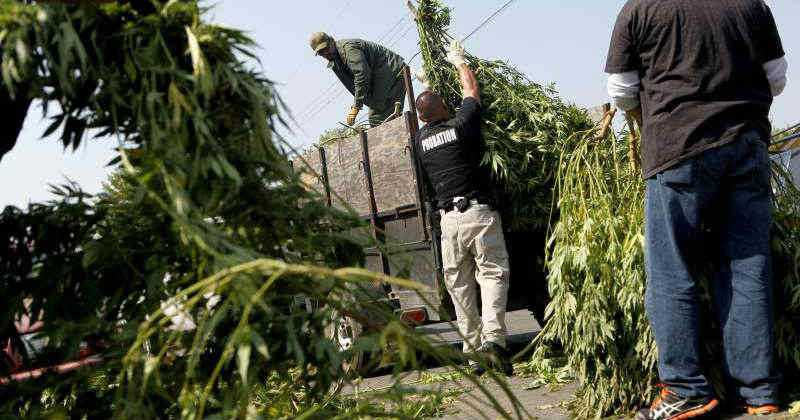
In California, illegal cultivation sites are legion and represent a real danger to local flora and fauna. A report by Integral Ecology Research Center estimates that 90 % of these illegal sites use hazardous pesticides. A figure six times higher than in 2012.
A growing trend
Researchers at Integral Ecology Research Center have noticed a worrying increase in the number of illegal sites using toxic products: in 2012, they represented just 15 %, in 2017 75 % and this year 90 %.
These sites are usually hidden away in mountains and forests, right in the heart of the wilderness. Toxic products, including pesticides, These chemicals, fungicides and fertilizers then find their way into rivers, poisoning fish and ultimately contaminating legal crops downstream.
U.S. Forest Service Chief Forester Vicki Christiansen has estimated that 4.5 million liters of water are diverted from California's forests to supply these illegal sites. California is not the only region affected by this scourge: traffickers have been found in 72 national forests in 21 states. Vicki Christiansen calls it a «major national problem».
Among the highly toxic chemicals most frequently found is carbofuran, an insecticide banned by most countries in the world for its devastating effects. «One teaspoon of this product can kill a 140-kilogram bear,» explains Gabriel, a member of Integral Ecology Research Center.
According to a report published earlier this year, This product was found in over 70 % illegal cultivation sites in California last year. Normally, a bottle of less than a liter must be diluted in about 19,000 liters of water. Illegal growers dilute it in just 10 to 20 liters of water, or use it as a concentrate.
Concentrated, the product takes 2.5 years to disappear instead of one month. A problem that delays the work of clean-up crews who cannot expose themselves to such high levels of toxicity. So far, 160 toxic sites have been cleaned up, but a list of 830 contaminated sites is still waiting to be declared less toxic so that they can be cleaned up.
The authorities' battle
Last May, the authorities announced the allocation of $2.5 million in funding to crack down on and clean up illegal cultivation sites. Since the beginning of the year, clean-up teams have discovered 95 illegal sites from which they have removed over 10 tonnes of chemicals, 640,000 cannabis plants, over 11,340 kilos of harvested cannabis, as well as 60 tonnes of waste, including 135 kilometers of irrigation pipes.
They also recovered $225,000 in cash and over 80 firearms. Attorney General Scott McGregor explains that products such as carbofuran come from Mexico and pass through drug cartels. 80 people have been arrested this year.
The cannabis produced is mostly destined for the illegal market from other states, because California's strict regulations and quality standards mean that it cannot be sold through legal channels. Traces of chemical components would be detected immediately. Mourad Gabriel of the research center explains that pesticide residues are visible at a level of 30 % in the plant itself.
Alongside the hunt for illegal sites, California, which is still working on new regulations, is starting a war against all unlicensed stores. Recently, the California Cannabis Bureau filed two criminal lawsuits against a dispensary and a cannabis delivery company without licenses.
Last May, the Bureau had already initiated the repression against stores that failed to comply with regulations on store location and product visibility. All in all, California's cannabis boom is likely to keep local and federal authorities on their toes for some time to come.











Argentina Opens Its Market to Hemp Flowers Containing 1% of THC

The French Socialist Party still doesn't know how to approach the legalization of cannabis

Science in the City International: Paris at the Heart of Transatlantic Scientific and Medical Dialogue

Christine Fréchette is alienating Quebec’s cannabis industry

Rima Hassan: When «Drugs» Become a Political Weapon

From Marathons to Ultratrails: How Extreme Running Affects the Endocannabinoid System

Four days of THC may make breast cancer less aggressive, according to a new study

Medical Cannabis: 14 Organizations Finally Call for Enforcement of the Law

One year after the launch of the Dutch cannabis experiment, the first trends are emerging

High Ground: The Crash of a Plane Full of Marijuana That Made History in Yosemite
-
 Cannabis and driving1 week ago
Cannabis and CBD: French Drivers Can Now Lose Their License Even Without a Positive Test Result
-
Cannabis in France2 weeks ago
Cannabis Legalization: The LFI Bill Has a Major Problem—THC
-

 Cannabis in the Netherlands4 days ago
One year after the launch of the Dutch cannabis experiment, the first trends are emerging
-
Cannabis in France5 days ago
French medical cannabis remains stalled at the Ministry of Health
-
Business4 days ago
The United Kingdom Is Moving Closer to a Regulated CBD Market
-
Cannabis in Europe2 weeks ago
Andorra Paves the Way for Medical Cannabis Cultivation
-
Cannabis in France2 weeks ago
Drought: Could Hemp Become the New Hope for French Farmers?
-
Cannabis in Argentina19 hours ago
Argentina Opens Its Market to Hemp Flowers Containing 1% of THC











You must be logged in to post a comment Login