
Is Jean Costentin dangerous?

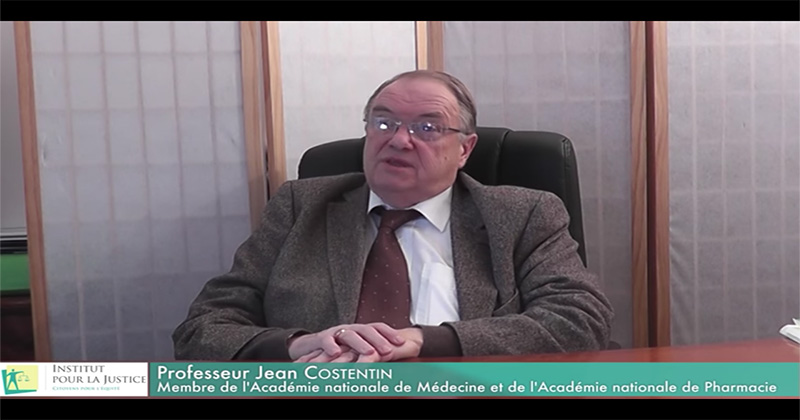
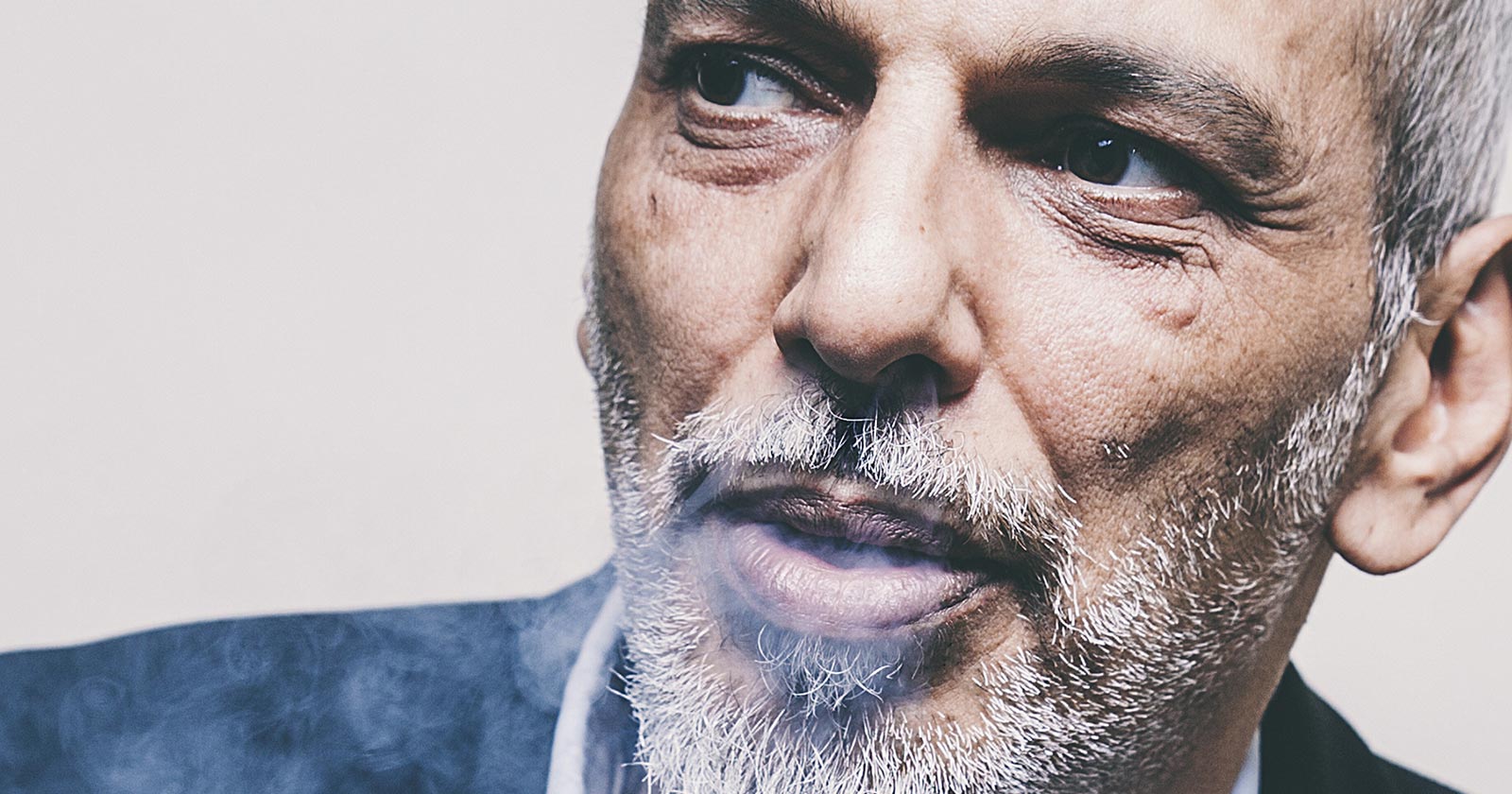
Jean Costentin is a professor of pharmacology at the University of Rouen and a member of the National Academy of Medicine and Pharmacy. In 2006, he published a book titled « Stop Cannabis! »where he wages a veritable war against cannabis, whether used for medicinal or recreational purposes. In his writings and through his numerous public appearances, Professor Costentin promotes a prohibitionist view of hemp, consistently taking a hostile stance against cannabis, sometimes clearly distorting the facts. Here is a review of his little white lies.
Cannabis and road accidents
Jean Costentin asserts that «300 traffic fatalities are attributable to the isolated use of cannabis, which is a significant number. The total number of deaths is around 3,500.»
Why is that wrong? According to the Centaure website, cannabis is certainly involved in some traffic accidents, but it is only in 1 out of every 8 accidents, or 230 deaths per year, a rounded and exaggerated figure. It is also worth noting that the presence of THC in the blood does not necessarily mean that the driver is under its influence, unlike with alcohol.
According to a another study published on the website Cannabis-Med.org, It is clear that cannabis use is not directly linked to traffic accidents. Driving under the influence of alcohol remains the leading cause of accidents. THC is also less impairing than a Schedule 2 or 3 analgesic (such as tramadol or codeine).
Costentin also explains in this video that under the influence of alcohol and cannabis, the number of fatal accidents increases 14-fold. In fact, that's true.
Cannabis and Addiction
Jean Costentin tends to exaggerate the addictive potential of THC: «THC is a drug, a substance that can lead to addiction, and therefore a substance that causes drug dependence and addiction.».
Professor Costentin also frequently refers to what Americans call the «stepping-stone theory,» or, in French, the theory of drug escalation. Put simply, this theory suggests that starting out by smoking a joint eventually leads to using heroin. Costentin discusses this in the video linked above. .
«We’ll call it the ‘tolerance phenomenon’: when the effects of cannabis wear off because the smoker is already using it daily, the user will quite naturally turn to other drugs like cocaine, ecstasy, and ultimately, heroin,» he asserts.
Why is that wrong? Numerous scientific studies have examined this theory, which emerged in the 1930s—at the height of racial segregation in America—and was directed specifically at Black and Latin American populations. The most compelling study, cited by Release, shows that cannabis users rarely move on to harder drugs, while the first substance used by cannabis users remains alcohol.
Cannabis and Legalization
Jean Costentin is, of course, opposed to the legalization of cannabis: «Legalization would send a terrible message to our youth that cannabis is nothing to be taken seriously. A government should not facilitate its citizens« access to a toxic substance. In surveys conducted in middle and high schools, when abstinent students were asked, »Why don’t you use cannabis?«, 40% answered »Because it’s toxic« and 60% »Because it’s illegal.« Lifting the ban would lead the former to believe it is not dangerous and would, for the latter, serve as an encouragement of the »let’s go for it» variety.”
Why is that wrong? Lifting the ban on a drug for adults does not, in principle, encourage its use among younger people. Examples exist today, first and foremost right here in Europe (the Netherlands and Portugal), and further afield in the U.S. states that have legalized cannabis. According to the latest figures, 40.1% of the French population has already tried cannabis, compared to 25.1% in the Netherlands and 9.1% in Portugal. In Colorado, it is those aged 35 and older who benefit most from the legalization of cannabis, with a significant increase among older adults.
A change in French law—which currently restricts freedom of expression regarding cannabis—would enable more targeted prevention efforts among young people and better early awareness of the risks of cannabis use for minors and young adults.
Cannabis and schizophrenia
The latest theory put forward by the professor of pharmacology concerns cannabis and schizophrenia. Jean Costentin specifically stated that THC is responsible for schizophrenia: «long suspected but now well established epidemiologically and well explained neurobiologically.» He cites Andreasson’s seminal study (published in 1987 in The Lancet medical website) which «found that smoking more than 50 joints in total before reaching the age of conscription increased the risk of developing schizophrenia by a factor of six.»
Why is it biased? The link between cannabis and schizophrenia is more complicated than scientists thought 20 years ago. The risk is very real, but Costentin «overlooks» the causal link. Studies have shown, for example this one, that people with schizophrenia were more likely to turn to cannabis. Cannabis may therefore trigger schizophrenic symptoms in people who are predisposed to the condition.
Cannabis and Jean Costentin
We had already mentioned Jean Costentin during the last presentation by the Academy of Pharmacy, of which Costentin is a member, on the topic of cannabis legalization. In this debate, every argument is worth considering. It can be objectively said that there are both benefits and risks to legalizing any substance. But we must not compromise the truth, the numerous available scientific studies, or the examples set by neighboring countries. The danger of cannabis also stems from the fact that certain «reasons» are biased from the outset.
Mehdi Bautier









CBD is said to promote athletic recovery, without improving performance

294 cannabis clubs in Chile: a booming movement with uneven distribution

Chronic Sciatica: New York Approves First Clinical Trial of a THC-Based Medication

United States: The DEA is accelerating the integration of medical cannabis at the federal level

Florida is nearing one million patients using medical cannabis

Uruguay Revives Its Plan to Allow Tourists to Legally Access Cannabis

In Brazil, researchers are developing an innovative CBD eye drop

Autism: Medical Cannabis Is Linked to Reduced Anxiety

The $28 billion U.S. hemp market remains under threat

Jamaica Eases Small Farmers' Access to the Cannabis Market
-
 Business6 days ago
The legal cannabis market in New York exceeds 4 billion $ in revenue
-

 Cannabis in France2 weeks ago
Which countries legalized medical cannabis before France?
-
Business2 weeks ago
South Korea is preparing to begin local production of medical cannabis to meet rising demand
-
Cannabis in the Netherlands4 weeks ago
One year after the launch of the Dutch cannabis experiment, the first trends are emerging
-
Cannabis in Thailand2 weeks ago
From the boom in dispensaries to a purely medical approach: Thailand is revising its cannabis policy
-
Cannabis in France4 weeks ago
French medical cannabis remains stalled at the Ministry of Health
-
Cannabis in Argentina3 weeks ago
Argentina Opens Its Market to Hemp Flowers Containing 1% of THC
-
Cannabis and driving2 weeks ago
Medical Cannabis and Driving: New South Wales Ends Automatic Penalties for THC

















Jean-Michel Sinte
May 16, 2017 at 11:36 p.m.
«»The primary drug used by cannabis users remains alcohol.»» No studies are needed to know that alcohol does not automatically lead to other drugs. If we were to accept his theory on cannabis and apply it to alcohol, we would find this phenomenon among alcohol users. The percentage of cannabis users with substance use disorders is estimated to be just over 7% of users. That’s slightly less than for alcohol, and besides, alcohol kills directly. The prevalence of recreational poly-drug use involving illegal substances among cannabis users is quite high due to the shared illicit market. But all, or nearly all, illicit drug users consume cannabis because it is part of the same distribution network, but also because cannabis acts as a moderator for other drugs. It reduces negative effects (especially during the comedown) and enhances positive effects. To claim that cannabis leads to other drugs because of the addiction it causes is nothing more than a myth, since it has been scientifically proven that this is not the case. That said, we must not downplay the risks of cannabis, due to its illegal status, but also because of the THC it contains, especially for young people. But compared to what they consume, cannabis seems like a harmless little thing. This professor never mentions the number of addicts or deaths caused by prescription drugs—which are likely accepted by the academic establishment. This makes him, aside from the fact that he is neither a doctor nor an addiction specialist, a highly unreliable source on this subject.
Jean-Michel Sinte
May 16, 2017 at 11:36 p.m.
«»The primary drug used by cannabis users remains alcohol.»» No studies are needed to know that alcohol does not automatically lead to other drugs. If we were to accept his theory on cannabis and apply it to alcohol, we would find this phenomenon among alcohol users. The percentage of cannabis users with substance use disorders is estimated to be just over 7% of users. That’s slightly less than for alcohol, and besides, alcohol kills directly. The prevalence of recreational poly-drug use involving illegal substances among cannabis users is quite high due to the shared illicit market. But all, or nearly all, illicit drug users consume cannabis because it is part of the same distribution network, but also because cannabis acts as a moderator for other drugs. It reduces negative effects (especially during the comedown) and enhances positive effects. To claim that cannabis leads to other drugs because of the addiction it causes is nothing more than a myth, since it has been scientifically proven that this is not the case. That said, we must not downplay the risks of cannabis, due to its illegal status, but also because of the THC it contains, especially for young people. But compared to what they consume, cannabis seems like a harmless little thing. This professor never mentions the number of addicts or deaths caused by prescription drugs—which are likely accepted by the academic establishment. This makes him, aside from the fact that he is neither a doctor nor an addiction specialist, a highly unreliable source on this subject.
jean-louis Bouvarel
May 17, 2017 at 6:41 p.m.
Hi, NewsWeed team
In 2012—I’m referring only to what’s printed in that year’s road safety report; a specific figure that has not appeared in subsequent reports: 58% of accident victims (fatal accidents) who tested positive for cannabis were not at fault for their accident. Yet Professor Costentin «forgets» to account for them. There are therefore barely more than a hundred cases where cannabis is implicated in a fatal accident. «Implicated» does not mean it is a proven cause, but it is assumed…
Compared to the population that shows no signs of any form of addiction behind the wheel, cannabis is therefore far less likely to cause accidents… whatever the police may say to the contrary, as they like to believe in moralistic nonsense… More than half of all accidents, fatal or otherwise, are caused by people considered «saints.» But we can’t punish them.
These figures are certified by Chanvre Info, but you can and should check them for yourselves. That said, I think that when we’re under the influence, we shouldn’t drive—it’s better that way! I’m not saying that driving high is okay, but that the authorities are cracking down on us a little too hard on this one! And that these anti-cannabis laws, like those concerning the workplace, socially exclude us and push us into precarious situations.
Greetings to the NewsWeed Team and thank you for your amazing work … Best regards
JLB from Chanvre Info