
Farid Ghehiouèche: «The legalization of cannabis can have many positive consequences on people's lives».»

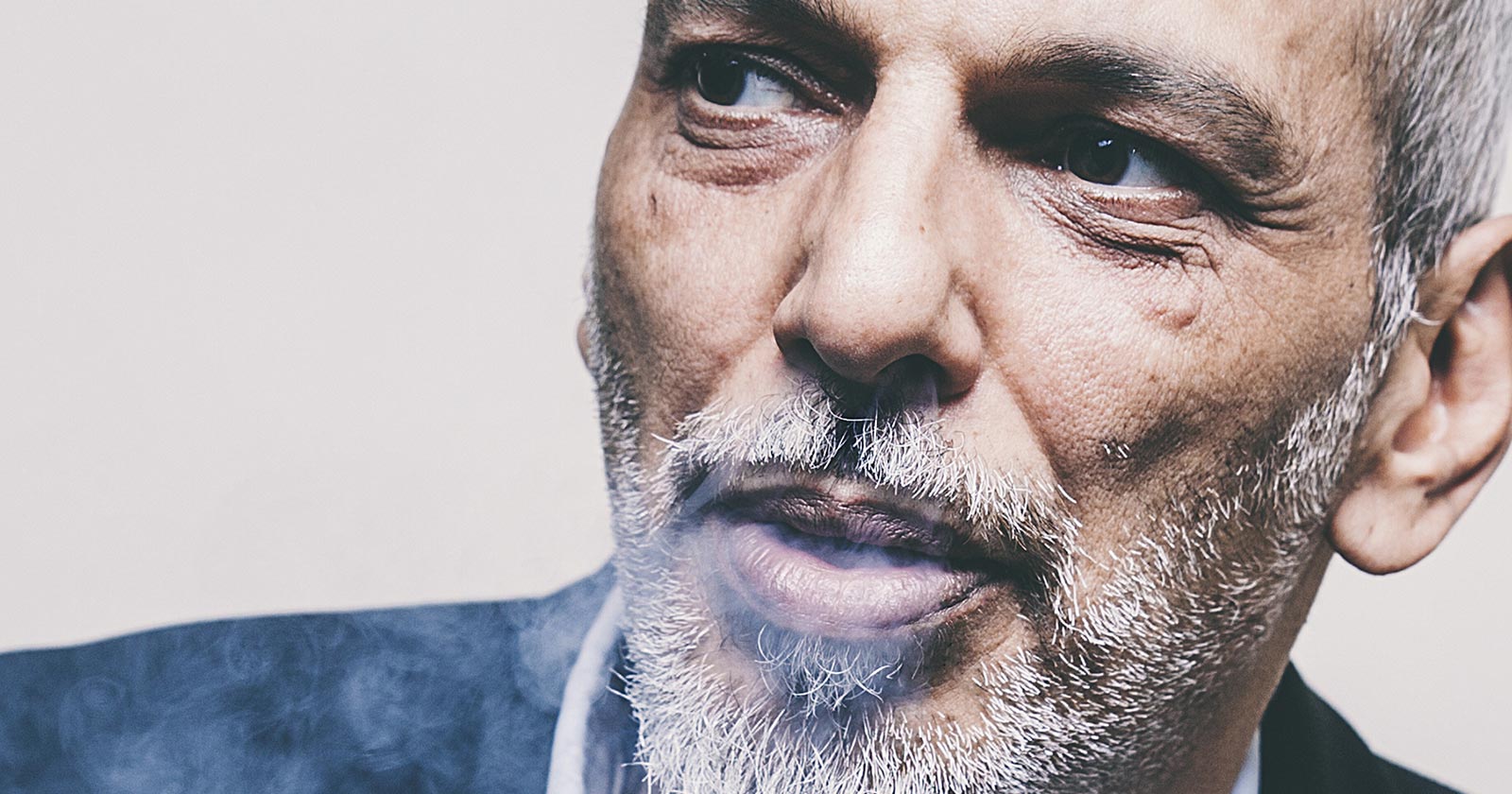
Farid Ghehiouèche is a key figure in the French cannabis scene. Co-founder of Cannabis Sans Frontières, user representative at Chanvre & Libertés – NORML France, and organizer of the World Cannabis March, among other roles, Farid is running for the second time in the legislative elections, in the eighth district of Essonne, against Nicolas Dupont-Aignan. This gave us the opportunity to interview him and ask him what’s on his mind.
Could you tell us about your group, Cannabis Sans Frontières?
The Cannabis Sans Frontières collective was founded in May 2009 for at least two good reasons. The first concerned the way political parties carefully avoided taking a stand on certain issues under specious pretexts such as «public opinion isn’t ready» or «it won’t win us any votes.» The second stemmed from the way in which the people affected (drug users, victims of the police state —the marginalized, the homeless, sex workers, Travellers, visible minorities—mistakenly view themselves as second-class citizens, out of fear of drawing attention to themselves or that their demands won’t be taken seriously, or even to spare themselves potential trouble…
With Cannabis Sans Frontières, the idea was to use the European elections to bring the reform of drug control policy to the forefront of public debate, just as Sarkozy had buried the release of the Reuter/Trautmann report commissioned by the EU [Editor's note: which showed that drug enforcement had not been effective between 1998 and 2007]. As if to thumb its nose at them, our programmatic platform was based on the recommendations of the Catania Report adopted by the European Parliament in 2004 and proposals that, unfortunately, are still being ignored today.
It is clear that the legalization of cannabis can have many positive effects on people's lives.
You're a cannabis activist—why did you choose to become an activist?
I would describe myself more as a citizen of the world and a defender of universal human rights. If I have become a pro-cannabis activist, it is because I have experienced injustices, endured arbitrary police checks and police provocation… perhaps even linked to the color of my skin or my social background (see, for example, in 2012 in Evry, when the municipal police arrested me for my latest election campaign event). I had—and still have—the feeling that I will never be able to live normally in an open and tolerant society as long as there is an unjust law that tramples on my basic rights.
The main reason for my commitment lies in the words of the Public Prosecutor of Bourg-en-Bresse, who, in 1991, delivered the following closing argument—words that remain etched in my memory: «If you listen to what he says, he wants to add yet another scourge—on top of alcohol and tobacco—with the serious consequences we’ve seen in Spain and the Netherlands»… At the time, I had just explained to the judge, in response to his questions about my consumption and my motivation to obey the law: «It is not you, nor the police officers, who are mistaken in enforcing the law; it is the legislature that is shirking its responsibilities by failing to grasp the reality of the situation and amend the law accordingly.».
Since then, I have continued to stay informed and take action to repeal the law of December 31, 1970, and to establish a fair and effective drug control policy.
Even today, thirty-five years later, that minor run-in with the French justice system when I was young is still preventing me from getting a visa to travel to the United States!
I hope that, one day in my lifetime, we will finally have a policy that separates the markets for different substances based on differentiated access criteria according to their scientifically recognized toxicity. Perhaps we’ll realize that alcohol is arguably even more difficult to regulate than cannabis, or that cannabis will help us better control the problems caused by alcohol and cigarettes!
What do you say to those who oppose the legalization of cannabis?
It all depends on how well-founded their arguments are, because their statements are often based not on knowledge but on personal opinions.
First, let’s consider that the current repressive status quo is a boon for criminal organizations that thrive on trafficking, since demand remains high.
I explain to them that the examples of the Netherlands and Portugal show that a policy of tolerance toward drug use can be much more effective in curbing consumption among young people, a group that is a real cause for concern in France.
I would like them to understand that cannabis isn’t the problem, but rather that a lack of information about its nature, composition, and origin—as well as a lack of proper guidance on its use—can lead to misuse. If they’re afraid of the effects of a plant, why aren’t they afraid of the Datura flowers that adorn public gardens?
Finally, since I am convinced that opponents of legalization cloak themselves in a form of self-righteous morality, and that their blindness is the root cause of health, social, and economic catastrophes, and environmental disasters, as well as harm to society as a whole and to individuals that is far more serious than the drugs themselves… it is difficult to find common ground with those who espouse the same logic as President Duterte in the Philippines or that of a Zetas gang leader in Mexico.
Do you think Emmanuel Macron will address the decriminalization of cannabis during his five-year term, beyond the move to treat it as a misdemeanor that has already been announced? In your opinion, will France follow the U.S. model?
I certainly hope he won’t remain timid, like his predecessor, and that he won’t limit himself to a cosmetic measure—one that could have even more negative consequences if this change isn’t consistent with a comprehensive prevention policy… If our young president doesn’t grow old too quickly, if he’s in tune with today’s world, with the realities of the 21st century, and engaged with global issues—and above all, if he wants to leave his mark on history—he can tackle the issue of regulating the market for psychotropic substances. If he is intelligent and well-advised, he will truly be able to bring order to the global financial system and seriously combat the criminal organizations—including terrorist groups—that profit from this trafficking.
As we know, this isn’t just a public health issue. In the developments observed across the Atlantic, economic factors take center stage: the cannabis market represents a significant source of revenue for a state’s budget, and by regulating it, governments can tax it and thereby gain new resources to fund certain public services. Depending on how it is implemented, the legal regulation of cannabis can open up a wealth of new economic opportunities.
What are your expectations for these legislative elections?
I hope that the future National Assembly will be representative of all segments of French society, and that many elected lawmakers will have publicly committed to reforming policies aimed at combating addictive behaviors by presenting their constituents with a proposal to legalize and regulate the cannabis market.
You received 0.42% of the vote in the 2012 legislative elections. Do you think the Pirate Party’s support will be enough this year against Nicolas Dupont-Aignan?
In the name of «ousting the incumbent,» in the name of «renewal,» in the name of the «presidential majority,» in the name of the fight «against the National Front,» in the name of «national harmony,» there are plenty of reasons why NDA shouldn’t be elected for a fifth time. Admittedly, my 2012 tally of 187 votes may seem ridiculous compared to his 18,000 votes, which make him virtually eligible to win in the first round. Given my resources and the campaign I’m running, I hope to do better, but I won’t do 100 times better to replace this far-right bigwig. Unless, that is, there are so few abstainers that they decide on June 11 to make their voices heard at the polls. But I’m not deluding myself, because the electorate is still very conservative—bordering on reactionary—and therefore, on the face of it, not very receptive to the proposals of the Pirate Party, Cannabis Sans Frontières, and the Open Unitary Libertarian Federation (F.L.U.O.).
What are the main challenges you face in your struggle today?
The main difficulties stem from the lack of a genuine, in-depth public debate, which leaves us at the mercy of false arguments and fruitless controversies. The root of the problem is Article L3421-4, which prevents the use of cannabis from being presented in an accurate light. How can we form an informed opinion when we are forced to «objectify» the issue by constantly spreading the same alarmist lies—such as «the theory of escalation,» «IQ loss» to counterbalance the «pro» arguments…
Above all, there is a problem with funding for the pro-legalization movement, because in France we lack organizations with budgets of several million euros to counterbalance the power of the prohibitionist lobby (such as OCRTIS, Big Pharma, the Church of Scientology, the Jehovah’s Witnesses, Civitas, etc.).
For example, in Germany, thanks to a TV game show and a prize of 1 million euros, the D.H.V. organization was able to shift public opinion and influence the government within a matter of months [editor's note: in English, here], to the point that our German neighbors have set a goal of becoming pioneers in access to medical cannabis.
By participating in the legislative election—beyond my own campaign—the Cannabis Sans Frontières + Pirate Party + F.L.U.O. candidates are champions of all these changes: Emmanuel MAILLARD in the 2nd constituency of Cantal, Florent BARBE in the 4th constituency in Paris, Béatrice BUDIN in the 1st constituency of Maine-et-Loire, and Maxime LAGLASSE and Serge DORDOIGNE in the 6th constituency in Paris.










Newsweed Launches Its Own AI
A new tax of 0.5% could disrupt the hemp industry in Canada

Medical Cannabis and Driving: New South Wales Ends Automatic Penalties for THC

China's Yongji Health Takes Control of Tasmanian Botanics

Autism and Cannabis: Results from the First Placebo-Controlled Trial of NTI164

Which countries legalized medical cannabis before France?

From the boom in dispensaries to a purely medical approach: Thailand is revising its cannabis policy

South Korea is preparing to begin local production of medical cannabis to meet rising demand

In the United States, cannabis use among high school students has reached an all-time low

Medical cannabis use surges by 64 % in Denmark
-
 Cannabis and driving3 weeks ago
Cannabis and CBD: French Drivers Can Now Lose Their License Even Without a Positive Test Result
-

 Cannabis in France3 days ago
Which countries legalized medical cannabis before France?
-
Cannabis in France3 weeks ago
Cannabis Legalization: The LFI Bill Has a Major Problem—THC
-
Cannabis in the Netherlands2 weeks ago
One year after the launch of the Dutch cannabis experiment, the first trends are emerging
-
Business4 days ago
South Korea is preparing to begin local production of medical cannabis to meet rising demand
-
Cannabis in Argentina2 weeks ago
Argentina Opens Its Market to Hemp Flowers Containing 1% of THC
-
Cannabis in France2 weeks ago
French medical cannabis remains stalled at the Ministry of Health
-
Cannabis in Thailand3 days ago
From the boom in dispensaries to a purely medical approach: Thailand is revising its cannabis policy














Anis Mg
June 1, 2017 at 15 h 07 min
We
I'm counting on you to provide solid arguments regarding the Cure for the
Cancer, Diabetes, Chronic Disease, Leukemia, Metablastoma… with extracts from the
Cannabis, if you want to convince the ignorant and uneducated of the truth
medicine.
Sirdec
June 1, 2017 at 10:55 PM
It's people like him who make things happen.
Respect.
Stef Anguille
August 1, 2017 at 7:21 p.m.
+1 for that great point! Let's legalize cannabis and decriminalize all drugs so we can better control consumption.