
Questions raised by the first days of legalization in Canada


The whole world is talking about nothing else (although in France we're too busy talking about Mélenchon), Canada has just legalized cannabis And there’s widespread euphoria: endless lines, people who’ve been camping out since 3 a.m. to be the first to buy legal cannabis, and overjoyed cannabis enthusiasts indulging in a full-blown celebration. Nevertheless, beyond the initial euphoria, the legalization of cannabis in Canada raises a number of questions.
Will supply meet demand?
According to Alain Brunet, president of the SQDC, said the company is receiving 50 orders per minute, whether in-store or through its website. Demand is surging at a similar rate everywhere else, and some provinces are already experiencing stockouts on certain products: in Ontario on its website, as well as in Alberta and Manitoba. Some, such as the mayor of Montreal, Valérie Plante, attributes this surge in demand to the euphoria surrounding legalization. She refers to a «novelty effect» that «will fade.».
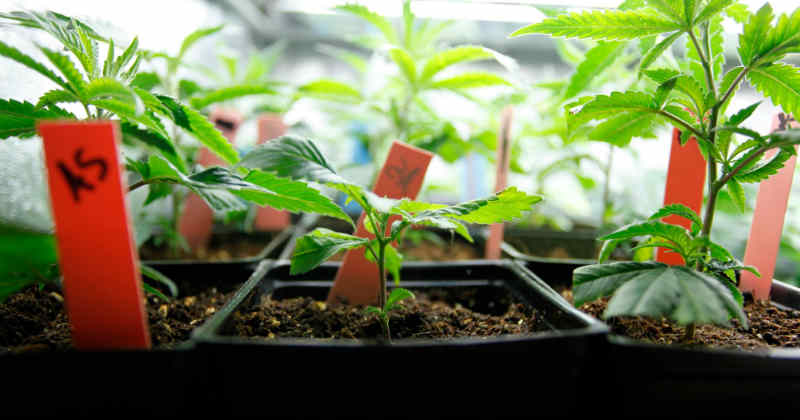
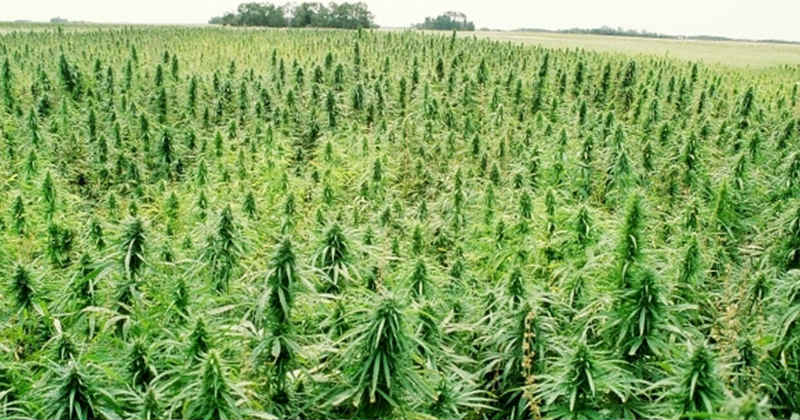
However, growing cannabis, like any agricultural product, takes time, and supply chains are not immediate, which means that shortages are likely to be prolonged. According to official statistics, 16 % of the Canadian population smoked in 2017, which amounts to nearly 6 million people, with only 120 producers. It will take some time for these producers to be able to meet the demand, especially since it is likely to increase.
Will the black market disappear?
Since it is currently impossible for Canadian producers to grow enough cannabis to meet demand, the black market will continue to exist for some time. Bill Blair, the minister in charge of reducing organized crime, plans to capture 25 % of the black market share by the end of 2018. This is quite ambitious given the current shortages—which began as early as the second day of legalization—and the ease of turning to a local dealer. Dealer networks are already well-established, and their prices are adjusting to legalization. Furthermore, there are no age restrictions on buying cannabis from a dealer, even though the penalties dealers face are quite dissuasive.
Is investing in cannabis still a good idea?
Investors have clearly understood that the sector is going through a period of adjustment. Since legalization took effect, cannabis company stocks have fallen by about 15 % on the stock market. However, they had increased by a similar amount in the days leading up to the legalization. Investors who benefited from a very strong run before legalization withdrew their money, both for profit and out of caution.
Investing before legalization and investing after legalization are not part of the same strategy at all. Before legalization, it was purely speculation, but now the cannabis sector will have to adapt to the realities of the industry and the market. The slow pace of this adaptation means that investing in cannabis now is a long-term strategy. Dramatic stock market movements are likely to reoccur as legalization approaches. edibles.
Will legalization backfire on Justin Trudeau?
Even though legalization gives the impression that everyone is satisfied, a survey shows that only a small fraction of Canadians (2 out of 10) are interested in legal cannabis. While the legalization plan is politically bold, it is also highly controversial. Perceptions of its success or failure will be a major issue in next year’s Canadian federal elections. It is still too early to tell how things will turn out. Justin Trudeau will surely go down in history as the prime minister who legalized cannabis in Canada, but he may pay a political price for it.
The conservative opposition condemns a «process [that] was rushed through for purely political reasons in order to meet a deadline he himself had set.» «Justin Trudeau is ignoring the very serious concerns raised by those who will have to deal with the consequences of his decisions,» said Pierre Paul-Hus, a Conservative MP. His colleague Gérard Deltell even donned mourning attire to underscore what he described as a dark day for Canada. He denounced the trivialization of cannabis and highlighted public health concerns.
Not a great day for Canada…
A sad day for Canada
A Sad Day at the Office pic.twitter.com/0qLEwxKdznADVERTISING— Gérard Deltell (@gerarddeltell) October 17, 2018
Doctors, too, say they are concerned about the legalization of cannabis. The Canadian Medical Association Journal denounces «an uncontrolled national experiment that will pit the profits of cannabis producers and tax revenue on one side against the health of Canadians on the other.» Ms. Kesall, the newspaper’s editor-in-chief, points out that if there is increase in consumption, legalization will be a failure, and adds: «We cannot expect the cannabis industry to scale back its growth ambitions and set a goal of reducing consumption.» On this point, in fact, the cannabis industry is already lobbying for more lenient regulations.












Cannabis: Wisconsin Could Finally Legalize It in 2027

Argentina Opens Its Market to Hemp Flowers Containing 1% of THC

The French Socialist Party still doesn't know how to approach the legalization of cannabis

Science in the City International: Paris at the Heart of Transatlantic Scientific and Medical Dialogue

Christine Fréchette is alienating Quebec’s cannabis industry

Rima Hassan: When «Drugs» Become a Political Weapon

From Marathons to Ultratrails: How Extreme Running Affects the Endocannabinoid System

Four days of THC may make breast cancer less aggressive, according to a new study

Medical Cannabis: 14 Organizations Finally Call for Enforcement of the Law

One year after the launch of the Dutch cannabis experiment, the first trends are emerging
-
 Cannabis and driving2 weeks ago
Cannabis and CBD: French Drivers Can Now Lose Their License Even Without a Positive Test Result
-
Cannabis in France2 weeks ago
Cannabis Legalization: The LFI Bill Has a Major Problem—THC
-

 Cannabis in the Netherlands6 days ago
One year after the launch of the Dutch cannabis experiment, the first trends are emerging
-
Cannabis in France7 days ago
French medical cannabis remains stalled at the Ministry of Health
-
Business6 days ago
The United Kingdom Is Moving Closer to a Regulated CBD Market
-
Cannabis in Europe2 weeks ago
Andorra Paves the Way for Medical Cannabis Cultivation
-
Cannabis in Argentina3 days ago
Argentina Opens Its Market to Hemp Flowers Containing 1% of THC
-
Cannabis in France3 weeks ago
Drought: Could Hemp Become the New Hope for French Farmers?














You must be logged in to post a comment Login