Is outdoor cultivation the future of the Canadian cannabis industry?

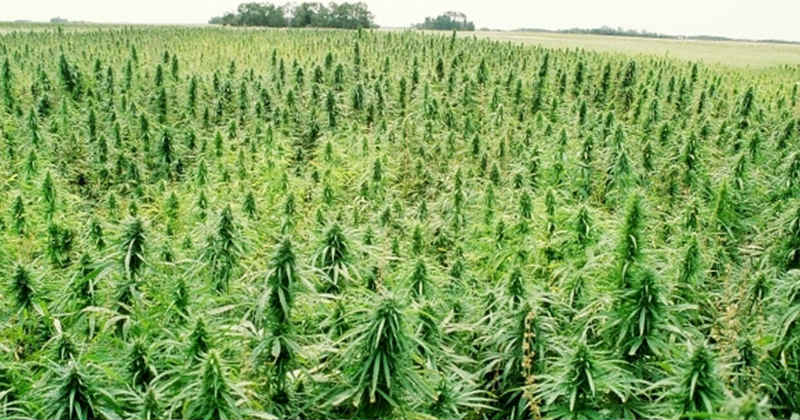
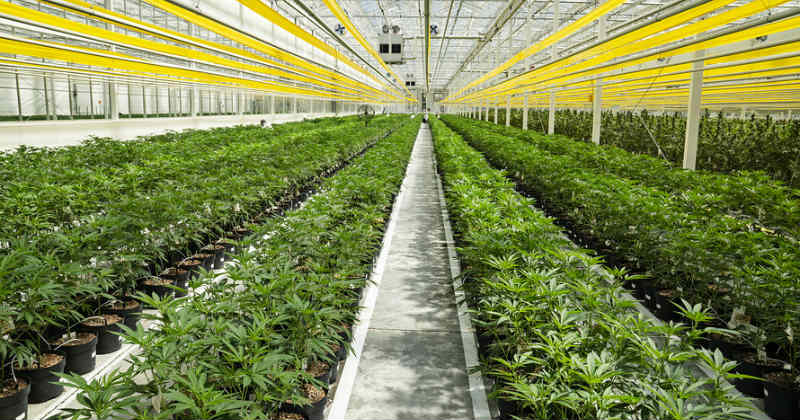
For now, Canadian cannabis is grown indoors or in greenhouses. These were, in fact, the only cultivation methods authorized by Canada’s medical cannabis program, but the Cannabis Act which to legalized recreational cannabis on October 17 It also legalizes the cultivation of cannabis for commercial-scale outdoor production. This proposal could revolutionize the current industry and create a two-tiered industry.
The Challenges of Outdoor Cultivation
Some people doubt that outdoor cannabis cultivation adds any value to the industry. It does, in fact, present significant challenges. First and foremost is Canada’s climate: growing cannabis outdoors requires a frost-free period of 75 to 90 days during a short growing season, and most of the most popular strains have an even longer flowering period. Cannabis also needs plenty of light, not too much wind, and high-quality water—factors that are difficult to control outdoors.
Growing methods also differ: outdoor cultivation is typically done using cuttings to avoid the presence of male plants, which could pollinate the females through the air, causing them to produce more seeds and fewer flowers. Outdoors, cannabis is also susceptible to various pests and the vagaries of the weather. In short, all these challenges stem from the fact that the environment cannot be controlled as it can indoors or in a greenhouse, resulting in more unpredictable harvests.
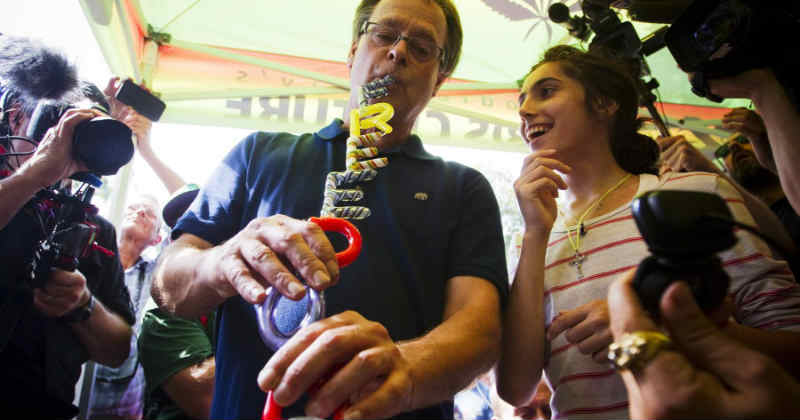
Nevertheless, some, such as Ian Dawkins, president of the Cannabis Trade Association of Canada, point out that these uncertainties are not unique to cannabis cultivation but are common to agriculture in general. In any case, according to Mark Spear, the founder of Burnstown Farms Cannabis Company, a company that has applied for a license to grow cannabis outdoors and plans to cultivate 50 acres on the outskirts of Beckwith Township, southwest of Ottawa, these natural constraints in no way prevent the production of high-quality cannabis.
https://twitter.com/spearster55/status/1023213428188434432
Profits and What They Mean for the Future of the Industry
The main commercial advantage of outdoor cultivation is, of course, lower production costs. According to the consulting firm Cannabis Compliance : «Production costs for efficient, large-scale indoor cultivation facilities range from 1$ to 3$ per gram, whereas commercial outdoor production could, in theory, bring those costs down below 20 cents per gram. At that price, even if a large portion of the crop is damaged by weather or pests, it doesn’t really make a difference.» In September 2017, Canopy Growth’s average production costs for growing, harvesting, processing, and shipping one gram of cannabis were approximately 2.37$.
For Kelly Coulter According to NORML, outdoor cultivation—in addition to offering obvious commercial advantages such as lower production costs for larger yields—represents a return to nature, with cannabis grown in the open air and under sunlight rather than «factory-grown cannabis » grown «in an ultra-scientific manner in a controlled climate and under quasi-quarantine conditions.» Furthermore, according to her, growing cannabis under these conditions does not even guarantee high quality. She is referring here to the RedeCan product recall in which Some customers found mold.
Another benefit of outdoor farming is the reduced environmental impact. In 2017, The California Public Utilities Commission stated that «the difference in energy costs between indoor cultivation, greenhouse cultivation, and outdoor cultivation was 78 to 1 to 0.» In fact, outdoor cultivation eliminates nearly all of the energy requirements for commercial cannabis cultivation, of which approximately 89% is dedicated to lighting, ventilation, and air conditioning. according to a 2012 study. Furthermore, the construction and installation of these energy-intensive facilities takes between six months and three years, according to a report presented to Parliament in 2017 titled: Outdoor cannabis cultivation: a vital component of Canada's cannabis regulations. The authors point out that «there is a real, recognized risk that the industry, as it is currently defined, may not be able to grow quickly enough.».
A bipolar market
The supply challenges facing the Canadian cannabis industry have reignited the debate over outdoor cultivation. With the future legalization of edibles and concentrates, the production of which requires a large amount of raw materials, it seems increasingly appropriate to pave the way for an outdoor cultivation industry. Even Rewak, the director of the manufacturers’ association Cannabis Canada Council, which had been lobbying lawmakers to ban outdoor cultivation, admitted that it might turn out to be a necessity. According to him, This production could become «a supply of raw material for oil production—not only for the medical market but also for the recreational market—with the legalization of edibles »and concentrates scheduled for next year.".
So far, The most vocal opponents of outdoor cultivation are licensed growers because, according to Kelly Coulter: «It completely destroys their business model.» Earlier this year, Bruce Linton, Canopy’s CEO, was mocked when he tried to convince a group of senators visiting his facilities that outdoor cultivation would cause security issues by exposing the crops to theft by drones. The idea had been mocked by a Canadian Gorafi specializing in cannabis.
According to Ian Dawkins, Licensed producers are simply trying to protect their multimillion-dollar investments in «high-tech bunkers with 45-centimeter-thick walls and metal reinforcement.» He explains that the introduction of outdoor cultivation in certain U.S. states has led companies to slash prices to remain competitive. «We’re going to see the market begin to transform into what’s known as a bipolar market,» he says.
Mark Spear shares this view and also predicts a two-tiered industry: «Outdoor growers will become dinosaurs within the next decade. There will only be a handful of them left producing premium-quality cannabis flowers, and people will pay for it, but that will account for only 10% of the market. The rest will come from greenhouse or outdoor cultivation sites.».
Which actors?
The first license for outdoor cultivation was filed by 48 North whose co-director co-founded The Green Organic Dutchman, one of Canada's largest producers, after acquiring Good & Green Another Canadian medical cannabis producer that owns a 100-acre farm in southwestern Ontario. It appears that medical cannabis producers are already anticipating competition from outdoor cultivation. The farm will have a production capacity of approximately 40,000 kg of dried cannabis per year starting in the spring of 2019. By comparison, the company’s indoor cultivation facilities in Brantford have a production capacity of only 1,000 kg per year, and its greenhouse facilities in Kirkland Lake have a capacity of 2,500 kg. The cannabis produced outdoors will be used by the company to produce concentrates. In this way, major producers are already securing their raw materials by staying ahead of potential competition.
On the other hand, other producers are hesitant to enter the business because the government imposes a tax based on weight rather than on THC or CBD content. Furthermore, Health Canada enforces rules for outdoor cultivation that are just as strict as those for indoor cultivation. Cultivation sites must be equipped with surveillance cameras along the entire perimeter, motion detectors, intrusion alarms, and access controls that log everyone entering and exiting the perimeter. Security fences around the site must be equipped with microphone cables that detect movement or vibrations near the fences. All of this requires significant resources and favors large producers who already have substantial capital.








JIHE 2026: Japan’s Largest Trade Show Dedicated to Hemp and CBD Returns to Tokyo with More Than 100 Industry Players
New Caledonia: The Courts Clear the Way for the Return of CBD

The Brazilian medical cannabis market continues to grow

Morocco: Three Cannabis-Based Medications Approved for the Treatment of Epilepsy

Canopy Growth Receives New EU-GMP Certification to Strengthen Its Presence in Europe

Three years after legalizing medical cannabis, Albania continues to establish regulations for it

The first plant-based medical THC spray arrives in the United Kingdom

Medical Cannabis in Germany: THC Prices Vary by a Factor of 12

France already has 3,000 cannabis retail outlets. None of them are legal.

Morocco's exports of legal cannabis have expanded to 15 countries
-
 Business2 weeks ago
The legal cannabis market in New York exceeds 4 billion $ in revenue
-

 Cannabis in France4 weeks ago
Which countries legalized medical cannabis before France?
-
Business4 weeks ago
South Korea is preparing to begin local production of medical cannabis to meet rising demand
-
Cannabis in France4 days ago
France already has 3,000 cannabis retail outlets. None of them are legal.
-
Cannabis in Thailand4 weeks ago
From the boom in dispensaries to a purely medical approach: Thailand is revising its cannabis policy
-
Cannabis in the U.S.5 days ago
A DEA report confirms that there are no fatal cannabis overdoses
-
Cannabis and driving3 weeks ago
Medical Cannabis and Driving: New South Wales Ends Automatic Penalties for THC
-
Cannabis in France3 weeks ago
France’s Drug Policy Chief Defends Cannabis Prohibition... and Runs Into the Facts
















You must be logged in to post a comment Login