
In Chile, a raid on a medical cannabis dispensary exposes flaws in the system


The Chile acknowledges For several years now, the medical use of cannabis and permits, under certain conditions, its cultivation for therapeutic purposes.
But between a prescription and actual access to a controlled substance, the framework remains incomplete. The’Operation Imperio Amsterdam, carried out in August against the organization linked to the National Clinic, a network of 21 clinics, has suddenly brought this contradiction back to the forefront of the debate.
The investigation, conducted by the Aysén Regional Prosecutor’s Office in collaboration with specialized units of the Carabineros, led to 42 raids in nine regions and 72 arrests, according to information released by Chilean authorities. The case involves, among other things, allegations of trafficking, cultivation, diversion of authorized crops, criminal conspiracy, and money laundering.
According to the prosecution, the organization allegedly used its purported medical operations to organize the production, supply, transportation, and sale of cannabis. The defense, of course, disputes this interpretation.
A Gap Between Prescription and Treatment
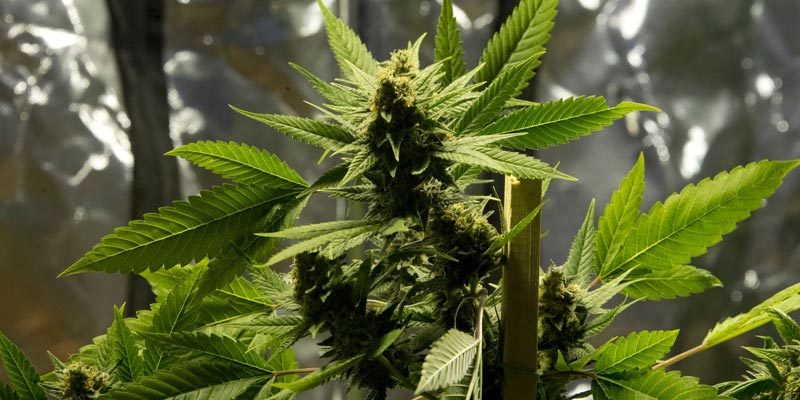
Since May 2023, the Chilean Law No. 21,575 strengthened the recognition of crops grown for medical treatment. Article 8 of Law 20,000 provides that a prescription from the attending physician may authorize the cultivation of cannabis for therapeutic use. The medical document must specify, in particular, the diagnosis, the treatment, its duration, and a method of administration other than smoking.
The problem arises when the patient lacks the space, knowledge, or time needed to grow their own crop.
The law also provides for a pharmaceutical route, allowing for the dispensing of controlled substances, extracts, and cannabis-based tinctures under certain conditions. However, there is no specific regulatory framework that clearly defines how dispensaries operate.
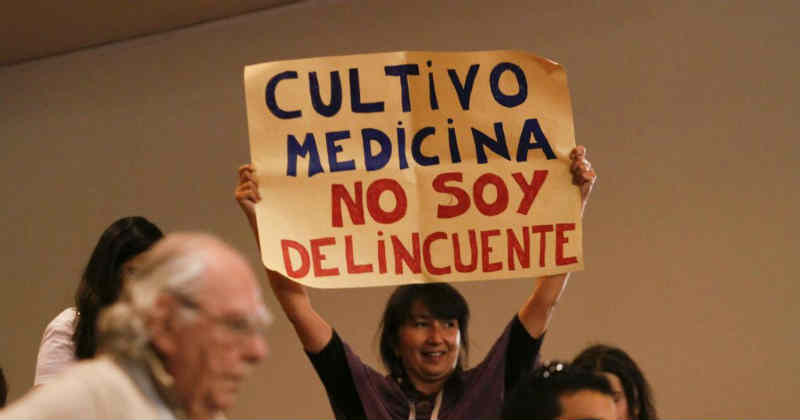
It is precisely this gray area that fuels the conflict surrounding the nonprofit model. Some Patients could theoretically be grouped together to pool their resources and infrastructure, but Article 8 does not explicitly address the delegation of cultural responsibilities to a collective organization.
From the authorities’ perspective, this lack of specific provisions cannot automatically serve as a basis for large-scale supply and distribution structures. For proponents of the model, however, it primarily illustrates the inadequacy of the regulatory framework.
Where does the association end and distribution begin?
The challenge also lies in the scale of the operation. Growing cannabis for multiple patients requires facilities, staff, equipment, testing, and logistical coordination. A nonprofit organization can fund its activities through member contributions, pay for office space, or hire employees without these elements necessarily implying a profit motive.
But in the absence of specific rules, it becomes difficult to draw the line between the pooling of resources and commercial activity.
Several questions therefore remain unanswered: How many plants can an association grow? How can a harvest be transported to patients in other regions? How are members’ contributions calculated? What happens when an association’s production is no longer sufficient to meet demand?
The prosecutor's office is particularly interested in the cannabis traceability used by the organization. According to his hypothesis, some of the products could come from other crops, or even from the black market. This aspect is central to a case in which the claimed medical purpose is not, on its own, sufficient to establish the legal origin of the production.
Traceability and Quality
The debate also concerns the quality of products intended for patients. A plant’s composition can vary depending on its genetics, light, humidity, and growing and storage conditions. For medical use, these factors can have significant implications.
A truly structured system should therefore make it possible to identify the THC and CBD concentrations, but also, when relevant, those of others cannabinoids. Tests focusing in particular on heavy metals, fungi, and mycotoxins are also cited as necessary safeguards.
The problem is that a doctor’s prescription and the quality of the product are two different things. A prescription indicates that a doctor considers a treatment to be appropriate; it does not, on its own, allow for a precise determination of the composition or origin of the product dispensed to the patient.
This issue presents Chilean clinics with a complex challenge: ensuring both the legality of their supply and an adequate level of health oversight.
Access to medical care, which remains a social issue as well
One final point that the case brings to light: the cost of access to medical cannabis.
Even when a legal avenue exists, patients must be able to see a doctor, obtain a prescription, follow up on their care, pay for their treatment, and continue it over the long term. These expenses can pose a barrier for certain segments of the population.
The nonprofit model addresses this challenge in part by allowing for the sharing of certain infrastructure and costs, particularly when the government does not fulfill this role.
The real challenge for Chile now is to answer this question: When a doctor prescribes a cannabis-based treatment to a patient who is unable to produce it themselves, who is legally permitted to grow it, under what rules, with what safeguards, and through what channels can it reach the patient?
For now, access to medical cannabis exists in theory, but actual access remains subject to legal interpretations and procedures that have not yet been clearly defined.
















Mexico's Supreme Court Authorizes Cannabis-Infused Edibles for Personal Use

French medical cannabis remains stalled at the Ministry of Health

Things are heating up between Sherbinski and Doja

Cookies Ordered to Pay $61.5 Million in a Dispute with Its Investors

Frenchfarm is launching its B1G1 clearance sale + free gift

Czech Republic: CBD shops selling synthetic cannabinoids are in the police's crosshairs

Cannabis and CBD: French Drivers Can Now Lose Their License Even Without a Positive Test Result

Could CBN protect the aging brain? Scientists uncover a promising new mechanism

In Haute-Savoie, a town is trying to combat drug trafficking… with posters

3 French Companies Betting on Cannabis… Abroad
-
 Cannabis and driving5 days ago
Cannabis and CBD: French Drivers Can Now Lose Their License Even Without a Positive Test Result
-
Cannabis in France1 week ago
Cannabis Legalization: The LFI Bill Has a Major Problem—THC
-
Cannabis in Europe2 weeks ago
Andorra Paves the Way for Medical Cannabis Cultivation
-
Cannabis in France2 weeks ago
Drought: Could Hemp Become the New Hope for French Farmers?
-
Cannabinoids1 week ago
What if CBD enhanced the effects of THC? A comprehensive analysis challenges a common misconception
-
Cannabis in the U.S.2 weeks ago
United States: Congress Rejects Ban on THC Derived from Hemp
-
Cannabis in Quebec2 weeks ago
Cannabis in Quebec: The 21-Year-Old Age Requirement in the Spotlight
-
Cannabis in France20 hours ago
French medical cannabis remains stalled at the Ministry of Health














You must be logged in to post a comment Login