French MPs table proposal to legalize recreational cannabis

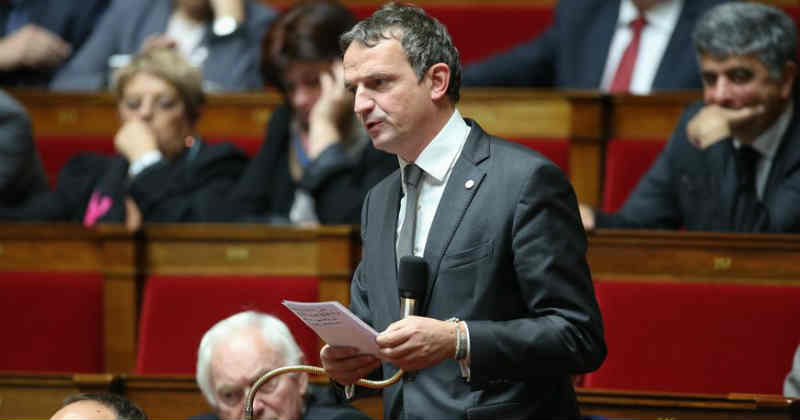
On the initiative of François Michel Lambert, elected representative for the Bouches-du-Rhône region, some fifteen MPs today tabled a proposal to legalize recreational cannabis. The aim is to establish a state monopoly on cannabis production and distribution.
An admission of failure
«France's essentially repressive anti-cannabis policy has failed to curb trafficking and reduce consumption. Worse still, demand is constantly on the increase, supply is growing and diversifying, and there is no evidence of any effectiveness in either the criminal justice responses or the prevention measures taken», writes the MP in the introduction to his text.
This observation of failure is made more and more frequently by elected representatives of all stripes, but also by intellectuals, healthcare professionals and civil society organizations. Most recently, an article co-signed by 70 leading figures public statements on the «ineffectiveness of prohibition» and the need to regulate recreational cannabis consumption.
With the aim of putting an end to repression, favoring prevention operations and controlling product quality, François Michel Lambert proposes «to move away from a policy of total repression towards a policy of regulated supervision of production, consumption and sales, combined with a policy of prevention in terms of risky behavior and public health, particularly aimed at the youngest and most vulnerable members of society».
The bill has been co-signed by the following MPs: Sylvia Pinel, Paul Molac, Jean-Michel Clément, Jeanine Dubié, Frédérique Dumas, François Pupponi (Libertés et territoires), Delphine Bagarry, Annie Chapelier, Hubert Julien-Laferrière, Pierre-Alain Raphan and Cécile Rilhac (La République en marche), Régis Juanico (apparenté PS), as well as Eric Coquerel, Loïc Prud'homme (La France insoumise) and Sébastien Nadot (non inscrit).
How should cannabis be regulated?
François Michel Lambert has a very specific vision of cannabis legalization. It would be entirely state-supervised, thanks to the creation of a public agency: the Société d'exploitation du cannabis (SECA). This agency would be responsible for «supplying seeds to farmers authorized to produce cannabis and concluding operating contracts with them». It would then redistribute production by supplying all retailers. It would also be responsible for setting and annually updating minimum prices for cannabis and related products.
According to the MP, this state monopoly would make it possible to develop a French cannabis industry by entrusting cannabis production to farmers and sales to tobacconists. Growers will have to apply to their local prefecture for prior authorization to operate. The opening of sales outlets will also be subject to prior authorization from the departmental prefect and the positive opinion of the mayor of the commune concerned.
«The establishment of a monopoly for the production and sale of cannabis through the creation of a national company, SECA, will make it possible to regulate production and sales while controlling consumption», explains the MP. Sales to minors, consumption in public places and advertising outside sales outlets (in outlets, signs and posters would be authorized) would remain prohibited, as would self-cultivation and cannabis above a THC level to be defined.
There are a thousand and one ways to regulate recreational cannabis use. Government-run distribution monopolies are already in place in some Canadian provinces, and have so far proved very successful. very mixed results. This proposal resembles the model initially implemented by New Brunswick, which had left the management of cannabis entirely to the public sector, and which is currently considering authorizing the private sector to produce and distribute cannabis due to considerable financial losses.
Interviewed by Newsweed on this choice, the deputy replied: «Because civil society is still wary of cannabis, in fear of libertarian liberalism, this provides reassurance through end-to-end State control. What's more, the authorities themselves are worried about the lack of public control over the players involved, so we provide a guarantee. Finally, as with any state monopoly, this allows us to structure a new activity that will upset society's current equilibrium, so we can move forward gradually.
A new proposal?
This seemingly innovative proposal is in fact not so new. In fact, it bears a striking resemblance to an «amendment» tabled by members of the France Insoumise party to protest against article 58 of the Justice reform bill, which introduced lump-sum fines for drug offences. They themselves seemed to have taken elements from’a proposed law tabled in 2017 by deputy Noël Mamère.












JIHE 2026: Japan’s Largest Trade Show Dedicated to Hemp and CBD Returns to Tokyo with More Than 100 Industry Players
New Caledonia: The Courts Clear the Way for the Return of CBD

The Brazilian medical cannabis market continues to grow

Morocco: Three Cannabis-Based Medications Approved for the Treatment of Epilepsy

Canopy Growth Receives New EU-GMP Certification to Strengthen Its Presence in Europe

Three years after legalizing medical cannabis, Albania continues to establish regulations for it

The first plant-based medical THC spray arrives in the United Kingdom

Medical Cannabis in Germany: THC Prices Vary by a Factor of 12

France already has 3,000 cannabis retail outlets. None of them are legal.

Morocco's exports of legal cannabis have expanded to 15 countries
-
 Business2 weeks ago
The legal cannabis market in New York exceeds 4 billion $ in revenue
-

 Cannabis in France4 weeks ago
Which countries legalized medical cannabis before France?
-
Business4 weeks ago
South Korea is preparing to begin local production of medical cannabis to meet rising demand
-
Cannabis in France4 days ago
France already has 3,000 cannabis retail outlets. None of them are legal.
-
Cannabis in Thailand4 weeks ago
From the boom in dispensaries to a purely medical approach: Thailand is revising its cannabis policy
-
Cannabis in the U.S.5 days ago
A DEA report confirms that there are no fatal cannabis overdoses
-
Cannabis and driving3 weeks ago
Medical Cannabis and Driving: New South Wales Ends Automatic Penalties for THC
-
Cannabis in France3 weeks ago
France’s Drug Policy Chief Defends Cannabis Prohibition... and Runs Into the Facts
















marieclaude
23 June 2019 at 18 h 47 min
Wouldn't legalizing cannabis be irresponsible for health and safety in the workplace, when we know that drugs have already been added to the list of major factors threatening workers» safety? For more information, see »Preventing drug addiction in the workplace": http://www.officiel-prevention.com/sante-hygiene-medecine-du-travail-sst/service-de-sante-au-travail-reglementations/detail_dossier_CHSCT.php?rub=37&ssrub=151&dossid=342 …
combustiondemerde
July 9, 2019 at 16 h 55 min
marieclaude I'd say no, for several reasons.
I quote from your article: «A preventive drug policy makes it possible to get ahead of addiction problems in the workplace, or at least prevent them from getting worse. « . As a reminder, cannabis is illegal. Cannabis prevention today is pitiful. This is mainly due to the fact that it is illegal and taboo.
Legalization = better prevention (by redirecting funds currently allocated to repression) = fewer people stoned at work.
Secondly, I'd say that today, in practice, nothing prevents anyone from arriving at work having consumed canna. Legalization won't aggravate this state of affairs, and will perhaps even accentuate controls.
I'm glad you turned your comment into a question because you seem open to dialogue. However, I don't see any «?» and so I assume you're only feigning questioning and camping your position, but only you know that...