
France is still Europe's leader in industrial hemp


France reaffirms its status as a leader in industrial hemp in Europe. According to a report by FranceAgriMer, the country has, in just a few years, become Europe’s leading exporter of hemp-derived raw materials, marking a turning point for an industry that has historically focused on its domestic market.
Until the 2021/2022 campaign, French hemp exports remained marginal, with only 415 tonnes shipped, mainly to Canada. But the situation changed radically from 2022/2023 onwards. French exports reached almost 48,000 tonnes in 2023/2024, and will remain at a similar level in 2024/2025, including 72% to European Union countries.
Production dominates Europe
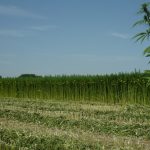
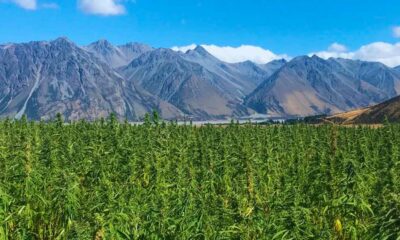
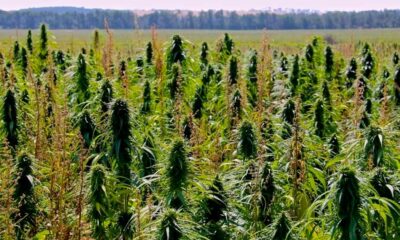
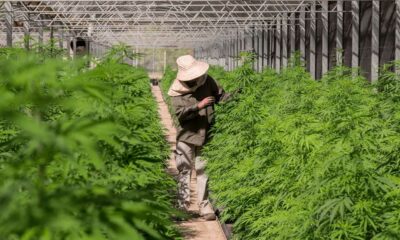
With 22,600 hectares under cultivation by 2024 with some 1,550 growers, France now accounts for more than half of Europe's hemp acreage. The country is also touted as the world's second-largest producer of industrial hemp behind China.
The Great East region remains the historical heart of this production, concentrating almost half of the national surface area, particularly in the Aube and Marne departments. The industry relies on seven hemp mills spread across the north of the country, enabling an integrated model where growing and processing remain geographically close.
The development of the sector is part of in a long-term dynamic. The area under cultivation has doubled in ten years, and France continues to invest in plant breeding, notably to improve fiber yields and reduce THC levels.
Textiles and fibers at the heart of production
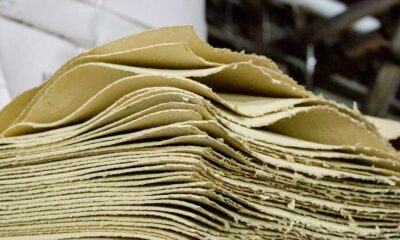
While the plant has numerous outlets, the hemp fibre remains the most economically strategic segment. According to’InterChanvre, Although it accounts for only 28% of the weight of processed products, it generates 50% of the sector's economic value.
This added value is driving French players to strengthen textile-related applications, to composite materials or insulation. Textile trials are currently being developed to support the relocation of natural fibers in Europe.
The central part of the stalk, the chenvotte, is mainly used for animal bedding, building or mulching, while the seeds are used for human and animal feed, notably in the form of oil or protein. Even the dust produced during processing is recovered for energy production or composting.
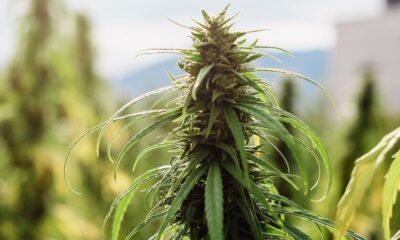
The report also specifies the increased separation between the industrial hemp and cannabinoid-related activities. Since January 2024, the interprofessional InterChanvre, which has always been careful to stay away from the CBD sector, officially excludes flowers from its scope.
Beyond the economic stakes, the hemp benefits from its agronomic qualities. The crop requires few inputs, generally no irrigation and very few phytosanitary treatments. Its root system also improves soil structure for subsequent crops. According to figures relayed by the industry, one hectare of hemp also makes it possible to store up to 15 tonnes of CO2.

















CBD is said to promote athletic recovery, without improving performance

294 cannabis clubs in Chile: a booming movement with uneven distribution

Chronic Sciatica: New York Approves First Clinical Trial of a THC-Based Medication

United States: The DEA is accelerating the integration of medical cannabis at the federal level

Florida is nearing one million patients using medical cannabis

Uruguay Revives Its Plan to Allow Tourists to Legally Access Cannabis

In Brazil, researchers are developing an innovative CBD eye drop

Autism: Medical Cannabis Is Linked to Reduced Anxiety

The $28 billion U.S. hemp market remains under threat

Jamaica Eases Small Farmers' Access to the Cannabis Market
-
 Business6 days ago
The legal cannabis market in New York exceeds 4 billion $ in revenue
-

 Cannabis in France2 weeks ago
Which countries legalized medical cannabis before France?
-
Business2 weeks ago
South Korea is preparing to begin local production of medical cannabis to meet rising demand
-
Cannabis in the Netherlands4 weeks ago
One year after the launch of the Dutch cannabis experiment, the first trends are emerging
-
Cannabis in Thailand2 weeks ago
From the boom in dispensaries to a purely medical approach: Thailand is revising its cannabis policy
-
Cannabis in France4 weeks ago
French medical cannabis remains stalled at the Ministry of Health
-
Cannabis in Argentina3 weeks ago
Argentina Opens Its Market to Hemp Flowers Containing 1% of THC
-
Cannabis and driving2 weeks ago
Medical Cannabis and Driving: New South Wales Ends Automatic Penalties for THC















You must be logged in to post a comment Login