
France: racehorses test positive for CBD!

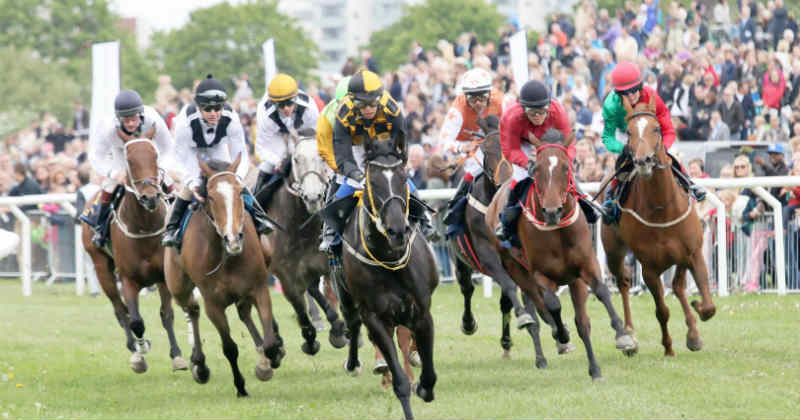
The National Horse Racing Federation (FNCH) has just reported in a press release that several racehorses have tested positive for cannabidiolic acid, or CBDA, a substance that is not permitted under the Federation’s regulations. The Laboratoire des Courses Hippiques (LCH) has detected CBDA in the blood and urine of horses from four trotting training stables since mid-February.
Is CBDA a performance-enhancing substance?
CBDA occurs naturally in the cannabis plant; it is the precursor to CBD into which it transforms afterward decarboxylation. The molecule has no psychoactive effects but does have anti-inflammatory properties. And while it is not no longer classified as a doping substance for humans, it is still prohibited by the Federation for horse racing and equestrian sports.
The horse racing code stipulates that no active substance may be detected in a horse’s system on race day—although certain anti-infective and antiparasitic drugs are permitted. «There is no specific list of substances, but rather categories of substances,» explains the FNCH. CBDA would therefore be included in the category of «active substances with anti-inflammatory properties.» Of course, horses are sometimes undergoing treatment, but in such cases, the active ingredient in the treatment must have been eliminated from the horse’s system before race day. Elimination half-lives are known for most substances, which allows trainers to take precautions when administering treatment. However, for CBDA, this half-life is still unknown.
The stables involved in this case are located in different regions, but the investigation revealed that they all had one thing in common: they had fed their horses feed produced by the company KRAFTT. When analyzed by the LCH, this feed was found to contain CBDA. «It has therefore been established that certain batches of horse feed produced by KRAFTT contain cannabidiolic acid,» states the FNCH press release. This may be due to contamination of the raw materials or to intentional addition. Indeed, the rediscovery of benefits of hemp has led to its increasingly frequent use in animals as a dietary supplement.
Following these analyses, the company issued a press release last Saturday stating that it would «test all of its raw materials to determine the origin of this molecule» in collaboration with the LCH. Horses that are already «contaminated» will undergo frequent testing to assess how long it takes the body to eliminate the molecule. For now, the FNCH recommends that equine professionals refrain from using these products, as doing so could result in disqualification from a race.














CBD is said to promote athletic recovery, without improving performance

294 cannabis clubs in Chile: a booming movement with uneven distribution

Chronic Sciatica: New York Approves First Clinical Trial of a THC-Based Medication

United States: The DEA is accelerating the integration of medical cannabis at the federal level

Florida is nearing one million patients using medical cannabis

Uruguay Revives Its Plan to Allow Tourists to Legally Access Cannabis

In Brazil, researchers are developing an innovative CBD eye drop

Autism: Medical Cannabis Is Linked to Reduced Anxiety

The $28 billion U.S. hemp market remains under threat

Jamaica Eases Small Farmers' Access to the Cannabis Market
-
 Business6 days ago
The legal cannabis market in New York exceeds 4 billion $ in revenue
-

 Cannabis in France2 weeks ago
Which countries legalized medical cannabis before France?
-
Business2 weeks ago
South Korea is preparing to begin local production of medical cannabis to meet rising demand
-
Cannabis in the Netherlands4 weeks ago
One year after the launch of the Dutch cannabis experiment, the first trends are emerging
-
Cannabis in Thailand2 weeks ago
From the boom in dispensaries to a purely medical approach: Thailand is revising its cannabis policy
-
Cannabis in France4 weeks ago
French medical cannabis remains stalled at the Ministry of Health
-
Cannabis in Argentina3 weeks ago
Argentina Opens Its Market to Hemp Flowers Containing 1% of THC
-
Cannabis and driving2 weeks ago
Medical Cannabis and Driving: New South Wales Ends Automatic Penalties for THC















You must be logged in to post a comment Login