
French CBD hemp industry threatened with extinction by proposed government monopoly

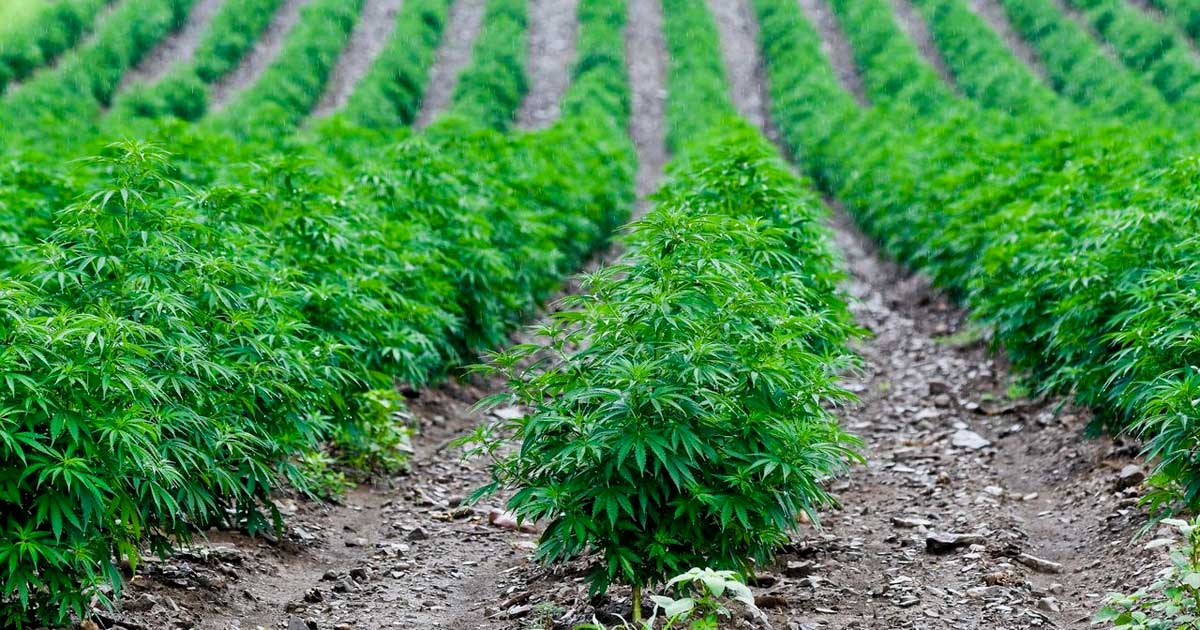
In the space of just a few years, the French hemp and CBD flower industry has gone from a niche farming experiment to a legitimate growth sector. From a few dozen farms in 2019 to nearly a thousand by 2025, the industry has provided a new source of income for farmers and merchants, a type of local, green economy that policymakers often claim to support.
Yet this success story is now on the brink of collapse. Hidden in article 23 the French Finance Bill for 2026 (PLF 2026), the French government is proposing to impose a State monopoly on the sale of CBD flowers, based on the tobacco system. This project would limit distribution to tobacconists and a handful of yet-to-be-defined «approved networks», while adding a substantial excise tax on flowers.
For the’French Association of Cannabinoid Producers (PSAC), This proposal does not represent progress, but rather a profound misunderstanding and a death sentence for the hundreds of small farms and stores that have built the market from scratch.
A call for regulation
Ironically, the French CBD hemp industry has long been calling for what the government now claims to want to implement: a clear regulatory and tax framework.
«We've been asking for a framework for five years now,» says a PSAC representative. «We understand the government's objectives: fiscal clarity, product traceability, protection of public health. But the tool they're using - the monopoly - won't achieve any of these objectives. It will destroy the sector.»
Indeed, the PSAC has repeatedly supported the idea of a 20% VAT on CBD flowers and a system for tracking production and sales. But rather than pursuing the collaborative process that had been initiated with government agencies such as the MILDECA (Mission interministérielle de lutte contre les drogues et les addictions), the government abruptly changed course.
«Up until mid-September, we were still working with MILDECA to rewrite the December 2021 decree,» AFPC recalls. «Then, suddenly, we were told that the rewrite was off. And a few days later, article 23 appeared. Without consultation, without warning.»
A monopoly that benefits only the tobacco giants
The new model would channel all sales of CBD flowers to customs warehouses, controlled by two major companies in France, run by firms linked to the tobacco industry. For AFPC, this is no coincidence.
«This system is tailor-made for the tobacco giants,» warns the association. «And if we look at what happened to the French tobacco growing industry, which no longer exists, we can guess where this will lead.»
In such a system, small-scale hemp growers would be squeezed out, forced to sign contracts with a handful of powerful buyers who would dictate prices and conditions.
«It's the same story we've seen throughout the agricultural sector,» laments PSAC. «A few big players control everything, and farmers can't survive.»
An economic and environmental setback
The proposed monopoly threatens to wipe out years of efforts to establish a sustainable local hemp economy. Many French CBD hemp growers operate small-scale organic farms that rely on the direct sales and short distribution channels. By cutting off these channels, the government would effectively force them out of business.
«Restricting sales to tobacconists kills direct sales and e-commerce, which are the mainstay of the hemp renaissance in France,» says AFPC.
This measure would also compromise environmental objectives. Hemp is one of the most environmentally-friendly crops in the world, requiring few inputs, regenerating soils and sequestering carbon. Taxing and restricting its cultivation runs counter to France's commitments to agro-ecological transition.
«Instead of rewarding farmers who grow hemp sustainably, we're punishing them,» says PSAC. «We're turning an ecological solution into an administrative problem.»
A paradox for public health and taxation
Supporters of Section 23 justify the monopoly on public health and tax grounds, claiming it would help control the market and generate revenue. But PSAC warns that the result will be the opposite: lower tax revenues and increased black market activity.
«We're already seeing CBD flowers on street dealers» menus,« explains one representative. »Growers are being approached by people asking for dozens of kilos a week for the black market. If you restrict legal access, you make the illegal market more profitable."
The same applies to tax revenues. With hundreds of legitimate businesses disappearing, total taxable sales will drop dramatically. «They will make less money, not more,» insists PSAC. «A system that kills the legal market cannot fund the state.»
A viable alternative ignored
Rather than dismantle the industry, AFPC has proposed a regulatory system inspired by the French wine and alcohol regulations, a proven French framework that combines traceability, taxation and local autonomy.
Under this plan, each CBD hemp producer would declare his or her activity to the state, register production volumes and operate under a regulated framework. Farmers would be able to sell directly from their farms or to authorized retailers, just as winegrowers sell their own bottles.
«This model allows the government to know who produces what, where it's sold and in what quantities,» explains PSAC. «It also guarantees traceability and tax collection without killing small businesses.»
Such a system would also enhance public health protection, as short, transparent supply chains are easier to monitor than opaque import routes from the Americas or Eastern Europe.
«In terms of safety, it's much easier to control French hemp than foreign imports,» notes the group. «Why not build on what works?»
An impossible plan
Even from a logistical point of view, the monopoly is doomed to failure. The government seems unaware of the scale of the online CBD trade, which already accounts for a significant, if not dominant, share of French sales.
«How are they going to enforce it?» asks one PSAC member. «They can shut down one French website, but what about the thousands of others based abroad? Customs officials can't intercept every package.»
The result, they warn, will be a selective punishment The new law will make small French producers with registered websites easy targets, while foreign sellers will continue to operate unhindered. «The ones who will suffer are those who are trying to respect the law,» says PSAC. «This is absurd.»
«We want co-construction, not conflict».»
Despite their frustration, PSAC representatives insist they remain open to dialogue. «We are not against regulation,» they repeat. «We want to co-construct it with the government, from an economic, agricultural, health and safety point of view.»
For them, the tragedy of Article 23 lies not only in its content, but also in its process: yet another example of France making policy in isolation, without listening to the people who know the sector best.
«If this goes through," concludes one member, "it won't just be a regulatory error. It will be the the end of an entire French agricultural sector, A sector that was growing, innovating and creating jobs. And all to the benefit of foreign imports and tobacco giants.»
At a time when France urgently needs rural revitalization, green jobs and fiscal innovation, destroying its own hemp industry would be a self-inflicted wound. PSAC's message is clear: regulate us, but don't erase us.


















CBD is said to promote athletic recovery, without improving performance

294 cannabis clubs in Chile: a booming movement with uneven distribution

Chronic Sciatica: New York Approves First Clinical Trial of a THC-Based Medication

United States: The DEA is accelerating the integration of medical cannabis at the federal level

Florida is nearing one million patients using medical cannabis

Uruguay Revives Its Plan to Allow Tourists to Legally Access Cannabis

In Brazil, researchers are developing an innovative CBD eye drop

Autism: Medical Cannabis Is Linked to Reduced Anxiety

The $28 billion U.S. hemp market remains under threat

Jamaica Eases Small Farmers' Access to the Cannabis Market
-
 Business6 days ago
The legal cannabis market in New York exceeds 4 billion $ in revenue
-

 Cannabis in France2 weeks ago
Which countries legalized medical cannabis before France?
-
Business2 weeks ago
South Korea is preparing to begin local production of medical cannabis to meet rising demand
-
Cannabis in the Netherlands4 weeks ago
One year after the launch of the Dutch cannabis experiment, the first trends are emerging
-
Cannabis in Thailand2 weeks ago
From the boom in dispensaries to a purely medical approach: Thailand is revising its cannabis policy
-
Cannabis in France4 weeks ago
French medical cannabis remains stalled at the Ministry of Health
-
Cannabis in Argentina3 weeks ago
Argentina Opens Its Market to Hemp Flowers Containing 1% of THC
-
Cannabis and driving2 weeks ago
Medical Cannabis and Driving: New South Wales Ends Automatic Penalties for THC















You must be logged in to post a comment Login