Louis Sarkozy and Marion Maréchal-Le Pen: two irreconcilable visions of drug decriminalization

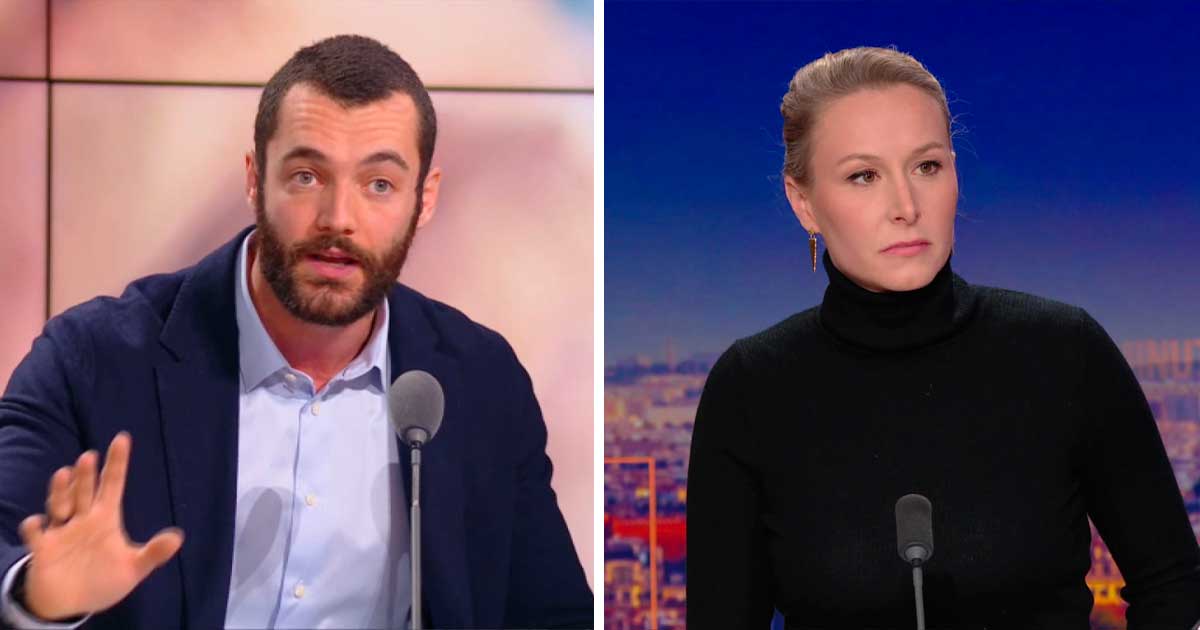
The murder of Amine Kessaci's brother has, as always, rekindled the media debate about the decriminalization of drugs in France. On the one hand, Louis Sarkozy, which advocates abandoning the repressive model in favor of decriminalizing drugs, and on the other, Marion Maréchal-Le Pen which does not include the principle of decriminalization.
Louis Sarkozy: «Let's decriminalize all drugs to destroy the deal».»
For Louis Sarkozy, He believes that the current system has reached the end of its tether. He believes that France, like the United States and other Western countries, has «lost the war of repression». His arguments are based on the repeated failure of anti-drug policies pursued throughout the world for over fifty years.
He also criticizes Emmanuel Macron's recent assertion that buying cannabis makes you complicit in trafficking: «Buying cannabis means being complicit in trafficking. The President's statement is strange. For thirty years, medical science has been telling us that addiction is a pathology, an illness that can be treated like any other. And our political leaders are now saying that they are, in fact, criminals complicit in murder? That's pretty strange».»
For him, a paradigm shift is essential: «The truth is that we need to decriminalize all substances, all of them. By doing so, we destroy the deal market and liberate the individual.»
In its reasoning, the Portugal takes an important place. In his view, the Luso example shows that a model based on the prevention, theinvestment in addiction and the risk reduction works: fewer consumers, fewer deaths, less violence.
«It's the opposite of laxity, it's efficiency.»
He also points to the inconsistency of the French approach to alcohol, which is widely accepted despite its harmful effects, while other substances, sometimes less dangerous in his view, remain taboo. With regard to cannabis, he considers that decriminalization would be an essential lever: a legal alternative would automatically reduce the black market.
«Persisting in error is not a policy. Changing the model is.»
Marion Maréchal: «We are dealing with extremely dangerous drugs».»
Marion Maréchal-Le Pen, on the other hand, seems lost. For her, decriminalization would mean making access to drugs more flexible, thereby aggravating already massive public health problems.
«I don't understand this discourse. [Once again, we're not dealing with recreational or soft drugs. We're dealing with drugs that are extremely dangerous.»
She places particular emphasis on the consequences of cannabis for young people (editor's note: for whom, decriminalization or not, nothing would change: cannabis would remain prohibited until they came of age).): «[...] as we know, cannabis, which is the most widely used drug, particularly among young people, has very serious consequences for brain development, school dropout and the development of illnesses such as schizophrenia and bipolarity.»
Marion Maréchal-Le Pen refuses to see decriminalization as a response to the failure of security: «We're not going to legalize this crime as if the problem were going to be solved.»
She also cites the example of low-risk consumption rooms, which she describes as a «scandal», believing that they normalize usage and create massive nuisances for local residents.
«I'm sorry to tell you that this is a certain way, a way of saying it's not that bad.»
A debate that reveals two conceptions
Enter risk reduction and refusal of care, These two adversaries, who don't get on so badly on other subjects, set out two antagonistic visions of the role of the State in drug management: either to regulate in order to reduce harm, or to maintain prohibition in an attempt to prevent the spread of drug use.
As the traffic continues to provoke violence and tension, France finds itself at the crossroads of two paths: either radically reform its approach, as proposed by Louis Sarkozy, or maintain a strictly prohibitive model, as defended by Marion Maréchal, with familiar results. As for the media debate, it doesn't look like it's about to end.

















Medical Cannabis in Germany: THC Prices Vary by a Factor of 12

France already has 3,000 cannabis retail outlets. None of them are legal.

Morocco's exports of legal cannabis have expanded to 15 countries

Aurora Cannabis Doubles Its Production Capacity in Germany

Tilray is accelerating its operations in Europe thanks to a license in Portugal

Boston will host the 10th annual State of the Cannabis Industry Conference on October 26

A DEA report confirms that there are no fatal cannabis overdoses

A British patient is challenging the NHS's refusal to reimburse medical cannabis

October 2026 CBD Highlights: 10 Strains and Hash to Discover from 5 French Producers

CBD in France: Traceability, Retail Stores, THC and Driving… What the New Bill Proposes
-
 Business2 weeks ago
The legal cannabis market in New York exceeds 4 billion $ in revenue
-

 Cannabis in France3 weeks ago
Which countries legalized medical cannabis before France?
-
Business3 weeks ago
South Korea is preparing to begin local production of medical cannabis to meet rising demand
-
Cannabis in Thailand3 weeks ago
From the boom in dispensaries to a purely medical approach: Thailand is revising its cannabis policy
-
Cannabis and driving3 weeks ago
Medical Cannabis and Driving: New South Wales Ends Automatic Penalties for THC
-
Autism3 weeks ago
Autism and Cannabis: Results from the First Placebo-Controlled Trial of NTI164
-
Cannabis in France2 weeks ago
France’s Drug Policy Chief Defends Cannabis Prohibition... and Runs Into the Facts
-
CBD1 week ago
In Brazil, researchers are developing an innovative CBD eye drop

















You must be logged in to post a comment Login