European Drug Report 2026: A More Complex and Powerful Cannabis Market

Cannabis remains by far the most widely used illicit substance in Europe, but the market for it is changing at a pace that makes it difficult to assess its health effects.
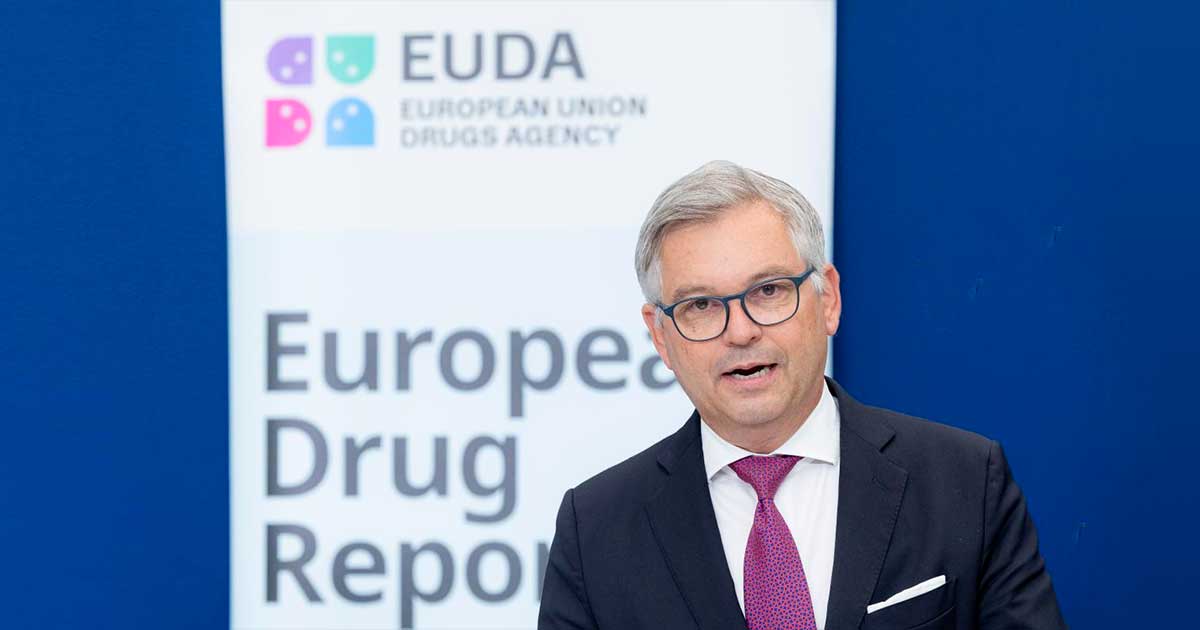
This is one of the main findings of the European Drug Report 2026, published on June 9 by the EUDA, the European Union’s drug agency. Between product diversification and a steady increase in the content of THC, shifts in drug trafficking patterns, and recent national reforms, the agency is calling for heightened vigilance.
Stable consumption, an increasingly diverse range of products
According to the EUDA, approximately 8.7% of European adults aged 15 to 64—or about 25 million people—have used cannabis in the past year. Prevalence is rising among younger people: 15.3% of those aged 15–34 (15.4 million) and 18% of those aged 15–24 report recent use, while nearly 4.5 million adults reportedly use it daily or almost daily.
National trends remain mixed: among the countries that have published a survey since 2023, three report an increase, ten report stability, and two report a decrease. Among adolescents, the 2024 ESPAD school survey confirms that cannabis remains the most commonly tried illicit substance, with 13% of 15- to 16-year-old students having tried it. Wastewater analysis also paints a mixed picture: of the 63 European cities studied in 2025, one-third report an increase in THC residues, while 44% report a decline.
Beyond cannabis and cannabis resin, which still dominate the market, the agency has observed a proliferation of products. Some have low THC levels or contain CBD; others, sold as cannabis on the illicit market, are found to be laced with powerful synthetic cannabinoids.
The EUDA is also concerned about the presence of highly concentrated extracts and edible products linked to cases of acute poisoning in emergency departments, as well as the arrival on the commercial market of semi-synthetic cannabinoids such as HHC, often made from CBD extracted from hemp. In 2026, the agency was tasked with assessing the role of CBD as a potential precursor in the production of THC. In 2024, at least three illicit manufacturing sites were dismantled, two in the Netherlands and one in Poland.
Increased health risks and high demand for care
Most risks are associated with everyday use. The EUDA points out that a intense use is associated with chronic respiratory symptoms, dependence, and psychotic symptoms, as well as poorer academic performance and an increased risk of involvement with the criminal justice system. Early initiation, high-potency products, and prolonged use are the main risk factors.
This reality is reflected in treatment centers. Cannabis now accounts for about one-third (33%) of drug-related treatment requests in the EU, Norway, and Turkey, making it the leading reason for admission. Of the approximately 104,000 patients recorded in 2024, nearly 62,000 were entering treatment for the first time, with the substance cited by 41% of new patients.
The agency highlights an average gap of eleven years between first use and initial treatment, representing a long period of exposure to risk. It also notes that smoking cessation often needs to be addressed concurrently.
Hospital data confirm this trend. In 2023, cannabis was involved in more than 46% of drug-related emergency room visits in Spain and 28% in France. Within the Euro-DEN Plus sentinel hospital network, it was the second most commonly reported substance in 2024 after cocaine, most often in combination with other substances. The median age of affected patients was 28, and 74% were men.
A €12 billion market, access roads being redesigned
Estimated at over 12 billion euros, the European cannabis market generates substantial profits for criminal groups, with high levels of violence in some member states.
In 2024, seizures of cannabis resin fell by 42 % compared with 2023, to an all-time low of 321 tonnes, due to a 45 % drop in Spain, which nevertheless remains the leading seizing country, with 206 tonnes. Weed seizures remained stable overall (199 tonnes), but with spectacular surges in Belgium (+1,075 %) and the Netherlands (+278 %), linked to large volumes from North America.
This is one of the strong signals in the report: networks are diversifying their methods and routes. Spanish forces intercepted drones and speedboats carrying resin, while the ports of Antwerp and Rotterdam seized around 21 tonnes each, mainly from Canada. Cannabis also comes from the United States and, to a lesser extent, from Thailand. Overproduction and falling prices in regulated North American markets could prompt European traffickers to source their supplies there.
In November 2025, the EUDA issued its very first alert via the EDAS system, highlighting the risks associated with North American cannabis: highly concentrated products and contamination by potentially dangerous pesticides.
Local production remains a mainstay of the supply. In 2024, Spain accounted for 75% of the plants seized in the EU, and thousands of cultivation sites—ranging from small-scale to industrial—are dismantled each year. The THC content THC continues to rise: resin averaged 24.6% in 2024, double that of marijuana (12%). Over ten years, resin concentration has jumped by 66%. Finally, approximately 477,000 offenses for use or possession were recorded in 2024, compared to 615,000 a year earlier.
National reforms: assessment at the heart of new models
Several European Member States have updated their regulatory frameworks. Malta led the way in December 2021, followed by Luxembourg (July 2023) and then Germany (February 2024), by permitting personal cultivation and the possession of small quantities. Germany and Malta also allow non-profit sales within supervised cultivation associations, following the model of cannabis social clubs.
The Netherlands has been conducting trials since 2025 a closed-loop system in ten municipalities, with cannabis produced in a regulated environment and then sold through coffeeshops. In January 2026, the Czech Republic, in turn, authorized the cultivation of three plants for personal use.
These schemes are still in their infancy and vary widely. The EUDA emphasizes the evaluation aspect: Germany and Luxembourg have published interim reports, and theagency is putting together a toolkit intended for public policymakers. However, in the absence of systematic monitoring of home-grown cultivation, the true extent of the phenomenon remains difficult to measure.
For the EUDA, these developments—more powerful products, a more complex market, and evolving regulatory frameworks—require, above all, more data. The agency notes that the gap between the rapid transformation of the market and our understanding of its effects remains, for now, its main blind spot.
























«Vincy Gold»: Humboldt Seed Company on the Hunt for Saint Vincent Sativas

Cronos Completes the Acquisition of CanAdelaar for 57.5 million euros

Cannabis with a "bloody" twist: Discover Sensi True Blood and Sensi Sangria, the two new strains from Sensi Seeds

Hemp: The Council of the EU Takes a Stand on New Production and Marketing Rules

Missouri's legal cannabis market accounts for 93 % of consumer spending

THC Gummies: How to Read a Certificate of Analysis Before Buying

British patients now have access to THCV-rich cannabis flowers

Spain: Medical Cannabis Is Coming to About 50 Hospitals

JIHE 2026: Japan’s Largest Trade Show Dedicated to Hemp and CBD Returns to Tokyo with More Than 100 Industry Players

New Caledonia: The Courts Clear the Way for the Return of CBD
-
 Business3 weeks ago
The legal cannabis market in New York exceeds 4 billion $ in revenue
-

 Cannabis in France4 weeks ago
Which countries legalized medical cannabis before France?
-
Cannabis in France1 week ago
France already has 3,000 cannabis retail outlets. None of them are legal.
-
Business4 weeks ago
South Korea is preparing to begin local production of medical cannabis to meet rising demand
-
Cannabis in the U.S.1 week ago
A DEA report confirms that there are no fatal cannabis overdoses
-
Cannabis in Thailand4 weeks ago
From the boom in dispensaries to a purely medical approach: Thailand is revising its cannabis policy
-
Cannabis and driving4 weeks ago
Medical Cannabis and Driving: New South Wales Ends Automatic Penalties for THC
-
Cannabis in France3 weeks ago
France’s Drug Policy Chief Defends Cannabis Prohibition... and Runs Into the Facts

















You must be logged in to post a comment Login