

United States: 78% less cross-border cannabis trafficking since legalization

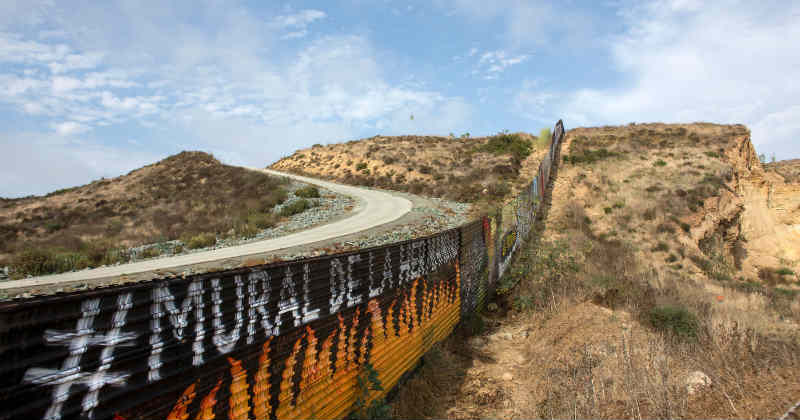
Since Saturday, Trump has partially shut down the federal government in protest against the Democrats« refusal in Congress to fund his multibillion-dollar border wall. »I can’t tell you when the government will reopen,« Trump announced. »I can tell you that it won’t reopen until we have a wall, or fences. You can call it whatever you want—it’s basically the same thing. It’s a barrier against the flood of people and drugs entering our country.”.
On Twitter, he stresses the need to protect the country’s external borders from illegal immigration and drug trafficking by stepping up controls and erecting more physical barriers. However, a study by the Cato Institute shows that the legalization of recreational cannabis in a number of states has been more effective in reducing cross-border drug trafficking than building a wall or increasing customs personnel.
I am in the Oval Office and have just awarded a contract for another 115-mile section of the Wall in Texas. We are already building and renovating many miles of the Wall, some of which are already complete. Democrats must end the government shutdown and secure funding. Billions of dollars—and lives—will be saved!
- Donald J. Trump (@realDonaldTrump) December 24, 2018
An irrational strategy
Trump wants to fulfill his campaign promise to complete the wall along the entire U.S.-Mexico border and also plans to deploy 5,000 additional border agents. However, statistics show that this strategy is not particularly effective. From 2003 to 2009, the number of border agents doubled, and approximately 373 km of fencing was erected and equipped with new surveillance technologies. Yet the annual rate of cannabis seizures by agents stationed between entry points remained unchanged at 52 kg per agent. It was only when states began legalizing in 2014 (Colorado legalized it in 2012 but began legal sales in 2014) that the rate of cannabis seizures steadily declined, reaching 11 kilograms per agent in 2018. This equates to a reduction of 78% in just 5 years.
This decline in cross-border cannabis trafficking represents a 70% reduction in seizures of all drugs at the U.S.-Mexico border. This implies that cannabis was the most widely trafficked drug, particularly between ports of entry. In 2013, border agents stationed between ports of entry accounted for the majority of seizures in terms of value. In 2018, however, inspectors stationed at ports of entry recorded seizures three times higher in value than those made by agents located between ports of entry. However, in 2018, agents stationed between entry points accounted for only 81% of hard drug seizures. According to the Institute, this points to a new trend: traffickers are now focusing on higher-value drugs, which they prioritize for transport through entry points. Consequently, building a wall or deploying agents along the entire length of the border will have little effect on drug trafficking.
According to the Cato Institute, Trump’s costly strategy doesn’t really make sense. Their findings call into question the effectiveness and necessity of building physical barriers and increasing the number of border agents to control the flow of drugs between ports of entry. In their view, resources should be prioritized at entry points, but above all, legal supply channels should be expanded. This alternative strategy has proven to be more effective than enforcement alone in reducing the cannabis trafficking by reducing the appeal of this illicit market to drug traffickers and users. The institute recommends adopting a similar strategy regarding immigration and increasing legal entry channels to reduce the appeal of illegal immigration.







The «cannabis» fine raised to 500 euros under the RIPOST Act

Sacha Baron Cohen Brings Ali G Back to Life During a Surprise Appearance at Wimbledon

Botswana Paves the Way for Commercial Hemp Cultivation

The First Authorized Medical Cannabis Cultivation in the Canary Islands

Germany Ends Public Health Insurance Coverage for Medical Cannabis Flowers

Cannabis Legalization in Pennsylvania Once Again on Hold

Democratic senators are reviving a bill to legalize cannabis at the federal level in the United States

A THC:CBD oil shows promising results in reducing agitation in people with dementia

San Francisco Allows «Cannabis Cafés»

Kenya Denies Rastafarians the Right to Use Cannabis
-

 Cannabis in Europe4 weeks ago
Bosnia and Herzegovina Continues to Roll Out Medical Cannabis Following Its Legalization
-
Cannabis in France4 weeks ago
France Submits the Long-Awaited Decree on the Reimbursement of Medical Cannabis to the Council of State
-
Cannabis in the U.S.4 weeks ago
The DEA Begins Hearings on the Federal Rescheduling of Cannabis
-
Business3 weeks ago
China Invests $10 Million in Medical Cannabis in Lebanon
-
Cannabis in Thailand4 weeks ago
Thailand Threatens Cannabis Shops with Severe Penalties
-
Cannabis in Australia3 weeks ago
South Australia is working to identify more water-efficient hemp varieties
-
Exchange4 weeks ago
Glass House will be the second U.S. cannabis company to list on the New York Stock Exchange
-
Cannabis in Africa2 weeks ago
Kenya Denies Rastafarians the Right to Use Cannabis















You must be logged in to post a comment Login