
New York: legalization without Big Cannabis

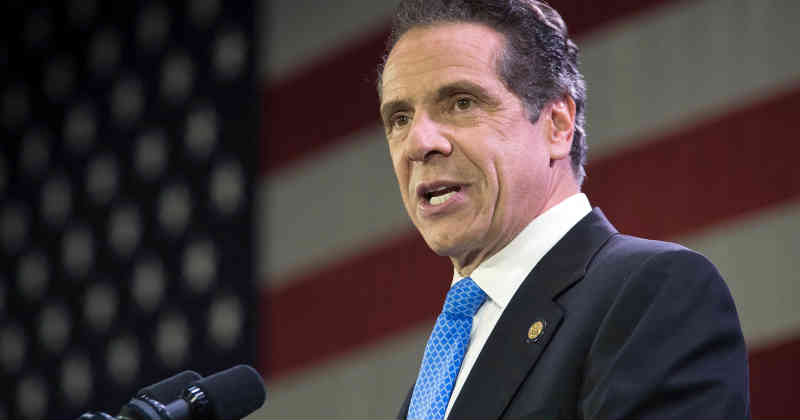
After months of anticipation and several ads With legalization on the horizon, New York Governor Andrew Cuomo has finally unveiled his plan to legalize recreational cannabis. The plan is included in his annual budget and must be approved by the legislature, which is now predominantly Democratic. Legalization is no longer in question in New York, where the debate has now shifted to the details of its implementation.
The Governor's Plan
The governor’s vision for legalization is to redress the wrongs caused by prohibition to ethnic minorities and poor communities. With this in mind, the governor stated: «Let’s create an industry that will benefit poor communities that have paid the price [of prohibition], not wealthy companies looking to turn a profit.» The medical cannabis program had been criticized precisely on this point because it required vertically integrated structures, effectively excluding small businesses that lacked the necessary resources.
Here it is: Gov. Cuomo’s plan to legalize recreational marijuana use for adults. pic.twitter.com/2eRnLEGYnw
— WXXI News (@WXXINews) January 15, 2019
The governor’s tax proposal includes three different taxes. The first is a cultivation tax of 1$ per gram of dried cannabis flowers and 0.25$ per gram of trimmed cannabis. The second is a tax on wholesale cannabis sales to retailers; amounting to 20% of the selling price. The third tax applies to the same sales but is collected by municipalities. The governor’s administration estimates that these taxes will generate a total of approximately $300 million annually.
The program calls for the creation of a Cannabis Management Office, which will be responsible for regulating the industry and issuing cultivation and sales licenses. Municipalities will have the right to opt out of the program. The program also provides for the automatic expungement of criminal records related to cannabis. One thing it does not do, however—unlike programs in other states where recreational cannabis is legal—is allow personal cultivation. It is, however, permitted for medical patients.
The debate
According to the government’s plan, the tax revenue generated will be allocated to the following areas: administration of the cannabis regulation program, data collection, road safety, small business development, and programs and services for substance abuse prevention, assistance, and treatment. The Senate, which has a Republican majority, considers, however, that Tax revenues should be used to reduce taxes, which they believe are stifling ordinary citizens and entrepreneurs.
The focus on social justice, however, seems to be something everyone can agree on. Andrew Cuomo’s former rival for the governorship, Cynthia Nixon—who had campaigned for the legalization of cannabis—said that this was exactly what she had hoped for from legalization. The governor-elect seems to be on the same page : «We have two criminal justice systems: one for the wealthy and one for everyone else. We must put an end to this,» he said.
Today, Cuomo announced his plan to legalize marijuana in New York.
Here’s what I’ll be looking for:
A plan to ensure that the economic benefits go to communities harmed by the War on Drugs—not to rich white men looking to make $$ off a product that has sent thousands of people of color to prison.
— Cynthia Nixon (@CynthiaNixon) January 15, 2019
Equity Issues and community issues are also at the heart of the debate. As the industry becomes more standardized and attracts executives and investors from other industries, the governor of New York wants to buck this trend and make room for minorities. It is also the opinion of the mayor of New York City, Bill de Blasio, who said: “We have a chance to do something that’s never been done before—to literally shut out the big companies and ensure that this industry is made up of small businesses that have the community’s best interests at heart.»
«Unfortunately, we know what happens when we allow big corporations to run the industry. For years, Big Tobacco knew that its product was deadly and addictive. Yet it denied it, downplayed it, and used advertising and lobbying to make its way into American homes by targeting children. For years, Big Oil knew that its product was polluting humanity on the only habitable planet. Yet it did everything in its power to create an economy dependent on fossil fuels. More recently, Big Pharma declared opioids to be safe and non-addictive painkillers. »Today, Americans are facing an epidemic of overdose deaths. We cannot let cannabis follow the same path,” the mayor added.






Contest: Win a trip to Quebec to experience the hemp harvest firsthand

Bedrocan on Hold Amid Uncertainty Over Medical Cannabis

Newsweed Launches Its Own AI
A new tax of 0.5% could disrupt the hemp industry in Canada

Medical Cannabis and Driving: New South Wales Ends Automatic Penalties for THC

China's Yongji Health Takes Control of Tasmanian Botanics

Autism and Cannabis: Results from the First Placebo-Controlled Trial of NTI164

Which countries legalized medical cannabis before France?

From the boom in dispensaries to a purely medical approach: Thailand is revising its cannabis policy

South Korea is preparing to begin local production of medical cannabis to meet rising demand
-
 Cannabis and driving3 weeks ago
Cannabis and CBD: French Drivers Can Now Lose Their License Even Without a Positive Test Result
-

 Cannabis in France6 days ago
Which countries legalized medical cannabis before France?
-
Cannabis in France3 weeks ago
Cannabis Legalization: The LFI Bill Has a Major Problem—THC
-
Cannabis in the Netherlands2 weeks ago
One year after the launch of the Dutch cannabis experiment, the first trends are emerging
-
Business6 days ago
South Korea is preparing to begin local production of medical cannabis to meet rising demand
-
Cannabis in Thailand6 days ago
From the boom in dispensaries to a purely medical approach: Thailand is revising its cannabis policy
-
Cannabis in Argentina2 weeks ago
Argentina Opens Its Market to Hemp Flowers Containing 1% of THC
-
Cannabis in France2 weeks ago
French medical cannabis remains stalled at the Ministry of Health













You must be logged in to post a comment Login