Appellations of origin for Californian cannabis from 2021

California Governor Gavin Newsom signed the Senate Bill 67, which paves the way for the commercialization of cannabis under a designation of origin.
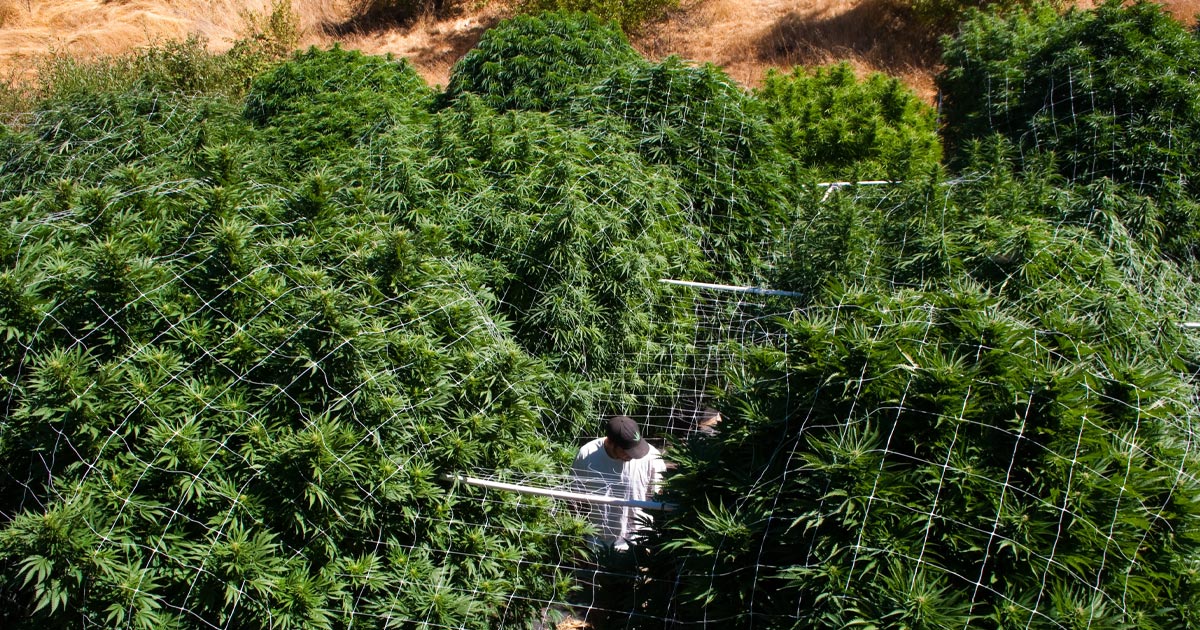
The text states that «a product claiming a «designation of origin» from a region of California must have been grown in open ground and under the sun of that region—in other words, without artificial light or shelter, such as a glass greenhouse or a plastic tunnel.»
It also requires that the program developed by the California Department of Food and Agriculture be launched by January 1, 2021, as had already been stipulated in the Senate Bill 185.
Until now, many cannabis growers have focused on variety and THC content to market their crops—the equivalent of a «grape variety» and «alcohol percentage» in wine. In fact, the designations of origin for California cannabis will mirror those of wine-growing regions, which already allow winemakers to include this geographic designation on their labels.
For cannabis, as for wine, the appellation would be defined by precise geographic locations that are distinct from their immediate surroundings. What is grown there would be defined by the composition of the soil in which the plants are cultivated, the amount and timing of sun exposure, temperatures and humidity during the day and night, and water sources. These factors thus demonstrate that the growing area is unique and exhibits significant differences in cultivation compared to neighboring areas—in short, that it meets the definition of a terroir, as proposed by Frenchy Cannol since 2015i.
Since January 2018, «country of origin» standards» allow certified growers to designate a county of origin For cannabis: “Mendocino Grown” and “Humboldt Grown” are common designations. These standards apply to all cannabis products, regardless of the cultivation method. To use the designation, 100% cannabis must be produced in the designated county as defined by its political boundaries.
The new guidelines on designations of origin allow legal growers to recognize cannabis-growing areas that do not necessarily correspond to county boundaries. They also establish requirements for how cannabis is grown within these designations, although the new system is not intended to replace or override previous standards.
The creation of a designation system could be a way to prevent the homogenization of crops—particularly to the benefit of small-scale growers—and to highlight the geographic and meteorological factors that play an important role in determining the taste and potency of cannabis strains.
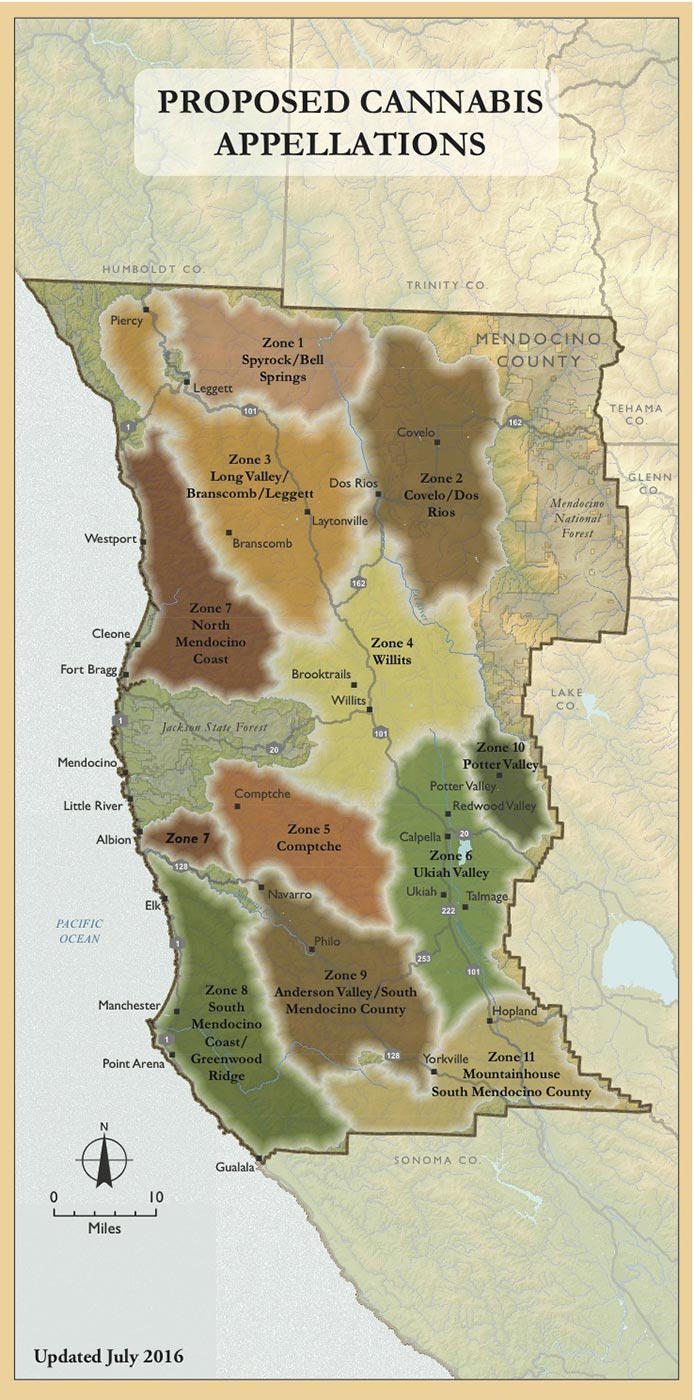
The project Mendocino Appellations Project (MAP) has proposed 11 cannabis appellation districts, which could be used for future appellations.


















Dr. Pascal Douek, a tireless advocate for medical cannabis in France, has died

Kentucky now has 26 medical cannabis dispensaries

«Vincy Gold»: Humboldt Seed Company on the Hunt for Saint Vincent Sativas

Cronos Completes the Acquisition of CanAdelaar for 57.5 million euros

Cannabis with a "bloody" twist: Discover Sensi True Blood and Sensi Sangria, the two new strains from Sensi Seeds

Hemp: The Council of the EU Takes a Stand on New Production and Marketing Rules

Missouri's legal cannabis market accounts for 93 % of consumer spending

THC Gummies: How to Read a Certificate of Analysis Before Buying

British patients now have access to THCV-rich cannabis flowers

Spain: Medical Cannabis Is Coming to About 50 Hospitals
-
 Business3 weeks ago
The legal cannabis market in New York exceeds 4 billion $ in revenue
-
Cannabis in France2 weeks ago
France already has 3,000 cannabis retail outlets. None of them are legal.
-
Cannabis in the U.S.2 weeks ago
A DEA report confirms that there are no fatal cannabis overdoses
-
Cannabis in France4 weeks ago
France’s Drug Policy Chief Defends Cannabis Prohibition... and Runs Into the Facts
-
Studies on cannabis2 weeks ago
Cannabis Oil and Endometriosis: A Promising Study for Pain Relief
-
Business2 weeks ago
Tilray is accelerating its operations in Europe thanks to a license in Portugal
-
CBD3 weeks ago
In Brazil, researchers are developing an innovative CBD eye drop
-
Cannabis in France2 weeks ago
CBD in France: Traceability, Retail Stores, THC and Driving… What the New Bill Proposes















You must be logged in to post a comment Login