
Brazilian researchers are studying hemp fibers to strengthen recycled paper

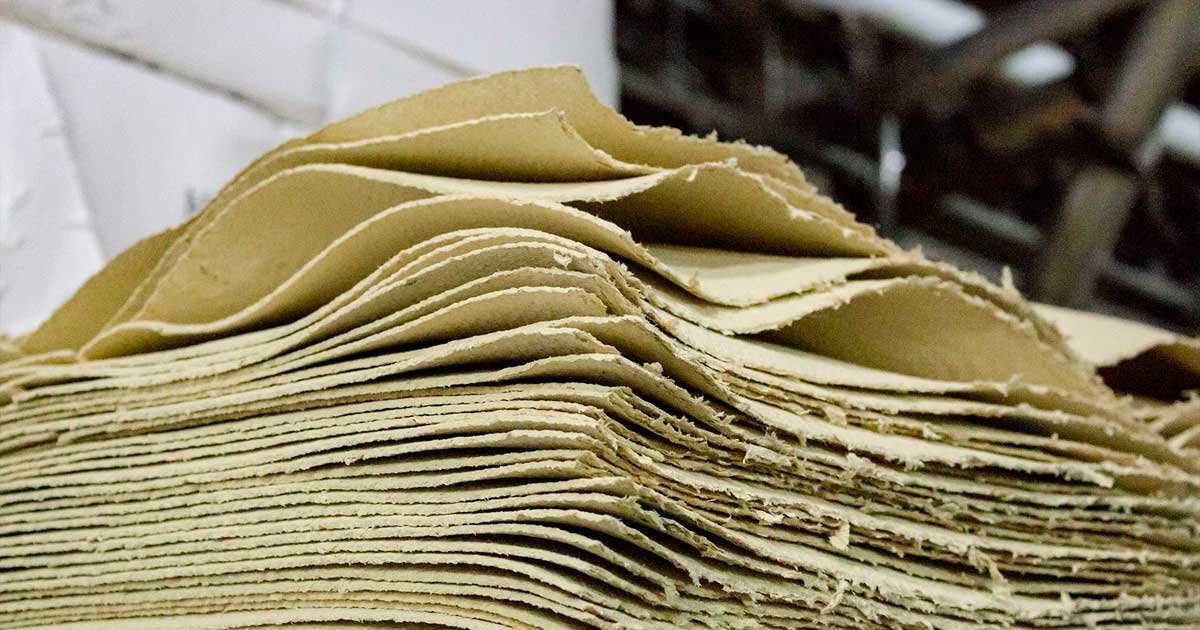
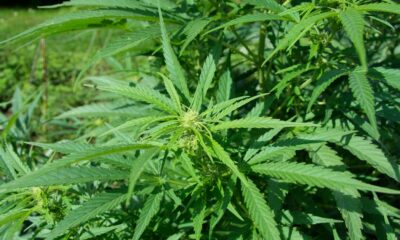
Researchers at the Federal University of Viçosa (UFV) in Brazil are studying whether hemp fibers could help improve the quality and lifespan of recycled paper products. Conducted in partnership with the startup Buds INC, the project focuses on fibers extracted from the stems, branches, and roots of Cannabis plants, with the goal of strengthening recycled paper, which typically loses its strength after several cycles of reuse.
Brazil has one of the largest recycled paper industries in the world. According to industry figures, the country processes approximately 6.6 million metric tons of recycled fiber per year, making any improvement in recycling efficiency potentially significant for the sector.
Researchers believe that hemp’s natural characteristics—particularly the length of its fibers and its mechanical strength—could help overcome one of the main limitations of paper recycling: the gradual degradation of cellulose fibers.
Extending the Lifespan of Recycled Paper
Traditional paper recycling relies on cellulose fibers that become shorter and weaker with each reuse. Recycled paper products eventually lose their structural integrity and require the addition of new raw materials.
The UFV team is investigating whether the controlled incorporation of hemp fibers Recycled pulp can restore—or even improve—the paper’s original properties.
“That’s exactly where this material comes into play. The controlled addition of hemp fibers to the recycled pulp restores the paper’s original strength,” explains Gustavo Baêsso, a forestry engineer and researcher involved in the project.
According to Mr. Baêsso, the initial results suggest that this technology could offer even greater benefits than originally anticipated.
“In some cases, it is possible to achieve mechanical properties superior to those of the original material, which significantly extends its service life and performance,” concludes Mr. Baêsso.
The project is currently entering its final phase, with researchers consolidating the results of mechanical tests conducted on paper samples containing varying concentrations of hemp fibers. The results are expected to be submitted to scientific journals for peer review.
Potential sustainability benefits
Beyond the material’s technical performance, researchers highlight the project’s environmental implications. Increasing the durability of recycled paper could reduce the demand for resources from virgin forests and improve the overall efficiency of recycling systems.
The project coordinator, Marcelo Moreira da Costa, highlighted the broader impact of this work, stating: “In addition to the technical and economic benefits, theuse of hemp fibers as a reinforcing material "represents a significant step forward in terms of sustainability, by increasing recycling efficiency and reducing the strain on traditional forest-based raw materials."
Hemp has always been used in specialty papers because of its long, durable bast fibers, but its widespread adoption has often been limited by cultivation restrictions and processing costs.
Brazilian research could help identify new commercial opportunities for hemp in the paper and packaging industries.
Patents and International Ambitions
The project began in February 2024 thanks to the university’s partnership with Embrapii, the Brazilian public agency for innovation, and received total funding of approximately 932,000 R$ (approximately 150,000 €). The research has already led to a patent application related to the cultivation and processing methods developed during the initiative.
The project also led to the development of a large-scale propagation technique. Starting with just 14 seeds, the researchers reportedly produced more than 4,000 hemp plants in four months.
The team also developed a cloning method called “minicutting,” designed to speed up plant production while maintaining high rooting success rates.
In 2025, project members traveled to the United States to present their findings and promote the potential industrial applications of hemp fibers. Further international promotional activities are planned, as researchers continue to seek out commercial and scientific partners.



















Medical Cannabis and Driving: New South Wales Ends Automatic Penalties for THC

China's Yongji Health Takes Control of Tasmanian Botanics

Autism and Cannabis: Results from the First Placebo-Controlled Trial of NTI164

Which countries legalized medical cannabis before France?

From the boom in dispensaries to a purely medical approach: Thailand is revising its cannabis policy

South Korea is preparing to begin local production of medical cannabis to meet rising demand

In the United States, cannabis use among high school students has reached an all-time low

Medical cannabis use surges by 64 % in Denmark

Canopy Growth Enters the U.K. Market with Four Canadian Strains

CBD: Full-Spectrum Extracts Under Threat in Greece
-
 Cannabis and driving2 weeks ago
Cannabis and CBD: French Drivers Can Now Lose Their License Even Without a Positive Test Result
-

 Cannabis in France2 days ago
Which countries legalized medical cannabis before France?
-
Cannabis in France3 weeks ago
Cannabis Legalization: The LFI Bill Has a Major Problem—THC
-
Cannabis in the Netherlands2 weeks ago
One year after the launch of the Dutch cannabis experiment, the first trends are emerging
-
Cannabis in France2 weeks ago
French medical cannabis remains stalled at the Ministry of Health
-
Cannabis in Argentina1 week ago
Argentina Opens Its Market to Hemp Flowers Containing 1% of THC
-
Business2 weeks ago
The United Kingdom Is Moving Closer to a Regulated CBD Market
-
Business2 days ago
South Korea is preparing to begin local production of medical cannabis to meet rising demand













You must be logged in to post a comment Login