
Austrian CBD industry in crisis due to tobacco's monopoly on hemp flowers

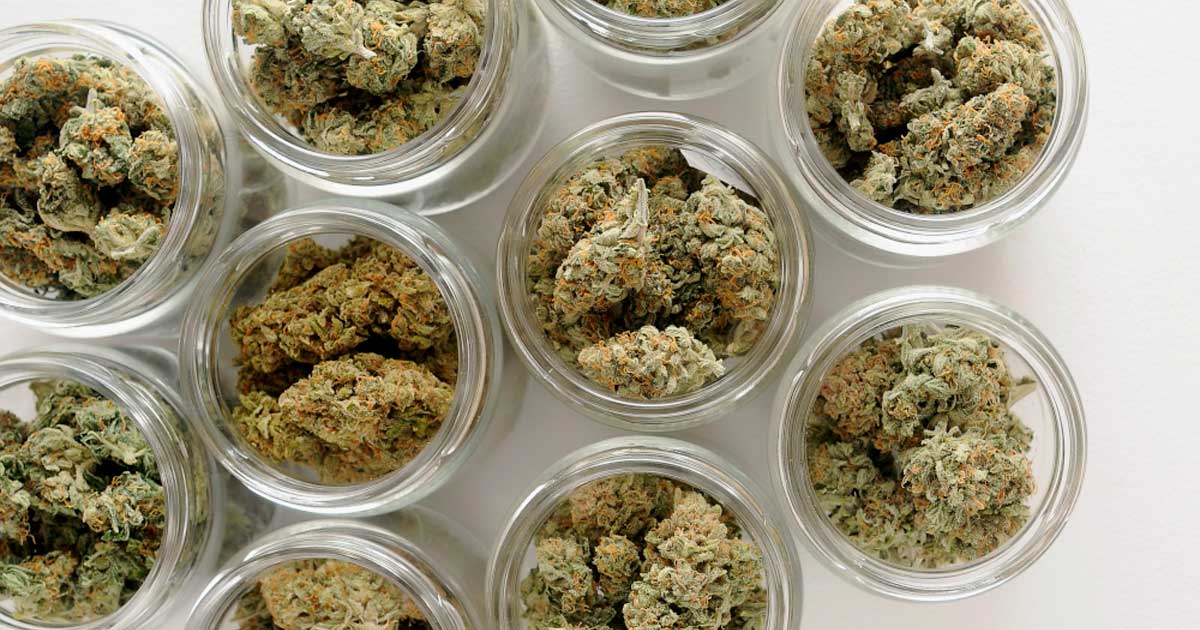
Austrian CBD retailers are fighting for their survival following a ruling by the administrative court in late 2024.
This The decision reclassified CBD hemp flowers classifying them as tobacco products, subjecting them to a tobacco tax of 34%, and restricting their sale exclusively to tobacco retailers. Although other cannabidiol-based products, such as CBD oils or creams, are not affected, this decision dealt a severe blow to stores whose business model depended on the sale of flower.
«The clarification provided by the current ruling came as a complete surprise to us,» said Reno, owner of Green Monkey, a CBD shop in the Annenviertel neighborhood of Graz, in an interview with Annenpost. He also laments the lack of communication on the part of the authorities and the disastrous financial consequences.
«Sales have plummeted… Some days, I only make 20 to 30 euros,» Mr. Reno admitted.
Economic Impact and Legal Response
The economic impact was immediate and dramatic. According to the Österreichische Hanfverband (ÖCB), a trade association recently formed by CBD companies, more than 500 stores were affected by the decision. Some have reported revenue losses of up to 80%, and many are going out of business or being forced to relocate abroad.
Furthermore, the implementation of the court’s decision was chaotic. CBD flowers remained unavailable in tobacco shops due to administrative delays and the lack of an operational framework. As a result, the product has virtually disappeared from the Austrian market, despite its popularity.
The ÖCB, seeking to restore fairness and clarity, has commissioned Professor Heinz Mayer, a constitutional lawyer, to assess the legality of the new restrictions. His legal opinion states that the classification of CBD flowers under the Austrian Tobacco Monopoly Act is contrary to EU law, in particular the principles of the free movement of goods and freedom of enterprise.
«Restrictions can only be imposed if they are necessary or proportionate, which is absolutely not the case for CBD flowers,» concludes Mr. Mayer.
A Legal Gray Area: Are These Sales Legal or Not?
Despite warnings from the Ministry of Finance, some CBD stores have resumed selling flowers. Constitutional lawyer Mayer argues that 'they are clearly not subject to to the Austrian monopoly »on tobacco.".
However, the ministry disagrees, pointing out that CBD flowers are still legally considered tobacco products and that any untaxed sales could result in financial penalties.
This discrepancy has created a climate of legal uncertainty. Stores have been advised to set aside 54% of their revenue to cover potential tax obligations, which places an even greater burden on small businesses. Furthermore, customs raids and sudden refund requests have heightened the sense of fear and confusion among store owners.
Julia Geiß, the owner of a CBD store, said at Kurier that when the ban went into effect, «sales plummeted» and many customers turned to foreign online stores. Klaus Hübner, president of the ÖCB, echoed these concerns, warning of a «distortion of competition» and an «expropriation» of entrepreneurs without compensation.
Monopolies, Market Distortions, and Future Prospects
The case has highlighted broader concerns about market monopolization. EU law prohibits the abuse of a dominant market position, but Austria’s decision to restrict CBD flower sales to tobacco retailers likely runs counter to that principle. The ÖCB is calling for the monopoly to be lifted and is prepared to challenge the decision in court.
It is interesting to note that even tobacco shops do not yet sell CBD flowers.
«It’s solely because there’s no legal basis,» said Wolfgang Streissnig of the Federal Association of Tobacco Retailers, citing unresolved licensing and regulatory issues. However, tobacco retailers are reportedly preparing for a possible launch, with dedicated training sessions already underway.
The ÖCB advocates for a modern cannabis law that would end legal uncertainty and allow for fair competition. It believes that the coexistence of specialty CBD stores and tobacco shops is not only possible but also desirable for consumers and businesses.





















France’s Drug Policy Chief Defends Cannabis Prohibition... and Runs Into the Facts

Cannabis and the Adolescent Brain: French Scientists Make a Key Discovery

EFSA Gives Initial Approval for Synthetic CBD; Natural Extracts Still Pending

Federal Cannabis Reform Once Again on Hold in the United States

Contest: Win a trip to Quebec to experience the hemp harvest firsthand

Bedrocan on Hold Amid Uncertainty Over Medical Cannabis

Newsweed Launches Its Own AI
A new tax of 0.5% could disrupt the hemp industry in Canada

Medical Cannabis and Driving: New South Wales Ends Automatic Penalties for THC

China's Yongji Health Takes Control of Tasmanian Botanics
-
 Cannabis and driving3 weeks ago
Cannabis and CBD: French Drivers Can Now Lose Their License Even Without a Positive Test Result
-

 Cannabis in France1 week ago
Which countries legalized medical cannabis before France?
-
Cannabis in France4 weeks ago
Cannabis Legalization: The LFI Bill Has a Major Problem—THC
-
Cannabis in the Netherlands3 weeks ago
One year after the launch of the Dutch cannabis experiment, the first trends are emerging
-
Business1 week ago
South Korea is preparing to begin local production of medical cannabis to meet rising demand
-
Cannabis in Thailand1 week ago
From the boom in dispensaries to a purely medical approach: Thailand is revising its cannabis policy
-
Cannabis in Argentina2 weeks ago
Argentina Opens Its Market to Hemp Flowers Containing 1% of THC
-
Cannabis in France3 weeks ago
French medical cannabis remains stalled at the Ministry of Health

















You must be logged in to post a comment Login