Cannabis and memory: how THC affects the brain

Update: April 2026.
«Where the hell are my keys!!!»
If you've ever experienced this kind of memory lapse after consuming cannabis, you're not alone. The effect is real, documented, and its mechanism is beginning to be well understood. But it is also often misinterpreted: between permanent memory loss, irreversible cognitive decline and a temporary effect, the scientific reality is more nuanced.
Here's what the research really says about cannabis and memory.
How THC disrupts short-term memory
The mechanism was revealed by Professor Giovanni Marsicano of Inserm in Bordeaux, whose work has been published in the journal Nature. His team identified the central role played by mitochondria, the cell's energy powerhouses, in this process.
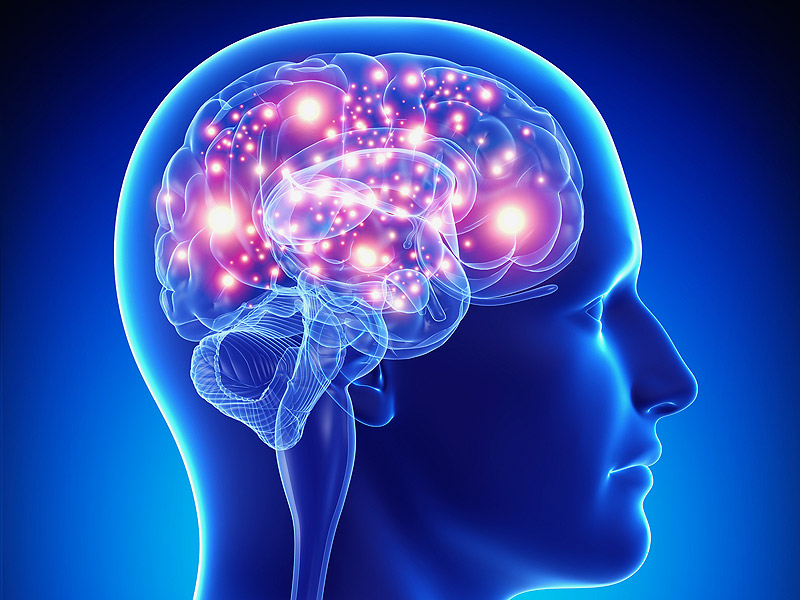
After cannabis consumption, THC reaches the hippocampus, the area of the brain responsible for memory. There, it activates CB1 receptors on neurons, replacing the natural endocannabinoid anandamide. The key discovery CB1 receptors receptors are also present on the mitochondria of hippocampal neurons (known as mtCB1 receptors). These mitochondria supply the energy required for memory storage.
By activating these mtCB1 receptors, THC instructs mitochondria to slow down the degradation of organic molecules. As a result, their energetic functions are greatly reduced. As a result, random access memory, i.e. the capacity for immediate recording, is disrupted. When scientists genetically excluded mitochondrial CB1 receptor activity, THC's effect on memory was nullified.
The same study raises another hypothesis: alterations in mitochondrial functions could partly explain why THC promotes or amplifies certain mental disorders, a line of research still under investigation.
Short-term memory vs. long-term memory: what's the difference?
It's one of the most common confusions. Cannabis mainly affects working memory,The ability to retain and manipulate information in the moment (a first name we've just heard, a sentence being constructed, the key on the table).
The impact on long-term memory is a separate issue. Observational studies of regular users show deficits in the consolidation of long-term memories, particularly in intensive and long-standing users. But these effects are difficult to isolate from other factors (frequency, age of onset, mode of consumption).
An American Medical Association (AMA) study published in 2024 shed important light: patients using medical cannabis in mild to moderate doses for one year showed no significant decline cognitive functions measured by fMRI, notably working memory and inhibitory control. This result moderates fears about the cognitive impact of controlled medical use, without invalidating concerns about intensive or recreational high-dose use.
Are the effects reversible?
On the whole, yes, but with important nuances according to consumption profile.
For occasional or moderate users, the effects on memory are essentially acute: they occur during intoxication and disappear within a few hours. The hippocampus returns to normal function.
In chronic and intensive users, brain imaging studies show structural and functional changes, particularly in the hippocampus and prefrontal cortex. These changes are partially reversible after a prolonged period of abstinence (several weeks to several months), but some deficits may persist, particularly in those who started before the end of brain development.
Why are teenagers more vulnerable?
The human brain is not fully developed until around the age of 25. The hippocampus and prefrontal cortex, the two structures most involved in memory and executive functions, are particularly active and sensitive during adolescence.
Regular cannabis use during this period has been associated in several longitudinal studies with lasting deficits in memory, attention and executive functions. These effects appear to be more marked and less reversible than in adults, probably because THC interferes with the normal development of neuronal connections and synaptic plasticity.
This is why specialists make a clear distinction between the’impact of cannabis on adolescents of that observed in adults, even with equivalent consumption.
CBD and memory: a different effect?
Unlike THC cannabidiol (CBD) does not bind directly to CB1 receptors. Its action on the brain is different, and its impact on memory seems to be the opposite.
Several preclinical studies suggest that CBD may have neuroprotective effects. Research from the University of Augusta published in eNeuro has shown that daily inhalation of CBD reduced markers of brain inflammation and improved memory performance in mice with Alzheimer's-like symptoms.
A clinical trial involving CBG (cannabigerol, another minor cannabinoid) also showed a positive improved verbal memory compared to a placebo, with no significant negative side effects.
These results remain largely preclinical or from small-scale studies. They do not allow us to conclude that CBD improves memory in healthy people, but they do suggest that cannabidiol does not have the same deleterious effects as THC on memory functions, and could even play a modulating role in certain pathological contexts.
What science says today
The effects of cannabis on memory depend on a combination of factors: user profile (age, frequency, duration of use), mode of administration, product composition (THC/CBD ratio, presence of terpenes) and individual predisposition.
What has been established:
- THC disrupts short-term memory via a well-identified mitochondrial mechanism in the hippocampus.
- Moderate adult users generally recover their abilities after stopping intoxication.
- Adolescents and long-term intensive users are the most exposed to lasting effects.
- CBD doesn't seem to share THC's amnesiac effects and could, in certain contexts, have a protective effect.
- Research on medical cannabis suggests that controlled, low-dose use does not cause measurable cognitive decline at one year.
Science on the subject has progressed considerably since the first studies, and continues to do so. The next few years will probably bring a finer understanding of long-term effects, particularly according to consumption profiles and the compositions of the products available.










Medical Cannabis in Germany: THC Prices Vary by a Factor of 12

France already has 3,000 cannabis retail outlets. None of them are legal.

Morocco's exports of legal cannabis have expanded to 15 countries

Aurora Cannabis Doubles Its Production Capacity in Germany

Tilray is accelerating its operations in Europe thanks to a license in Portugal

Boston will host the 10th annual State of the Cannabis Industry Conference on October 26

A DEA report confirms that there are no fatal cannabis overdoses

A British patient is challenging the NHS's refusal to reimburse medical cannabis

October 2026 CBD Highlights: 10 Strains and Hash to Discover from 5 French Producers

CBD in France: Traceability, Retail Stores, THC and Driving… What the New Bill Proposes
-
 Business2 weeks ago
The legal cannabis market in New York exceeds 4 billion $ in revenue
-

 Cannabis in France3 weeks ago
Which countries legalized medical cannabis before France?
-
Business3 weeks ago
South Korea is preparing to begin local production of medical cannabis to meet rising demand
-
Cannabis in Thailand3 weeks ago
From the boom in dispensaries to a purely medical approach: Thailand is revising its cannabis policy
-
Cannabis and driving3 weeks ago
Medical Cannabis and Driving: New South Wales Ends Automatic Penalties for THC
-
Autism3 weeks ago
Autism and Cannabis: Results from the First Placebo-Controlled Trial of NTI164
-
Cannabis in France2 weeks ago
France’s Drug Policy Chief Defends Cannabis Prohibition... and Runs Into the Facts
-
CBD1 week ago
In Brazil, researchers are developing an innovative CBD eye drop

















You must be logged in to post a comment Login