California: a new genetic test to determine your compatibility with cannabis

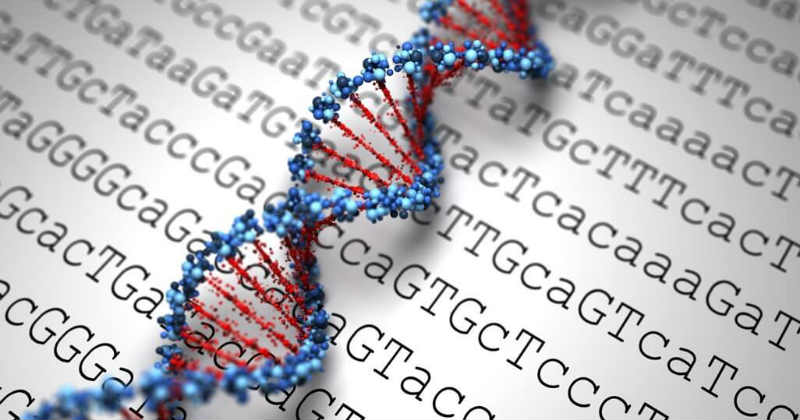
Biotechnology research company Endocanna Health, based in LA, has just released a brand new DNA test that evaluates the interaction of cannabis with a given genetic profile to determine the risks and benefits of cannabis consumption in a given individual.
Of the 0.1% of DNA that makes us unique, it's according to Endocanna Health precisely this 0.1% that is affected by cannabis consumption, which explains the different reactions to cannabis. Beyond individual tolerance levels, it's the quality of the experience itself that varies from one individual to another, depending on their genetic profile: for some, it proves positive, while for others it leads to anxiety attacks or addiction.
How does the test work? What does it assess?
The Cannabinoid DNA Variant Test is based on a patented algorithm that analyzes the customer's genetic profile to create personalized recommendations and flag up contraindications. For example, the presence of CYP2C9 gene in DNA indicates that the body may not metabolize THC properly. You should therefore avoid cannabis in the form edibles. Genetic profiles linked to higher-than-average anxiety, psychosis and dependency tendencies will need to avoid certain cannabinoid profiles that could exacerbate these traits.
The test also analyzes the endocannabinoid system and determines predispositions to anxiety, dependence, psychosis or depression, pain sensitivity, sleep quality, metabolic functioning and the effect of THC on cognition. Knowledge of these predispositions will enable recreational users and patients to make reasoned, personalized use decisions.
The test does not go so far as to recommend specific cannabis varieties, The company has identified eight ratio-types and terpene combinations based on current research. The company's team has identified 8 ratio-types and combinations of terpenes based on current research. The test also advises which drugs and dietary supplements may match a given genotype.
What for?
Len May, co-founder and director of the company explains that the aim of this test is to: «provide individuals with the tools and confidence to introduce cannabis into their lives using the most advanced research available today». The test's vocation is primarily medical and, in this respect, follows the global trend towards the legalization of the therapeutic use of cannabis.
The test has the advantage, according to Len May, of «providing the most precise but, more importantly, personal and unique information». Personalized medicine is already available for other drugs, whose dosage is often adapted to the patient's profile, but in terms of cannabis, it has not yet been democratized. The development of these techniques could give confidence to doctors who are reluctant to prescribe cannabis because they are unfamiliar with its effects on individual patients.
The test could also prevent the development of disorders and dependence before they actually occur, by avoiding prescribing medical cannabis to patients for whom it is not suitable. Doctors would be able to precisely define which patients are likely to substitute medical cannabis for opioids, an issue currently much debated as part of the opioid crisis in North America.
Potential dangers for privacy
The test is very easy to carry out: the customer takes a saliva sample at home, then sends it to the laboratory, which will sequence the DNA and identify the genetic markers relevant to cannabis use. This is not the first test of its kind on the market, as the company AnantLife had already marketed one, but at a dissuasive price ranging from 700 to 900$.
The Endocanna Health costs only 40$ but does not benefit from the same quality guarantee: AnantLife is accredited by the College of American Pathologists (CAP) and the Clinical Laboratory for Improvement of Amendments (CLIA), the gold standards for medical testing certification. As a result, their data is recognized as legitimate by governments, universities and researchers in the USA and Canada.
The fact that genetic testing is becoming more and more widespread, and is no longer carried out by recognized medical bodies, is a cause for concern when it comes to data storage and use, an area which is still largely unregulated. In Canada, as in the United States, there is a law on genetic discrimination which prevents insurance companies, for example, from charging for premium risks based on genetic information, while anonymity is in principle guaranteed. In reality, it's very easy to trace a person's identity and address by comparing their DNA with public records. What's more, these genetic testing companies are very lucrative, and could sell the test results to pharmaceutical laboratories. This sharing of information can be beneficial, but it can also be misused without the customer's knowledge.











Medical Cannabis in Germany: THC Prices Vary by a Factor of 12

France already has 3,000 cannabis retail outlets. None of them are legal.

Morocco's exports of legal cannabis have expanded to 15 countries

Aurora Cannabis Doubles Its Production Capacity in Germany

Tilray is accelerating its operations in Europe thanks to a license in Portugal

Boston will host the 10th annual State of the Cannabis Industry Conference on October 26

A DEA report confirms that there are no fatal cannabis overdoses

A British patient is challenging the NHS's refusal to reimburse medical cannabis

October 2026 CBD Highlights: 10 Strains and Hash to Discover from 5 French Producers

CBD in France: Traceability, Retail Stores, THC and Driving… What the New Bill Proposes
-
 Business2 weeks ago
The legal cannabis market in New York exceeds 4 billion $ in revenue
-

 Cannabis in France3 weeks ago
Which countries legalized medical cannabis before France?
-
Business3 weeks ago
South Korea is preparing to begin local production of medical cannabis to meet rising demand
-
Cannabis in Thailand3 weeks ago
From the boom in dispensaries to a purely medical approach: Thailand is revising its cannabis policy
-
Cannabis and driving3 weeks ago
Medical Cannabis and Driving: New South Wales Ends Automatic Penalties for THC
-
Cannabis in Argentina4 weeks ago
Argentina Opens Its Market to Hemp Flowers Containing 1% of THC
-
Autism3 weeks ago
Autism and Cannabis: Results from the First Placebo-Controlled Trial of NTI164
-
Cannabis in France2 weeks ago
France’s Drug Policy Chief Defends Cannabis Prohibition... and Runs Into the Facts

















You must be logged in to post a comment Login