
Hemp and the paper industry: threat or opportunity?

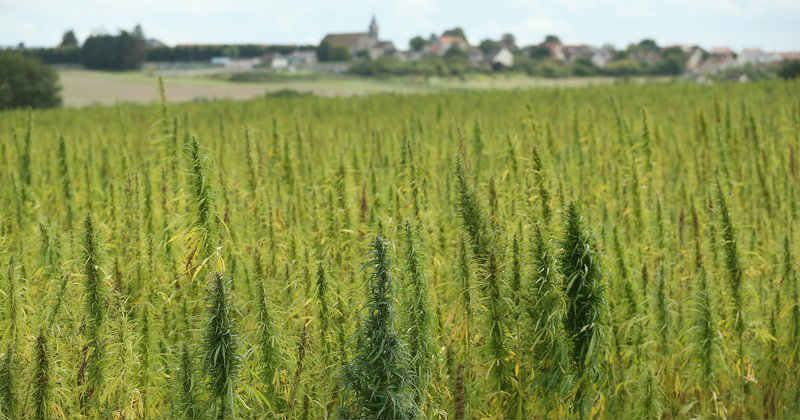
The rise of digital technology has not yet eliminated cardboard and paper, which are still used for books, shipping boxes, newspapers, and even wallpaper. Paper pulp, extracted from trees, leads to high wood consumption—sometimes from sustainably managed forests—even though eco-friendly alternatives exist and were already used by our ancestors: hemp pulp and flax.
In addition to the pulp, all parts of the hemp plant can be used in industry. Thus, the Hemp seeds can be used in food products and fibers in the textile and construction industries. However, much like paper made from trees, cotton imported from the colonies eventually replaced hemp because it could be processed more quickly. In the past, trees were considered an abundant and renewable resource, but today deforestation and the destruction of ecosystems essential to life are causes for concern.
The Obstacle of Prohibition
While advances in industrial and technological techniques related to hemp would have made it a preferable alternative, decades of prohibition have wiped out all scientific research into the economic potential of hemp. Today, it is the established nature of competing industries that is slowing down and hindering the development of this potential.
The confusion of the industrial hemp The association of recreational «marijuana»—whose use was heavily ethnicized in the United States—led to the banning of the product and its cultivation, despite its beneficial properties and millennia-old use. Hemp was therefore banned in 1937 under the Marijuana Text Act, although it is sometimes permitted as part of industrial strategies that offer alternatives to oil.
Due to the ban, the hemp industry does not yet have the appropriate techniques and technologies to effectively replace the traditional paper industry; however, once developed, it could meet market needs on a large scale and in a much more environmentally friendly way. Eventually, hemp could completely replace paper and be used on a massive scale in the production of cigarette paper, tea bags, and banknotes. With effective marketing strategies, it is conceivable that hemp cultivation could become the exclusive source for paper products.
A more environmentally friendly alternative
Just like wood, the entire hemp plant can be used to make paper of various qualities, although this requires complex processing facilities. Processing hemp is certainly more labor-intensive, but it is far more environmentally friendly than processing wood; and when made from hemp fibers, the paper is of high quality and can be recycled more times than paper made from timber. It also lasts much longer because hemp pulp contains no acids. The leftover material can be used to make cardboard boxes, hemp-based building materials or as fuel. The entire plant can be used for a variety of different purposes.
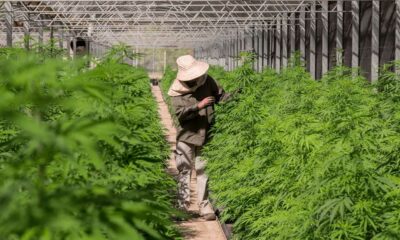
In terms of maintenance, the hemp plant is easy to care for and hardy, and requires virtually no pesticides. Unlike trees, hemp crops can be harvested annually. Furthermore, under the same growing conditions, hemp yields 4.1 times more paper than fast-growing trees.
In terms of performance, hemp stands out as the best alternative; yet even though it seems to possess all the qualities needed to become the primary material in many sectors, rival industries—which have benefited from prohibition—continue to campaign for the plant to be banned, emphasizing its psychoactive effects.











CBD is said to promote athletic recovery, without improving performance

294 cannabis clubs in Chile: a booming movement with uneven distribution

Chronic Sciatica: New York Approves First Clinical Trial of a THC-Based Medication

United States: The DEA is accelerating the integration of medical cannabis at the federal level

Florida is nearing one million patients using medical cannabis

Uruguay Revives Its Plan to Allow Tourists to Legally Access Cannabis

In Brazil, researchers are developing an innovative CBD eye drop

Autism: Medical Cannabis Is Linked to Reduced Anxiety

The $28 billion U.S. hemp market remains under threat

Jamaica Eases Small Farmers' Access to the Cannabis Market
-
 Business5 days ago
The legal cannabis market in New York exceeds 4 billion $ in revenue
-
Cannabis and driving4 weeks ago
Cannabis and CBD: French Drivers Can Now Lose Their License Even Without a Positive Test Result
-

 Cannabis in France2 weeks ago
Which countries legalized medical cannabis before France?
-
Business2 weeks ago
South Korea is preparing to begin local production of medical cannabis to meet rising demand
-
Cannabis in the Netherlands4 weeks ago
One year after the launch of the Dutch cannabis experiment, the first trends are emerging
-
Cannabis in Thailand2 weeks ago
From the boom in dispensaries to a purely medical approach: Thailand is revising its cannabis policy
-
Cannabis in France4 weeks ago
French medical cannabis remains stalled at the Ministry of Health
-
Cannabis in Argentina3 weeks ago
Argentina Opens Its Market to Hemp Flowers Containing 1% of THC















You must be logged in to post a comment Login