
Cannabis and the Adolescent Brain: French Scientists Make a Key Discovery
A new study conducted on mice suggests that exposure to THC during adolescence may temporarily disrupt the energy metabolism of brain cells, with behavioral effects that persist long after the molecular disruption itself has subsided. This finding proposes a possible mechanism for one of the biggest unanswered questions in cannabis research.

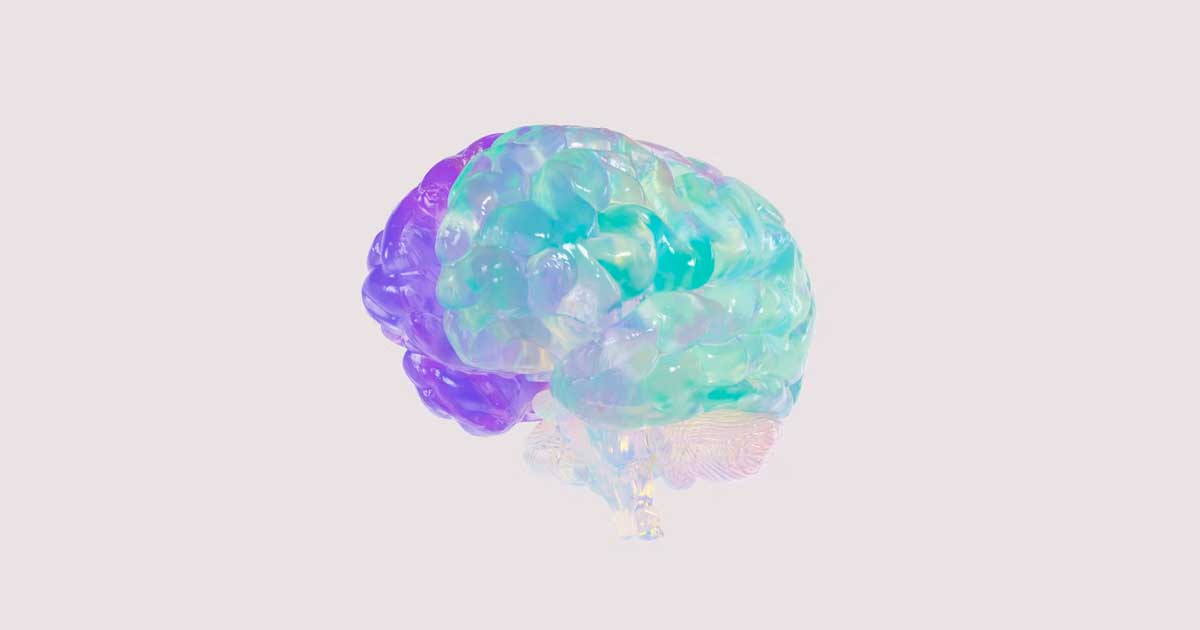
Scientists have long sought to understand why the cannabis use during adolescence could have long-lasting effects into adulthood.
Several studies have established a link between exposure to cannabis during adolescence and a higher risk of certain psychiatric disorders later in life, including social and cognitive difficulties. Animal studies have also shown lasting behavioral changes following exposure to THC, the primary psychoactive compound in cannabis.
But one question remains: How could a relatively brief exposure during adolescence have consequences weeks or even years later?
A new study published in Neuropsychopharmacology suggests one possibility: mitochondria, those tiny structures that provide the energy needed for our cells to function.
Researchers based in France, Spain, and Italy have discovered that exposure to THC during adolescence temporarily altered mitochondrial function in certain brain cells of mice.
Even more surprising: this change had disappeared by adulthood, but certain behavioral changes were still present. And in this experiment, they primarily affected male mice.
Mitochondria at the Heart of the Experiment
The researchers focused on mitochondria, as previous studies had shown that the CB1 cannabinoid receptors are found not only on the surface of brain cells but also on their mitochondria.
THC can therefore act directly on these cells and disrupt certain mechanisms that enable cells to produce energy.
The team wanted to know whether such a disruption, when it occurs during adolescence, could have lasting consequences. This period is particularly important because the brain is still developing rapidly and its neural circuits continue to reorganize.
To test this, the researchers administered THC or a control solution daily to adolescent male and female mice for ten days. Once the animals reached early adulthood, they assessed their physical activity, social interactions, and working memory.
Different effects in males and females
The results showed a clear difference between the sexes. Male mice exposed to THC during adolescence were subsequently more active, interacted less with their peers, and performed worse on a test used to measure working memory.
Female mice, on the other hand, were much less affected by THC exposure in these same tests.
To understand why, researchers studied a protein called NDUFS4, which plays a role in mitochondrial function and, consequently, in cellular energy production.
In adolescent male mice, THC temporarily altered this protein in the hippocampus and prefrontal cortex, two brain regions involved in memory and behavior, among other functions.
At the highest THC dose tested, this change was clearly visible immediately after exposure. But by adulthood, it had disappeared. Female mice also did not exhibit the same reaction to THC.
The researchers were thus faced with an intriguing result: The change observed in the cells was temporary, but the behavioral changes persisted.
A temporary disruption with lasting consequences?
It remained to be determined whether this change in the mitochondria was actually responsible for the changes observed later on. The researchers then turned their attention to astrocytes. These cells play a vital role in the brain: they surround and support neurons and are involved, in particular, in supplying them with energy.
Using a viral vector, scientists introduced a modified version of the NDUFS4 protein into male mice to prevent it from being disrupted by THC. The mice were then exposed to THC during adolescence.
Result: By preventing this change, the researchers also prevented the subsequent changes in sociability and physical activity observed in the other mice exposed to THC. The experiment therefore suggests that this temporary disruption of mitochondrial function plays a direct role in certain behavioral effects observed later on.
The adolescent brain is thought to be particularly sensitive
The researchers propose the following scenario: during adolescence, THC may temporarily disrupt mitochondrial function in astrocytes. These cells would then be less effective at supporting neurons at a time when the brain’s circuits are still developing.
Even if mitochondrial function subsequently returns to normal, certain brain circuits may have been altered during this particularly sensitive period.
In other words, the problem would not necessarily be permanent mitochondrial damage. Rather, it would be the moment when the disturbance occurs which could have long-term consequences.
The study also examines the differences between males and females. In particular, the authors hypothesize that females may have better protection against certain cellular imbalances, potentially due to estrogen. However, they emphasize that this line of inquiry will need to be studied in greater detail.
Results in mice, but not yet in humans
This distinction is crucial: the study was conducted on mice and does not prove that the same phenomenon occurs in teens who use cannabis.
The experimental conditions also differ greatly from human consumption. In particular, the mice were administered THC via injection, and the researchers acknowledge that they do not yet know whether astrocytes are the only cells—or even the primary cells—involved in the observed effects.
This study Therefore, it does not show that using cannabis during adolescence inevitably leads to psychiatric disorders in adulthood.
It does, however, offer a biological mechanism to explain how exposure to THC during a critical period of brain development could produce effects that persist even after the initial disruption has subsided.




















Autism: Medical Cannabis Is Linked to Reduced Anxiety

The $28 billion U.S. hemp market remains under threat

Jamaica Eases Small Farmers' Access to the Cannabis Market

Faced with resistance from Aurora, Curaleaf raises its offer by 25%

Massachusetts: 71.1% of voters want to keep cannabis legal

All Our Tips for Finding a Reliable CBD Store

Uncertainty surrounding Bedrocan threatens the supply of medical cannabis flowers to Danish patients

"Light" Cannabis in Italy: The ban on hemp flowers will be delayed until February 2027 pending a ruling by the Constitutional Court

The legal cannabis market in New York exceeds 4 billion $ in revenue

France’s Drug Policy Chief Defends Cannabis Prohibition... and Runs Into the Facts
-
 Cannabis and driving4 weeks ago
Cannabis and CBD: French Drivers Can Now Lose Their License Even Without a Positive Test Result
-

 Cannabis in France2 weeks ago
Which countries legalized medical cannabis before France?
-
Business2 weeks ago
South Korea is preparing to begin local production of medical cannabis to meet rising demand
-
Cannabis in the Netherlands3 weeks ago
One year after the launch of the Dutch cannabis experiment, the first trends are emerging
-
Cannabis in Thailand2 weeks ago
From the boom in dispensaries to a purely medical approach: Thailand is revising its cannabis policy
-
Cannabis in Argentina3 weeks ago
Argentina Opens Its Market to Hemp Flowers Containing 1% of THC
-
Cannabis in France3 weeks ago
French medical cannabis remains stalled at the Ministry of Health
-
Cannabis and driving2 weeks ago
Medical Cannabis and Driving: New South Wales Ends Automatic Penalties for THC
















You must be logged in to post a comment Login