California: CBD food products temporarily illegal


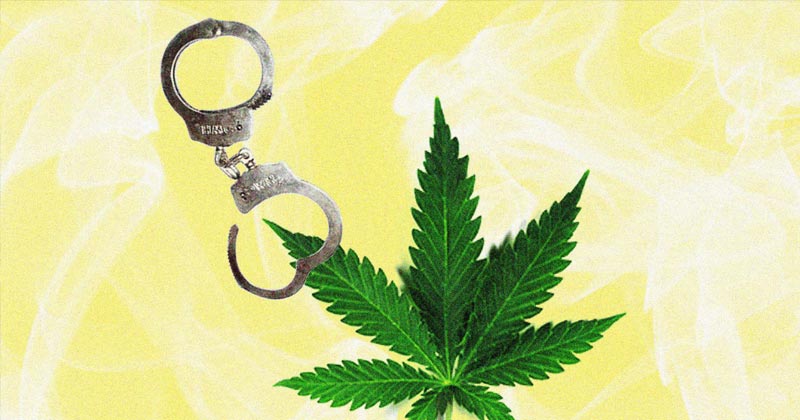
While California has officially launched its legal cannabis market Earlier this year, the Department of Public Health announced that CBD oil was banned from sale and from use by both animals and humans. Although the California government has the authority to legalize the substance, it chose to align itself with the federal position, which is that of the FDA (Food and Drug Administration).
An illegal substance
This position is ambiguous, to say the least, since it allows the consumption of industrial hemp seeds and oil made from those seeds, provided that the distributor does not claim any therapeutic benefits for the product, but it prohibits all CBD products, whether derived from cannabis or industrial hemp, with the exception of seeds and provided that the oil obtained is not enriched with CBD, THC, or other cannabinoids.
Oil derived from industrial hemp seeds has a different status than CBD oil. Industrial hemp oil (extracted from the seeds) does, of course, contain traces of CBD but is permitted for consumption.
CBD oil extracted from the plant, on the other hand, cannot be used as an ingredient, additive, or dietary supplement in food. At least not until the FDA—which is currently conducting research on the subject—declares it safe or even medically recommended. In the meantime, adding CBD to any product, regardless of its source, is strictly prohibited. The only authorized CBD product is the’Epidiolex, recognized as a drug by the FDA.
A Paradox for California
It may seem paradoxical for a state that has legalized cannabis in all its forms, including edibles, to ban CBD in food products when cannabis itself contains CBD.
These issues are, however, left to the discretion of the states, which can rely on federal agricultural laws to authorize the use of CBD for human consumption—something some states have already done. However, California, the U.S. leader in cannabis legalization, appears to be resisting this for the time being. Perhaps the government, currently in the process of drafting regulations for the cannabis market, does not wish to take on the regulation of another controversial substance that would require the creation of a new legal framework and entail high procedural costs.
The CBD-based products Yet they are experiencing a real boom and are becoming increasingly popular for their therapeutic benefits and relaxing effects. They are already available in many forms—from food to medical and cosmetic products—and in a variety of stores that are not limited to cannabis shops. This raises the question of how the government will go about removing all the controversial merchandise now that the market is flooded with it.











France Is More Reluctant to Legalize Cannabis Than the EU Average, According to a New EUDA Survey

Scientists Create Cannabinoid-Free Hemp

MediPharm is preparing to launch its cannabis inhaler in Europe

Sensi Seeds and High Times are teaming up to launch five new cannabis strains

Brains Bioceutical is aiming for the Nasdaq with a valuation of $750 million

CBD in French Polynesia: Sublingual Oils Soon to Be Available Over the Counter

Cannabis legalization in Mexico returns to the Senate after five years of political deadlock

Massachusetts Gives the Green Light to Drive-Thru Cannabis Sales

Finland Wants to Legalize Cannabis Based on the German Model

Hemp-derived THC: U.S. Senators Are Divided Over the Ban
-
 Cannabis in Quebec4 weeks ago
Cannabis: What France Could Learn from Quebec, Eight Years After Legalization
-
Cannabis in New Zealand4 weeks ago
Chronic Pain: New Zealand Is Testing Cannabis to Improve Sleep
-
Cannabis in France4 weeks ago
Dr. Pascal Douek, a tireless advocate for medical cannabis in France, has died
-
Cannabis in France4 weeks ago
Medical cannabis: The Greens introduce two amendments to accelerate its widespread adoption
-
Cannabis in Canada4 weeks ago
A Canadian study reveals the pleasant psychotropic effects of high-dose CBD
-
Studies on cannabis4 weeks ago
More THC, barely any additional effects: A new study challenges common assumptions about the potency of cannabis
-
Cannabis in Argentina4 weeks ago
The Argentine province of Chubut is creating its own framework for medical cannabis
-
Cannabis in France3 weeks ago
Medical Cannabis: Patients Issue a Formal Notice to the Government to Break the Deadlock














You must be logged in to post a comment Login