

Prestigious American dispensary chain Medmen faces financial difficulties


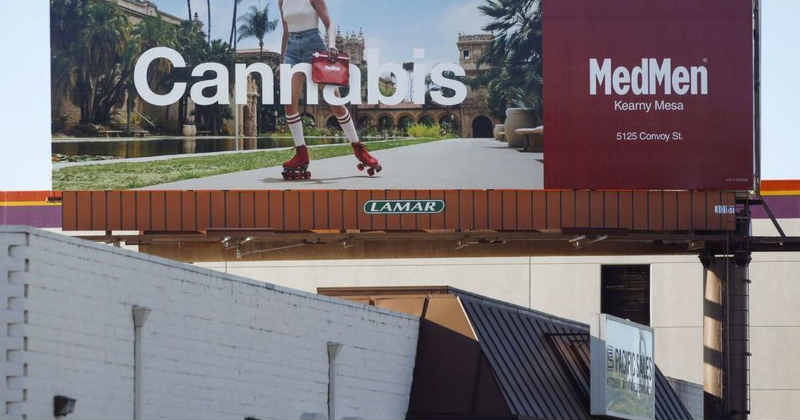
Medmen is one of, if not the, most prestigious American dispensary chain. The brand has become an international benchmark. Nevertheless, recent financial reports highlight the company's financial difficulties. The situation raises a number of questions about the profitability of the market segment the company has entered, and that of the industry in general.
Medmen falters
Despite its prestige, Medmen almost ran out of money. The company finally secured a $100 million loan from a cannabis investment fund: Gotham Green Partners. The latter agreed to lend a further 150$ million depending on the company's results. The high rate (6%) suggests that the company's financial worries have dented investor confidence. Medmen shares have fallen by almost 60% since last October, and the company has dropped from $3 billion in market capitalization to $1.6 billion.
As reported by CNBC, The company's financial losses over the last six months amounted to $131 million. These had been offset by a $200 million loan during the last quarter of 2018. This money was also spent, and the company needed a new loan. It has even sold some of its dispensaries. Its financial situation calls into question the relevance of its business strategy and the size of the market segment it was targeting.
A correlation of factors
Internal factors
The brand maintains high prices and a superior quality image. It seeks to offer an inclusive experience with distinctively designed stores and careful attention to branding. The company aims to attract new consumers, tourists and, in general, a more affluent clientele. Its mission is to normalize cannabis consumption, and to this end it has released a short film directed by Spike Jonze: « The New Normal« . However, it would appear that the market for new consumers has been overestimated.
Medmen's problems are therefore partly due to a communications strategy that was too costly and not effective enough. Disciplinary problems within the company have also been raised by a former employee in a court case. Not just any employee, however, but the company's former CFO, James Parker. He accused the two CEOs, Adam Bierman and Andrew Modlin, of tolerating cocaine use by employees and flirting with the law in terms of compliance with regulations.
External factors: the California market
Structural factors may also explain the company's decline. California is Medmen's main market, and it's an extremely complex one. Legal cannabis businesses are subject to very significant taxes and restrictions - the price passed on to consumers can sometimes increase by 45% all taxes aggregated. They also face competition from a highly developed illicit market which has existed and adapted for decades.
Prices on the black market are almost half those on the legal market. Regular consumers therefore continue to buy from the black market, and the legal market fails to capture this essential customer base. The market analysis company BDS Analytics estimates that the illegal market still accounts for 80% of California sales. This problem has led the government to step up its crackdown on illegal businesses.
«The unlicensed business market continues to flourish, in part due to their financial comparative advantage over legal cannabis work businesses,» wrote the California Cannabis Commission in a 2018 report. These comparative advantages are partly due to the strict regulations and high taxes that drive up prices in the legal market. In some states, on the contrary, lower taxes have attracted consumers and gradually brought prices down. In Colorado and in Oregon, legal dispensaries now account for 60 to 70% of sales. They are nevertheless other problems and the black market persists.


















The «cannabis» fine raised to 500 euros under the RIPOST Act

Sacha Baron Cohen Brings Ali G Back to Life During a Surprise Appearance at Wimbledon

Botswana Paves the Way for Commercial Hemp Cultivation

The First Authorized Medical Cannabis Cultivation in the Canary Islands

Germany Ends Public Health Insurance Coverage for Medical Cannabis Flowers

Cannabis Legalization in Pennsylvania Once Again on Hold

Democratic senators are reviving a bill to legalize cannabis at the federal level in the United States

A THC:CBD oil shows promising results in reducing agitation in people with dementia

San Francisco Allows «Cannabis Cafés»

Kenya Denies Rastafarians the Right to Use Cannabis
-

 Cannabis in Europe4 weeks ago
Bosnia and Herzegovina Continues to Roll Out Medical Cannabis Following Its Legalization
-
Cannabis in France3 weeks ago
France Submits the Long-Awaited Decree on the Reimbursement of Medical Cannabis to the Council of State
-
Cannabis in the U.S.4 weeks ago
The DEA Begins Hearings on the Federal Rescheduling of Cannabis
-
Business3 weeks ago
China Invests $10 Million in Medical Cannabis in Lebanon
-
Cannabis in Thailand4 weeks ago
Thailand Threatens Cannabis Shops with Severe Penalties
-
Cannabis in Australia2 weeks ago
South Australia is working to identify more water-efficient hemp varieties
-
Exchange4 weeks ago
Glass House will be the second U.S. cannabis company to list on the New York Stock Exchange
-
Cannabis in Africa1 week ago
Kenya Denies Rastafarians the Right to Use Cannabis















You must be logged in to post a comment Login