Italy's hemp flower ban referred to European Court of Justice

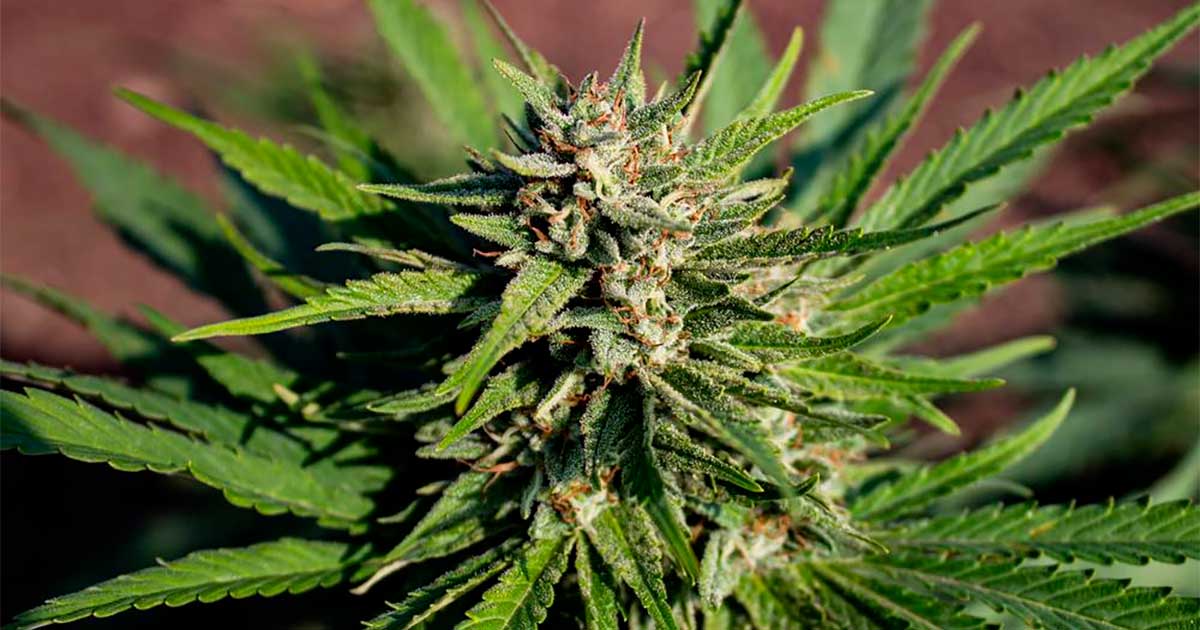
The legal dispute that divides Italy over the hemp flowers and CBD comes at a crucial time, that France has also experienced.
The Italian Council of State referred the dispute to the Court of Justice of the European Union (CJEU), The referral raises the question of the conformity of national measures restricting hemp inflorescences with the European Union. The referral raises the question of the compliance of national measures restricting hemp inflorescences with the European Union law, particularly with regard to the free movement of agricultural products.
The case concerns safety decree and the ministerial decree Italy, which considers certified hemp flowers, leaves, oils and resins to be narcotics, even when their THC content is below the legal thresholds.
In referring the case back to Luxembourg, the Conseil d'Etat recognized that these rules could be in contradiction with European regulations, echoing the view of the European Court of Justice. to the precedent set by the Kanavape ruling, in which the CJEU ruled that CBD was not a narcotic and could not be blocked by member states if legally marketed elsewhere in the Union.
Legal and economic issues
This decision could have Europe-wide repercussions, by determining whether the Italian restrictive framework violates the principles of free movement of goods, of competition and proportionality under European law.
According to the lawyer Giacomo Bulleri, who is following the case, the CJEU ruling «is likely to have an effect throughout the EU, and is an important step towards harmonization in the sector». He adds that the ruling could lead to the suspension of current coercive measures, offering temporary respite to operators subject to criminal or administrative proceedings.
For industry players, the stakes are high. Visit Italy's hemp industry employs some 15,000 people and generates annual sales estimated at 500 million euros.
Mattia Cusani, president of Canapa Sativa Italia, The European Court of Justice (CJEU) will clarify whether targeting inflorescences alone is justified when European law makes no distinction between different parts of the plant and THC levels are minimal. «For companies and stores, this means a concrete prospect of legal certainty and supply chain protection,» he noted.
Years of regulatory turbulence
The referral to the CJEU concludes a decade of struggle marked by legislative reversals and legal challenges. In 2023, the Lazio Regional Administrative Tribunal (TAR) annulled certain parts of a ministerial decree which restricted hemp flowers and leaves, citing a lack of scientific justification. The Meloni government appealed, eventually prompting the Council of State to request a European ruling.
Italy has made several attempts to classify hemp as a medicinal plant, Restricting its cultivation and trade to seeds and fibers. These restrictions have led to confusion and legal disputes that have disrupted the sector's growth. Francesco Mirizzi, General Manager of’European Industrial Hemp Association (EIHA), noted that the industry «has paid the price in legal fees, product seizures and uncertainty», exacerbating the impact of inconsistent national policies.
At the heart of the referral to the CJEU are two questions: does the Italian safety decree breach the 2016 Italian Hemp Law by treating all hemp flowers as narcotics, and do these restrictions breach EU rules on agricultural products and market freedoms?
The Conseil d'Etat based its decision on the principle that European legislation «makes no distinction between different parts of the plant», suggesting that national bans on inflorescences could be incompatible with EU single market rules.
Mr. Mirizzi pointed out that while politics often delays the clarification of regulations, the CJEU ruling will eventually shape the interpretation of hemp law in all member states.
Towards legal certainty
With this referral, Italian operators and retailers are anticipating an historic decision that could finally harmonize national rules with EU standards.
The CJEU's decision will determine whether the flowers, the leaves, hemp oils and resins with a THC content of less than 0.3% are legal throughout the EU, putting an end to years of legal uncertainty.
As Bulleri points out, «the final battle for the hemp sector is on the horizon», marking a pivotal moment for one of Europe's most controversial agricultural industries.






















«Vincy Gold»: Humboldt Seed Company on the Hunt for Saint Vincent Sativas

Cronos Completes the Acquisition of CanAdelaar for 57.5 million euros

Cannabis with a "bloody" twist: Discover Sensi True Blood and Sensi Sangria, the two new strains from Sensi Seeds

Hemp: The Council of the EU Takes a Stand on New Production and Marketing Rules

Missouri's legal cannabis market accounts for 93 % of consumer spending

THC Gummies: How to Read a Certificate of Analysis Before Buying

British patients now have access to THCV-rich cannabis flowers

Spain: Medical Cannabis Is Coming to About 50 Hospitals

JIHE 2026: Japan’s Largest Trade Show Dedicated to Hemp and CBD Returns to Tokyo with More Than 100 Industry Players

New Caledonia: The Courts Clear the Way for the Return of CBD
-
 Business3 weeks ago
The legal cannabis market in New York exceeds 4 billion $ in revenue
-

 Cannabis in France4 weeks ago
Which countries legalized medical cannabis before France?
-
Cannabis in France1 week ago
France already has 3,000 cannabis retail outlets. None of them are legal.
-
Business4 weeks ago
South Korea is preparing to begin local production of medical cannabis to meet rising demand
-
Cannabis in the U.S.1 week ago
A DEA report confirms that there are no fatal cannabis overdoses
-
Cannabis in Thailand4 weeks ago
From the boom in dispensaries to a purely medical approach: Thailand is revising its cannabis policy
-
Cannabis and driving4 weeks ago
Medical Cannabis and Driving: New South Wales Ends Automatic Penalties for THC
-
Cannabis in France3 weeks ago
France’s Drug Policy Chief Defends Cannabis Prohibition... and Runs Into the Facts
















You must be logged in to post a comment Login