
Medical cannabis use surges by 64 % in Denmark
The Danish medical cannabis program saw a sharp increase in usage in 2025, with more than 22,000 prescriptions issued to nearly 2,500 patients.

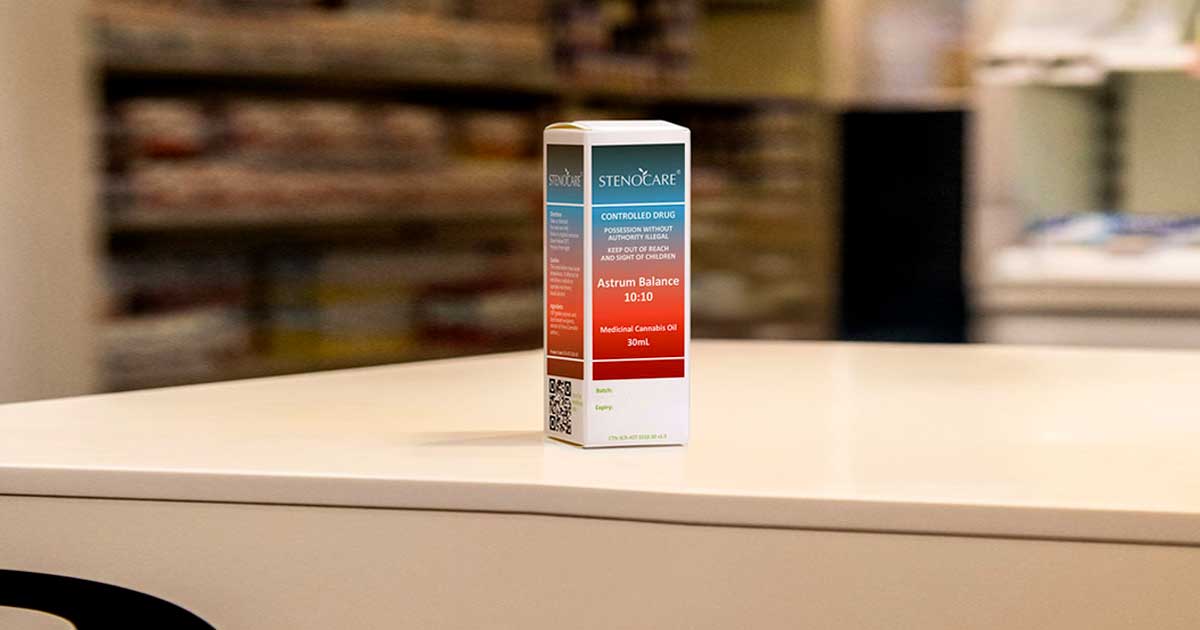
The consumption of Medical cannabis has seen significant growth in Denmark in 2025. However, the number of reports of suspected adverse effects remained extremely low: only three for the entire year, according to the latest report from the Danish Medicines Agency (Lægemiddelstyrelsen).
Published in September 2026, this annual pharmacovigilance report covers products distributed under the Danish medical cannabis program between January 1 and December 31, 2025.
All in all, 22,410 prescriptions were issued to 2,465 patients during the year, compared with 13,665 prescriptions for 1,605 patients in 2024. In the space of a year, the number of prescriptions thus jumped by 64 %, while the number of patients increased by 54 %.
However, this sharp increase in consumption was not accompanied by a rise in reports of adverse effects. The agency received only three such reports in 2025, exactly the same number as the previous year. Two involved suspected serious adverse effects, and one involved an adverse effect considered non-serious.
These data therefore paint a two-sided picture. On the one hand, the Danish health authority has not identified any new safety signals regarding the available products. On the other hand, it believes that the very low number of reports likely reflects a Persistent underreporting of adverse events.
Four suspected adverse effects
The three reports received in 2025 describe four suspected adverse effects: fatigue, loss of consciousness, blurred vision, and pericardial effusion—that is, an abnormal accumulation of fluid around the heart.
They pertain to four products on the market as part of the program : «Stenocare» CBD Oil, «Stenocare» THC/CBD Oil, «Stenocare» CBD100 Oil, and «SCANLEAF» THC 25. Two statements were made by hospital physicians, and the third by a general practitioner.
For each case, the Danish Medicines Agency assessed whether there was a possible causal link to the product in question, taking into account, in particular, the patient’s health status, their treatments, and the already known effects of authorized medications containing medical cannabis.
Fatigue, loss of consciousness, and blurred vision are already among the known side effects of some of these medications.
The case of pericardial effusion is more specific. This effect is not among those already associated with cannabis-based medicines cited as a reference by the agency. While a link to the product consumed cannot be completely ruled out, the authorities consider the patient’s health condition to be a more likely explanation: the patient suffered from severe anorexia and had experienced a similar episode in the past.
After analyzing the reports, the agency states that it has not identified no indications suggesting the emergence of new risks or changes in known risks.
Furthermore, lot numbers were available for all reports, and there was no evidence to suggest a manufacturing or quality issue with any particular lot. Therefore, no additional risk mitigation measures were deemed necessary.
More than 22,000 prescriptions in one year
Beyond pharmacovigilance, the report primarily highlights the rise of medical cannabis in Denmark. Thirteen products were available in 2025, with very different profiles, ranging from flowers with high THC content to oils with higher CBD concentrations.
The consumption tables published by the agency show that a few specific products account for a significant share of prescriptions. Bedrocan «Scanleaf,» containing 220 mg/g of THC and 10 mg/g of CBD, was dispensed to 935 patients for a total of 7,460 prescriptions.
Bedrocan « Canngros », containing 220 mg/g of THC and less than 10 mg/g of CBD, was prescribed to 780 patients and accounted for 5,430 prescriptions. The «Stenocare» CBD oil, meanwhile, was dispensed to 445 patients through 1,995 prescriptions.
The patients involved in the three adverse event reports were between 21 and 82 years old. In two cases, cannabis had been prescribed to treat neuropathic pain; in the third, it was used to stimulate appetite.
The agency notes, however, that it would be impossible to compare the safety profiles of different products based on this data. With only three reports, the sample size is far too small to establish a relationship between a product’s consumption level and the number of adverse effects attributed to it.
A Problem of Underreporting
Above all, three reports do not mean that only three patients experienced adverse effects in 2025.
A statement is based on the suspicion a link between a product and a medical event, but does not, on its own, prove that cannabis is responsible: the patient’s illness, other treatments, or various factors may also be at play.
In Denmark, doctors are required to report suspected adverse reactions observed in their patients treated with these products to the Medicines Agency. Serious cases must be reported within fifteen days of their identification. Other healthcare professionals, as well as patients and their families, may also submit reports.
It is precisely for this reason that the low number of reports is a cause for concern for health authorities.
With the number of patients having increased by more than half in one year and doctors now subject to stricter reporting requirements, the agency believes that Pharmacovigilance continues to suffer from underreporting.
It had already reminded physicians of their obligations when it published its 2024 report and now considers it necessary to continue these awareness-raising efforts. The issue will therefore remain a focus of attention for the Danish authority, although it notes that no new safety signals have emerged from the data at its disposal.























In the United States, cannabis use among high school students has reached an all-time low

Medical cannabis use surges by 64 % in Denmark

Canopy Growth Enters the U.K. Market with Four Canadian Strains

CBD: Full-Spectrum Extracts Under Threat in Greece

Medical Cannabis and Back Pain: Opioid Use Has Dropped by 90 % in 10 Years

Cannabis: Wisconsin Could Finally Legalize It in 2027

Argentina Opens Its Market to Hemp Flowers Containing 1% of THC

The French Socialist Party still doesn't know how to approach the legalization of cannabis

Science in the City International: Paris at the Heart of Transatlantic Scientific and Medical Dialogue

Christine Fréchette is alienating Quebec’s cannabis industry
-
 Cannabis and driving2 weeks ago
Cannabis and CBD: French Drivers Can Now Lose Their License Even Without a Positive Test Result
-
Cannabis in France2 weeks ago
Cannabis Legalization: The LFI Bill Has a Major Problem—THC
-

 Cannabis in the Netherlands1 week ago
One year after the launch of the Dutch cannabis experiment, the first trends are emerging
-
Cannabis in France1 week ago
French medical cannabis remains stalled at the Ministry of Health
-
Cannabis in Argentina6 days ago
Argentina Opens Its Market to Hemp Flowers Containing 1% of THC
-
Business1 week ago
The United Kingdom Is Moving Closer to a Regulated CBD Market
-
Cannabis in Europe3 weeks ago
Andorra Paves the Way for Medical Cannabis Cultivation
-
Cannabis in France1 week ago
Rima Hassan: When «Drugs» Become a Political Weapon















You must be logged in to post a comment Login