More than 30 US states seek to ban over-the-counter sales of synthetic phytocannabinoids

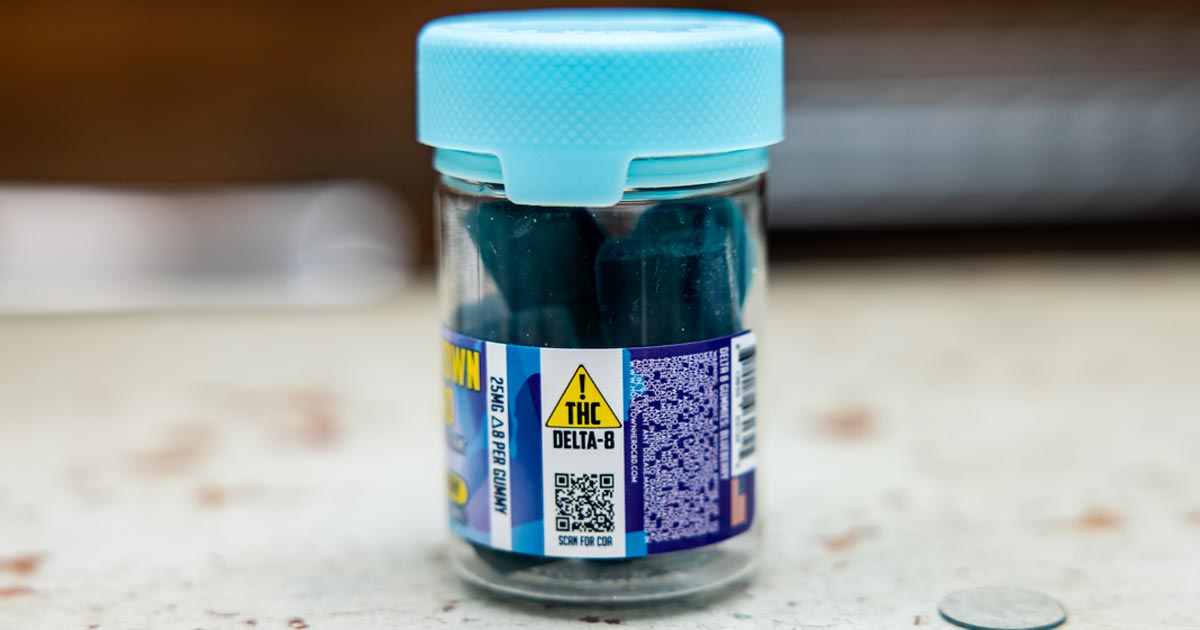
States such as California and Missouri have recently joined the 30 or so US states attempting to ban the marketing of synthetic phytocannabinoids (delta-8-THC, delta-10-THC, HHC, THCP and other variants) derived from hemp and currently unregulated on the market.
These synthetic cannabinoids came on the scene after the federal legalization of hemp in 2018, especially in US states where cannabis is still illegal. Created from CBD, these molecules, which sometimes exist in their natural state, more or less faithfully reproduce the psychotropic effects of cannabis.
California regulatory measures
California has taken a proactive stance on these products. Governor Gavin Newsom has ordered state agencies to issue warnings to cannabis licensees about the illegality and safety risks of cannabis products. delta-8 THC. These compounds, often presented as alternatives to cannabis, have raised concerns due to their availability in retail outlets and online platforms.
The California Department of Public Health (CDPH) and the Department of Alcoholic Beverage Control (ABC) have issued notices aimed at curbing the distribution of THC beverages The aim is to prevent these products from reaching minors, and to ensure compliance with strict consumer safety laws, including labelling requirements. The aim is to prevent these products from reaching minors, and to ensure compliance with strict consumer safety laws, including labeling requirements.
Missouri Legislative Initiatives
In Missouri, legislative initiatives such as Senate Bill 984 (SB 984) and House Bill 1781 (HB 1781) are a reminder of the urgency of regulating psychotropic products derived from hemp. These bills propose measures such as assigning regulation to the Missouri Department of Health, banning sales to people under 21, requiring laboratory testing, enforcing appropriate labeling and instituting child-resistant packaging.
Missouri law enforcement, otherwise burdened by the opioid crisis, has expressed support for the bills. Police chiefs stress need to fight accessibility of delta-8 THC and similar substances, which are often packaged to look like candy and target teenagers.
Louisiana proposals
By requiring that substances in hemp-based edibles be extracted naturally, the Louisiana state bill would eliminate the vast array of intoxicating hemp products, and synthetic concoctions that are prepared in laboratories from hemp-derived CBD.
They include delta-8 THC, the most popular substance, the delta-10 THC, THC-O-acetate, the THCP and others.
Other key provisions of HB 952 include:
- Ban on the sale of hemp flowers
- Edible hemp products may not contain more than 9 milligrams of total THC per serving.
- These products may not exceed 0.3 % total THC delta-9
- Alcoholic beverages may not contain THC, CBD or other cannabinoids
- Non-alcoholic beverages may not contain more than 8 milligrams of THC per serving.
Pressure for regulation also stems from safety concerns and allegations of mislabeling practices within the industry.

















The Brazilian medical cannabis market continues to grow

Morocco: Three Cannabis-Based Medications Approved for the Treatment of Epilepsy

Canopy Growth Receives New EU-GMP Certification to Strengthen Its Presence in Europe

Three years after legalizing medical cannabis, Albania continues to establish regulations for it

The first plant-based medical THC spray arrives in the United Kingdom

Medical Cannabis in Germany: THC Prices Vary by a Factor of 12

France already has 3,000 cannabis retail outlets. None of them are legal.

Morocco's exports of legal cannabis have expanded to 15 countries

Aurora Cannabis Doubles Its Production Capacity in Germany

Tilray is accelerating its operations in Europe thanks to a license in Portugal
-
 Business2 weeks ago
The legal cannabis market in New York exceeds 4 billion $ in revenue
-

 Cannabis in France4 weeks ago
Which countries legalized medical cannabis before France?
-
Business4 weeks ago
South Korea is preparing to begin local production of medical cannabis to meet rising demand
-
Cannabis in France4 days ago
France already has 3,000 cannabis retail outlets. None of them are legal.
-
Cannabis in Thailand4 weeks ago
From the boom in dispensaries to a purely medical approach: Thailand is revising its cannabis policy
-
Cannabis in the U.S.5 days ago
A DEA report confirms that there are no fatal cannabis overdoses
-
Cannabis and driving3 weeks ago
Medical Cannabis and Driving: New South Wales Ends Automatic Penalties for THC
-
Cannabis in France3 weeks ago
France’s Drug Policy Chief Defends Cannabis Prohibition... and Runs Into the Facts















You must be logged in to post a comment Login