329 NGOs call for reform of anti-drug policies and question the UN's ability to initiate such reform

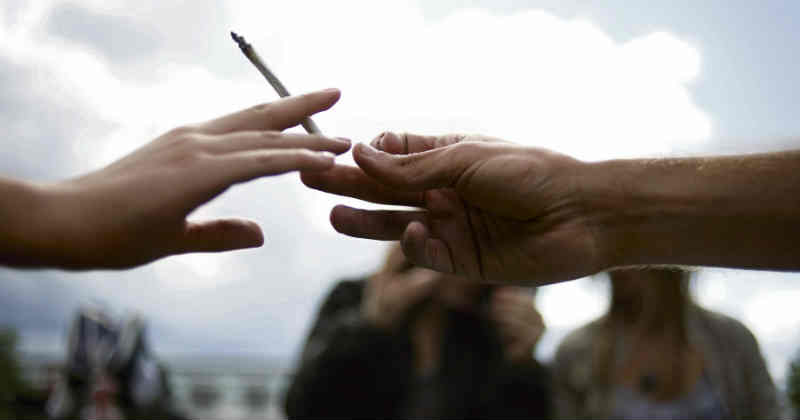
On the occasion of the 26th International Harm Reduction Conference in Porto, bringing together international experts and civil society players, 329 NGOs published an open letter. The letter describes the health crisis among drug users. It also denounces the fact that current repressive policies are only making the situation worse, and calls on international organizations and national governments to adopt a harm reduction approach.
A policy in crisis
The NGOs denounce a «high level of stigmatization and discrimination [of drug users] in access to health services». They also note that this is a particularly criminalized population, «the vast majority for simple possession». Drug users account for a fifth of the world's prison population, the document points out, noting that a dozen countries inflict corporal punishment as a punishment for drug use. The letter mentions in particular the philippine president's bloody «war on drugs Rodrigo Duterte: «We absolutely must put an end to these unacceptable human rights violations».
Despite recent commitments by the international community to the Sustainable Development Goals (SDG5), the 2016 United Nations General Assembly Special Session (UNGASS 2016) and in the 2019 Ministerial Declaration adopted barely a month ago in Vienna, international reform efforts have so far come to nothing. With regard to cannabis, the member states of the Commission on Narcotic Drugs have failed to vote WHO recommendations which would have eased the restrictions on its use in research.
A lack of political will
NGOs point to a lack of political will and question the ability of UNODC, the UN body that coordinates international drug control, to encourage reform of current policies. «By virtue of its very mandate and structure, UNODC remains an organization more sensitive to law enforcement's response to drugs. Alarmingly, the agency struggles to fully embrace, endorse and embody health- and rights-based responses to drugs,» reads the document.
The NGOs consider that «UNODC's position on harm reduction is still several years behind that of other UN bodies». Indeed, the UN and WHO had already recommended drug decriminalization in 2017. Last March, the UN's Governing Council, which brings together 31 UN agencies, decided to take action, did the same. Despite the growing consensus on the need for reform, no concrete targets have been set for member states. NGOs point to the lack of political leadership on this issue.
Available in French, Spanish, English and Russian on the Drug Policy Consortium, the open letter concerns all users and recommends decriminalization of all drugs based on the Portuguese model. Signatories include Drug Policy Alliance and Veterans for Medical Cannabis Access, two organizations campaigning for the liberalization of drug policies in the United States. French organizations include Médecins du Monde, Cannabis Sans Frontières and Principes Actifs, Collectif Police Contre la Prohibition and SOS Addictions.













Medical Cannabis in Germany: THC Prices Vary by a Factor of 12

France already has 3,000 cannabis retail outlets. None of them are legal.

Morocco's exports of legal cannabis have expanded to 15 countries

Aurora Cannabis Doubles Its Production Capacity in Germany

Tilray is accelerating its operations in Europe thanks to a license in Portugal

Boston will host the 10th annual State of the Cannabis Industry Conference on October 26

A DEA report confirms that there are no fatal cannabis overdoses

A British patient is challenging the NHS's refusal to reimburse medical cannabis

October 2026 CBD Highlights: 10 Strains and Hash to Discover from 5 French Producers

CBD in France: Traceability, Retail Stores, THC and Driving… What the New Bill Proposes
-
 Business2 weeks ago
The legal cannabis market in New York exceeds 4 billion $ in revenue
-

 Cannabis in France3 weeks ago
Which countries legalized medical cannabis before France?
-
Business3 weeks ago
South Korea is preparing to begin local production of medical cannabis to meet rising demand
-
Cannabis in Thailand3 weeks ago
From the boom in dispensaries to a purely medical approach: Thailand is revising its cannabis policy
-
Cannabis and driving3 weeks ago
Medical Cannabis and Driving: New South Wales Ends Automatic Penalties for THC
-
Cannabis in Argentina4 weeks ago
Argentina Opens Its Market to Hemp Flowers Containing 1% of THC
-
Autism3 weeks ago
Autism and Cannabis: Results from the First Placebo-Controlled Trial of NTI164
-
Cannabis in France2 weeks ago
France’s Drug Policy Chief Defends Cannabis Prohibition... and Runs Into the Facts
















You must be logged in to post a comment Login