
What will happen at UNGASS 2016?

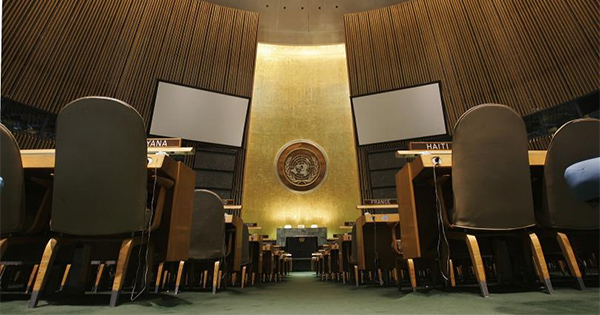
«A world without drugs—we can do it!» declared the United Nations General Assembly Special Session (UNGASS, for Special Session of the United Nations General Assembly ) in 1998, the last time this regulatory body met to discuss drug-related issues. Among the goals of that meeting was the reduction, or even eradication, of cocaine, opium, and cannabis production by 2008.
What is UNGASS?
UNGASS is a meeting of United Nations member states aimed at assessing and discussing global issues such as health, gender equality, or, in our case, priorities in global drug control.
With a new session scheduled for April 19–21, 2016, in New York, the goal of creating a drug-free world is no longer on the agenda. Instead, world leaders and activists from around the globe are calling on the United Nations to use this session to shift from a global war on drugs from a repressive and prohibitive approach to reforms in the justice system, public health policies, and human rights initiatives.
Why is this summit important?
International meetings on drugs generally serve only to reaffirm what is already set forth in the 1961 Single Convention on Narcotic Drugs and the 1971 Convention on Psychotropic Substances. But 2016 is different: never before have so many voices spoken out against the current global approach to drugs.
In February, the former Secretary-General of the United Nations Kofi Annan, who had led the 1998 UNGASS, stated: «We must accept that a drug-free world is an illusion,» adding that it was time to legalize and regulate personal drug use. On the activist side, 225 organizations from around the world sent a letter to Barack Obama asking him to inject bold momentum toward reforming the international conventions that currently shape drug laws.
Furthermore, over the past 10 years, many countries have moved further away from the United Nations conventions. Mexico and other Latin American countries have decriminalized the possession of small amounts of drugs. Twenty-three U.S. states have legalized medical cannabis and four states have legalized recreational cannabis, even though the federal government still criminalizes its possession and use. Canada is in the process of doing so and would be the the first G7 country to legalize cannabis. Uruguay has already taken the plunge and legalized a state-regulated cannabis market.
UNGASS 2016 will therefore be a real opportunity to put an end to a war on drugs that has not exactly proven effective, and to prioritize health, human rights, and security.
How will this change my life?
United Nations conventions provide a framework for national policies. When Switzerland sought to address its drug problems in the 1990s by providing heroin to patients, establishing injection rooms, and offering treatment, the country saw the number of users decline, drug-related deaths cut in half, and HIV infections drop by 90% over 10 years. Rather than praising this success, the United Nations accused Switzerland of drug trafficking and encouraging drug use.
The message sent by the United Nations may therefore discourage some countries from trying drug control policies that go beyond the framework established by these conventions. It is widely accepted that zero tolerance and drug prohibition have only made the problems worse. There are certainly better ways to address the issue of drugs in general and cannabis in particular. The adoption of these policies at the international level could encourage some countries to give them a try.




CBD is said to promote athletic recovery, without improving performance

294 cannabis clubs in Chile: a booming movement with uneven distribution

Chronic Sciatica: New York Approves First Clinical Trial of a THC-Based Medication

United States: The DEA is accelerating the integration of medical cannabis at the federal level

Florida is nearing one million patients using medical cannabis

Uruguay Revives Its Plan to Allow Tourists to Legally Access Cannabis

In Brazil, researchers are developing an innovative CBD eye drop

Autism: Medical Cannabis Is Linked to Reduced Anxiety

The $28 billion U.S. hemp market remains under threat

Jamaica Eases Small Farmers' Access to the Cannabis Market
-
 Business6 days ago
The legal cannabis market in New York exceeds 4 billion $ in revenue
-

 Cannabis in France2 weeks ago
Which countries legalized medical cannabis before France?
-
Business2 weeks ago
South Korea is preparing to begin local production of medical cannabis to meet rising demand
-
Cannabis in the Netherlands4 weeks ago
One year after the launch of the Dutch cannabis experiment, the first trends are emerging
-
Cannabis in Thailand2 weeks ago
From the boom in dispensaries to a purely medical approach: Thailand is revising its cannabis policy
-
Cannabis in France4 weeks ago
French medical cannabis remains stalled at the Ministry of Health
-
Cannabis in Argentina3 weeks ago
Argentina Opens Its Market to Hemp Flowers Containing 1% of THC
-
Cannabis and driving2 weeks ago
Medical Cannabis and Driving: New South Wales Ends Automatic Penalties for THC















You must be logged in to post a comment Login