
France: police mobilize against cannabis prohibition


While law enforcement agencies will likely see the addition of the contraventionnalisation In light of drug use and the automatic €300 fine imposed for any offense committed on public roads prior to any potential legal proceedings, some are speaking out to question the current system.
This week, two initiatives aimed at long-term growth were launched.
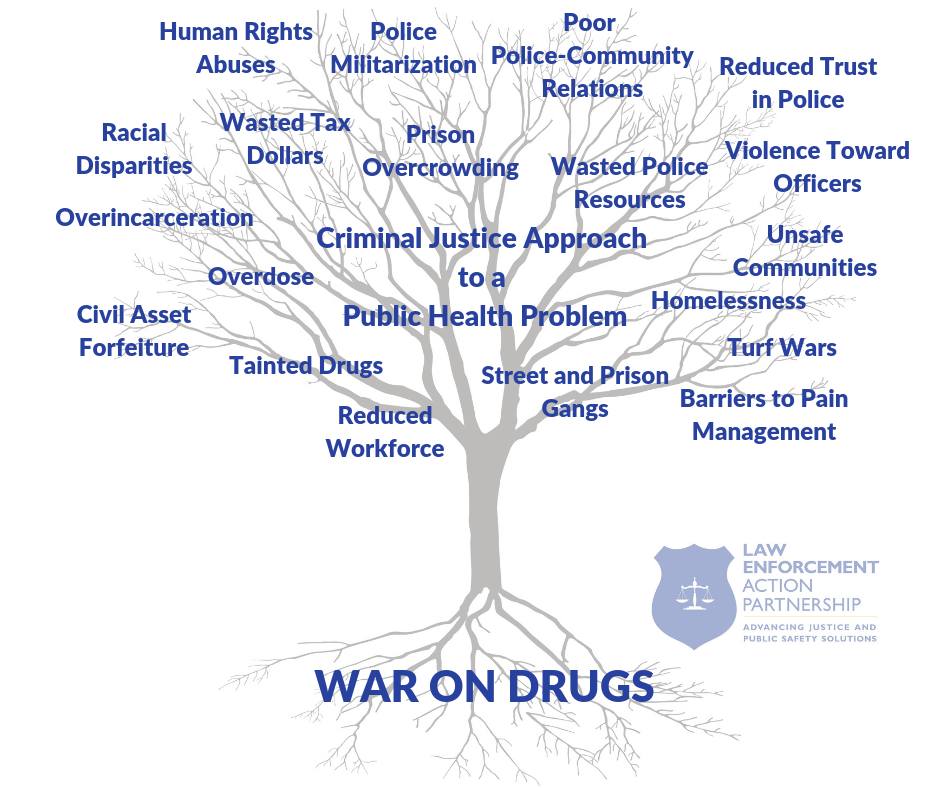
With the aim of raising awareness internally—throughout the police and criminal justice system—of the failure of prohibitionist policies and promoting progressive drug policies, law enforcement organizations are being established everywhere, both internationally and in France.
The «Police Against Prohibition» collective»
This group, founded by former law enforcement officers, aims to serve as a voice for a «perspective that has gone unheard until now,» that of active-duty police officers bound by a duty of confidentiality who observe «the daily and overwhelming failure of current public policy on narcotics and its many adverse effects.».
The members of the collective are thus joining their individual voices with those of early advocates such as CIRC and NORML, and hope to encourage open discussion within police and gendarmerie units in order to rally more and more of their colleagues to their cause.
On the collective's website, it states that the policy of cracking down on drug users has never succeeded in reducing either substance use or crime rates. According to the group, this policy is futile because it does not deter users and has no impact whatsoever on solving drug trafficking cases. In short, it unnecessarily ties up law enforcement’s time and energy and constitutes a massive waste of public resources. Cannabis users are the most affected by this crackdown and account for 90% of arrests for illicit substance use.
The group is also concerned about relations between the police and the public, particularly in so-called «sensitive» neighborhoods where interactions are marked by “hatred and [brutality].” The crackdown on drug users tarnishes the image of the police, whose actions are perceived as pointless, counterproductive, and often unfair. Targeted identity checks and police misconduct fuel conflict with local youth, who feel unfairly stigmatized. By amplifying these specific voices, the collective hopes to foster a new image of the police—an institution often perceived as the “faithful foot soldier” of repression and a conservative, even reactionary, profession.
Finally, the members of the collective believe that «repression hinders prevention, education, access to care, and harm reduction—all of which should be top priorities.» They advocate for a reevaluation of drug-related issues from a public health perspective rather than a legal one, with an emphasis on harm reduction.
What the collective is proposing:
- decriminalization of drug use and regulation of the cannabis market. To this end, it will be necessary to repeal Article L.3421-1 of the Public Health Code.
- Equip police officers with naloxone, a drug that counteracts the effects of heroin and can prevent death by overdose before emergency responders arrive.
- the creation of safer consumption rooms for drug users, who can thus use drugs safely with sterilized equipment. These rooms also reduce public nuisances by providing designated spaces for drug use.
- launch a comprehensive review of the police function, its purpose, and its objectives in order to put the values of service back at its core.
The collective regrets that police officers, who are supposed to serve the public, have become symbols of oppression. The members of the collective wish to highlight the officer’s free will through the concept of ethical disobedience. In other words, law enforcement officers commit to not initiating proceedings against drug users as they are required to do, but rather to direct them to local resources where they can receive help.
This ethical disobedience is also part of a protest movement against a flawed system of police organization known as the policy of focusing on numbers. It consists of a system of quantified targets with performance bonuses at stake that extends across the entire police hierarchy. This system confuses performance with the number of arrests and relies on the repression of drug users—particularly cannabis users—to inflate the statistics. The collective denounces a «system that is toxic to public safety and warrants a parliamentary commission of inquiry.».
LEAP France (Law Enforcement Action Partnership)
In the same vein, the international organization LEAP (Law Enforcement Action Partnership), which was founded in the United States but also has a presence in Europe and is particularly influential in the United Kingdom and the Scandinavian countries, is about to establish a French branch.
LEAP brings together law enforcement officers as well as judges, correctional staff, intelligence agents, and military personnel who are seeking to engage in a dialogue about new ways of addressing drug-related issues.
The entire judicial system is involved in this discussion, and their message is important: these frontline professionals have an intimate understanding of the consequences and harmful effects of these policies. «When even law enforcement officials are calling for an end to the war on drugs, we have to ask ourselves why,» reads the LEAP US website.
The fact that those who embody prohibition are speaking out against it is indeed a powerful message.
An international organization
Each chapter or branch is rooted in the social and political issues of its country while being affiliated with an international network. Ultimately, the various organizations aim to unite at the regional level. In the United States, for example, organizations are established on a state-by-state basis but have come together under LEAP US.
Similarly, LEAP chapters in European countries hope to foster a European movement. LEAP already exists in Germany, the United Kingdom, Belgium, and Scandinavia. LEAP France will benefit from the proven credibility of the other chapters. The organization’s international standing will enable it to position itself as a key partner for initiating political and social dialogue on the reform of French and European drug laws.
The expertise of LEAP US’s representatives is recognized by U.S. policymakers and the media. The organization is particularly active and provides financial support for policy initiatives and innovative research programs. In the United Kingdom, LEAP fuels the discussion on drug law reform through television and radio appearances and by engaging with high-profile media figures. LEAP UK has become a leading voice on the issue and is even sharing its vision abroad by sending representatives to South Africa, Switzerland, and Denmark. The commitment of its members appears to have paid off, as Scotland’s largest political party has now aligned itself with their position on decriminalization.
The spirit of LEAP is to bring together organizations, associations, and stakeholders who are ready to take action and discuss a reevaluation of drug policies. LEAP France will be launched on Saturday at its inaugural private event. Participants will work together to select the movement’s representatives, define its direction, and identify the priorities that are most pressing in the current French context.
The organization aims to foster a spirit of dialogue and unity through collaborative efforts with other organizations and associations. These joint initiatives will be carried out on a case-by-case basis and depending on the issues at hand. Drug policies do, in fact, have repercussions on many aspects of society and extend into numerous areas.







Contest: Win a trip to Quebec to experience the hemp harvest firsthand

Bedrocan on Hold Amid Uncertainty Over Medical Cannabis

Newsweed Launches Its Own AI

A new tax of 0.5% could disrupt the hemp industry in Canada

Medical Cannabis and Driving: New South Wales Ends Automatic Penalties for THC

China's Yongji Health Takes Control of Tasmanian Botanics

Autism and Cannabis: Results from the First Placebo-Controlled Trial of NTI164

Which countries legalized medical cannabis before France?

From the boom in dispensaries to a purely medical approach: Thailand is revising its cannabis policy

South Korea is preparing to begin local production of medical cannabis to meet rising demand
-
 Cannabis and driving3 weeks ago
Cannabis and CBD: French Drivers Can Now Lose Their License Even Without a Positive Test Result
-

 Cannabis in France5 days ago
Which countries legalized medical cannabis before France?
-
Cannabis in France3 weeks ago
Cannabis Legalization: The LFI Bill Has a Major Problem—THC
-
Cannabis in the Netherlands2 weeks ago
One year after the launch of the Dutch cannabis experiment, the first trends are emerging
-
Business5 days ago
South Korea is preparing to begin local production of medical cannabis to meet rising demand
-
Cannabis in Thailand5 days ago
From the boom in dispensaries to a purely medical approach: Thailand is revising its cannabis policy
-
Cannabis in Argentina2 weeks ago
Argentina Opens Its Market to Hemp Flowers Containing 1% of THC
-
Cannabis in France2 weeks ago
French medical cannabis remains stalled at the Ministry of Health













You must be logged in to post a comment Login