«Murder Mountain: the dark side of California's cannabis industry

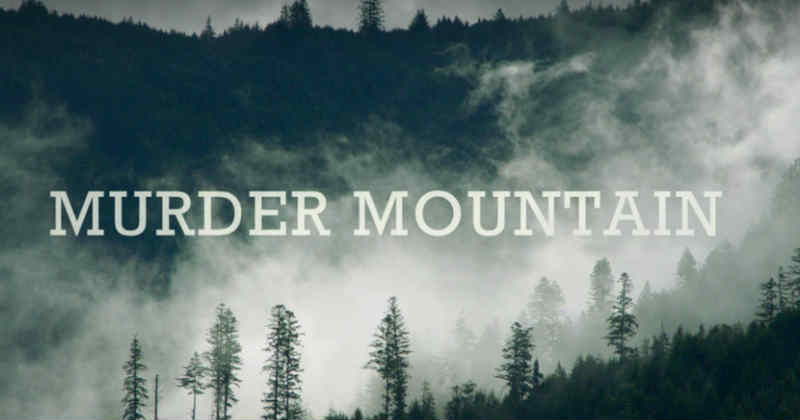
«Murder Mountain», Netflix's new documentary series, plunges us into the heart of Humboldt County in California's Emerald Triangle, a hotbed of illicit cannabis cultivation.
60% of the cannabis produced in the USA is grown there, in the heart of the immense sequoia forest, in the misty hills and mountains of Northern California. Today, this partly legal production has long fed the American black market, and has changed face again and again with the politics of cannabis control and regulation. We watched the first two episodes to get an idea.
50 years of transformation: from hippies to gangs to legal trade
The series begins by highlighting the unsettling nature of this remote area, infamous for holding the record for the highest number of missing persons cases in the whole of California. Through the testimony of his father, we follow the disappearance of 29-year-old Garret Rodriguez, who left to make his fortune in the illicit cultivation of cannabis on the island. Murder Mountain.
The local police seem totally powerless in this region, where growers with all the characteristics of gangs seem to make their own law. Some consider the mountain to be the last vestige of the Wild West.
Soon other, more sympathetic figures appear, growers who have come here to live a different life, isolated from society and based on other values. They tend to be farmers, and a real sense of community emerges among them. For them, living in Humboldt is above all a lifestyle choice. You can sense the heritage of the first inhabitants and pioneers of the cannabis trade in these mountains: the hippies.
Hippie pioneers
The report then goes on to meet the pioneers of this trade: hippie communities who came to Humboldt in the 70s and 80s to live in nature, on the bangs of society. For them, cannabis was just one resource among many, and an essential element of hippie culture. Its lucrative trade enabled them to build real communities with schools and villages. The series includes some interesting archive footage.
This was without taking into account the war on drugs unleashed by Nixon. Prior to this, local police had little means of spotting plants in the thick vegetation, and their action was extremely limited. Nixon launched Operation CAMP against drugs. This used military equipment to locate and destroy cannabis plantations. Seen as a veritable invasion and persecution by the hippie community, it prompted many families to leave, and by the 1990s, the new inhabitants of the mountains of Humboldt County no longer had the same profile. Hippie idealism gave way to commercial opportunism.
Green Rush
In 1996, California legalized medical cannabis, but regulations were so vague and permissive that a multitude of individuals eager to make their fortune in green gold moved to the mountains. This was the era of green rush or «the green gold rush». «We have 10,000 km of jurisdiction and we have 15,000 illicit cultivation sites up there. It's unbelievable. This industry is fueled by greed, and that greed is going to continue to drive people into violence and force them to save where they can. This is no longer the cannabis industry of the hippies,» explains county sheriff Tod Honsal.
Among these individuals are unsavory people who seek to maximize their production by using dangerous pesticides and exploiting workers. Little by little, the county becomes the scene of numerous homicides and disappearances. «Every underground industry has its dark side. That's why it's called underground,» explains historian Nick Angeloff, who explains that the young people who go up to harvest and «trim» marijuana expose themselves to reckless risks.
Regulating the industry
In 2018, a new era is upon us: recreational cannabis is now legal, and the industry must normalize and enter the legal mainstream. For politicians, it's a question of sorting out the wheat from the chaff, driving out the traffickers and keeping the producers honest. For the latter, it's the end of an era of fear, but also of freedom. For these people who had always escaped the system, it is now necessary to obtain a permit and pay thousands of dollars in taxes. The growers« community feels completely suffocated by the amount of taxes and the constraints of regulations they see as designed to favor the big groups and multi-nationals. »For 20 years, the police tried to eradicate us. It's really ironic that legalization can destroy what criminalization couldn't," explains Ed Denson, a cannabis lawyer.
Today, California is still fighting against the still large segment of illicit producers by implementing various measures. The latest of these concerns mandatory laboratory analysis: most traffickers use high-dose pesticides to maximize their profits. Contaminated cannabis cannot be sold in the legal circuit.
Small producers in the Emerald Triangle are still struggling to adapt to change, but they are already developing strategies to gain recognition for the quality of their produce. They are currently working with the authorities to produce’an appellation of origin system as it does for fine wines. In addition to its pioneering role, the region is also renowned for having the best cannabis in the USA.
These are all aspects of Murder Mountain, which we recommend.





















Medical Cannabis in Germany: THC Prices Vary by a Factor of 12

France already has 3,000 cannabis retail outlets. None of them are legal.

Morocco's exports of legal cannabis have expanded to 15 countries

Aurora Cannabis Doubles Its Production Capacity in Germany

Tilray is accelerating its operations in Europe thanks to a license in Portugal

Boston will host the 10th annual State of the Cannabis Industry Conference on October 26

A DEA report confirms that there are no fatal cannabis overdoses

A British patient is challenging the NHS's refusal to reimburse medical cannabis

October 2026 CBD Highlights: 10 Strains and Hash to Discover from 5 French Producers

CBD in France: Traceability, Retail Stores, THC and Driving… What the New Bill Proposes
-
 Business2 weeks ago
The legal cannabis market in New York exceeds 4 billion $ in revenue
-

 Cannabis in France3 weeks ago
Which countries legalized medical cannabis before France?
-
Business3 weeks ago
South Korea is preparing to begin local production of medical cannabis to meet rising demand
-
Cannabis in Thailand3 weeks ago
From the boom in dispensaries to a purely medical approach: Thailand is revising its cannabis policy
-
Cannabis and driving3 weeks ago
Medical Cannabis and Driving: New South Wales Ends Automatic Penalties for THC
-
Cannabis in Argentina4 weeks ago
Argentina Opens Its Market to Hemp Flowers Containing 1% of THC
-
Autism3 weeks ago
Autism and Cannabis: Results from the First Placebo-Controlled Trial of NTI164
-
Cannabis in France2 weeks ago
France’s Drug Policy Chief Defends Cannabis Prohibition... and Runs Into the Facts

















You must be logged in to post a comment Login