
Turkey to increase hemp production

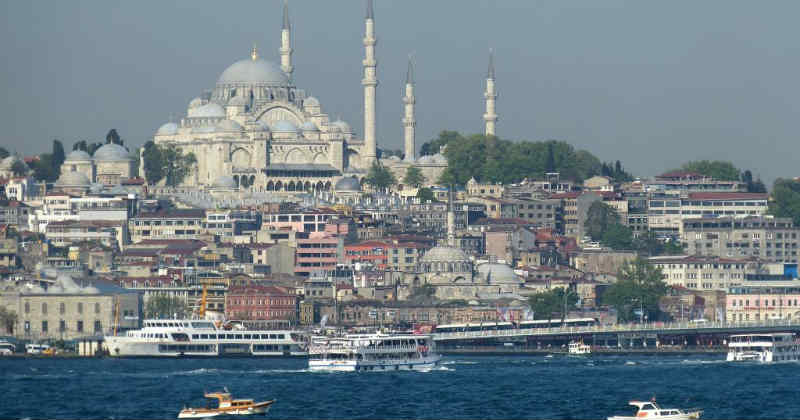
Traditional Hemp Cultivation in Turkey covered 1.4 million ares in 1961. However, since the 1990s, hemp cultivation in Turkey has gradually declined, reaching an area of less than 4,000 ares in 2017. Last week, during his speech on local government, Turkish President Tayyip Erdogan stated his intention to revive the Turkish hemp industry and announced plans to increase cultivation.
More culture for a more efficient industry
During his speech, Erdogan stated: «We have put a stop to cannabis cultivation in our country because of enemies disguised as friends.» According to journalist and writer Yunus Eksi, an expert at the Eurasian Strategic Research Center (ASAM), it was U.S. policies that influenced Turkish agricultural policies and led to the drastic decline in hemp cultivation in Turkey. For the opposition, however, it is the government’s agricultural policies that are to blame for this low production. It is true that the government maintains, a repressive stance toward cannabis in general.
Since 2016, however, Hemp production is permitted in 19 provinces for scientific and medical research purposes. From an industrial standpoint, only the fibers, seeds, and stems could be used, but the fact that the government has signaled its intention to open up industrial markets suggests that the flowers could be used for extractions and that the CBD sector (the fastest-growing one) will potentially be encouraged. In any case, increased cultivation and the revitalization of the industry will enable Turkey to become more self-sufficient in a market that is growing in importance.
One of the goals of this revitalization policy is to encourage local production of a wide range of products. Between 2015 and 2018, Turkey’s hemp exports were valued at $24,000, while its imports totaled $5.8 million. Due to its low production levels, Turkey imports most of its hemp products. This was also the case in the United States and was likely a decisive economic argument in favor of U.S. legalization. This news may have influenced the Turkish president's decision.
The Geopolitics of Hemp Production
The United States, one of the world’s leading agricultural powers, is already emerging as a future leader in the global hemp market. Current leaders include Europe, which had approximately 5 million ares of hemp crops in 2018, Canada with 10 million, and China with 6 million. Turkey has the advantage of a climate conducive to hemp cultivation as well as a large amount of arable land. It therefore seems logical for Turkey to join the world leaders in this increasingly lucrative venture rather than maintain a trade deficit.
In fact, the idea of domestic production is gaining more and more support among Islamist and conservative elements in Turkish society. Yesterday, The Islamist newspaper Dirilis Postasi ran the headline “Cannabis production is a national issue,” and published a diagram in its first issue explaining the industrial applications of hemp. At the same time, Abdurrahman Dilipak, a well-known Islamist writer, recommended that Turkey produce its own cannabis-based medicines.
In this context, Turkish researchers are working on breeding cannabis varieties adapted to regional conditions. Research on this topic has been underway at the Black Mother Institute of Agriculture since 2017. A hemp project has been launched with the goal of producing low-THC, high-yielding varieties adapted to local climatic conditions. These varieties will then be added to the list of agricultural crops that can be cultivated in the country. The Council for Scientific and Technological Research is also working on the development of domestic low-THC phenotypes.






CBD is said to promote athletic recovery, without improving performance

294 cannabis clubs in Chile: a booming movement with uneven distribution

Chronic Sciatica: New York Approves First Clinical Trial of a THC-Based Medication

United States: The DEA is accelerating the integration of medical cannabis at the federal level

Florida is nearing one million patients using medical cannabis

Uruguay Revives Its Plan to Allow Tourists to Legally Access Cannabis

In Brazil, researchers are developing an innovative CBD eye drop

Autism: Medical Cannabis Is Linked to Reduced Anxiety

The $28 billion U.S. hemp market remains under threat

Jamaica Eases Small Farmers' Access to the Cannabis Market
-
 Business5 days ago
The legal cannabis market in New York exceeds 4 billion $ in revenue
-
Cannabis and driving4 weeks ago
Cannabis and CBD: French Drivers Can Now Lose Their License Even Without a Positive Test Result
-

 Cannabis in France2 weeks ago
Which countries legalized medical cannabis before France?
-
Business2 weeks ago
South Korea is preparing to begin local production of medical cannabis to meet rising demand
-
Cannabis in the Netherlands4 weeks ago
One year after the launch of the Dutch cannabis experiment, the first trends are emerging
-
Cannabis in Thailand2 weeks ago
From the boom in dispensaries to a purely medical approach: Thailand is revising its cannabis policy
-
Cannabis in France4 weeks ago
French medical cannabis remains stalled at the Ministry of Health
-
Cannabis in Argentina3 weeks ago
Argentina Opens Its Market to Hemp Flowers Containing 1% of THC















You must be logged in to post a comment Login