What do we really know about H4CBD?

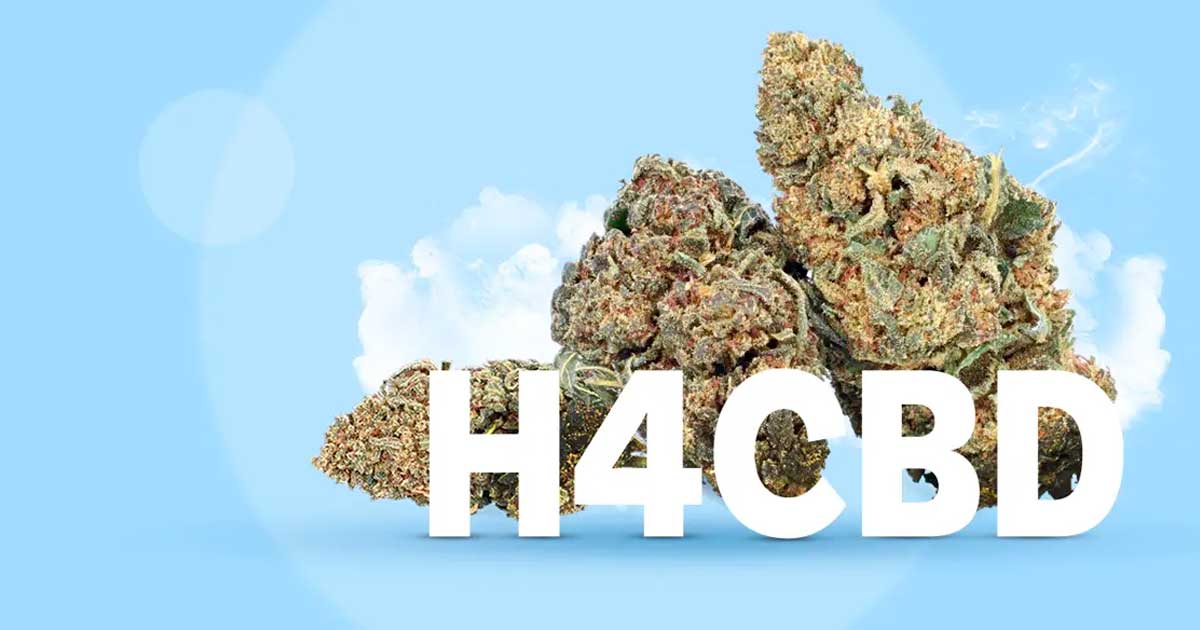
While France remains resistant to any legislative changes regarding cannabis, French consumers are now seeing new legal cannabinoids appear on store shelves. Following HHC—which is now banned from sale and consumption—H4CBD has made its way onto the shelves of retailers and tobacco shops.
Although it may seem intriguing, it is important to explore what we currently know about this new synthetic compound. In this article, we will examine the current state of knowledge regarding H4CBD, including its discovery, properties, potential applications, and the need for further research.
Discover H4CBD
The H4CBD is a new molecule resulting from ongoing research in the field of cannabinoid science. Its structure is similar to that of cannabidiol (CBD), the well-known compound found in the Cannabis plant. H4CBD was identified using advanced laboratory techniques and analytical methods, and its unique properties have sparked the interest of researchers.
The specific properties and composition of H4CBD are still being studied, and further research is needed to fully understand it. Preliminary results suggest that H4CBD shares similarities with CBD in terms of molecular structure. Its potency is often marketed as being 100 times that of CBD, although no studies have actually demonstrated this multiplier.
However, H4CBD has distinct characteristics that set it apart from other cannabinoids, which could lead to unique effects and applications.
What effects can you expect from H4CBD?
Since research on H4CBD is still in its early stages, its potential applications have not yet been fully explored. However, based on what we know about other cannabinoids, including CBD, it is reasonable to assume that H4CBD could have therapeutic potential. Cannabinoids, in general, have been studied for their potential in managing various health conditions, such as pain, inflammation, anxiety, and epilepsy. It remains to be seen whether H4CBD possesses similar or different properties that could make it a valuable addition to the existing cannabinoid repertoire.
Although the initial findings regarding H4CBD are intriguing, it is essential to emphasize the need for further research. As with any new compound, rigorous scientific study is necessary to understand its safety, efficacy, and potential side effects. In-depth studies, including preclinical and clinical trials, are needed to evaluate the pharmacological properties of H4CBD and determine its potential benefits in treating specific health conditions.
The regulatory landscape surrounding H4CBD is still evolving, and it is subject to the regulations and laws governing cannabinoids and cannabis-derived compounds. As with any new molecule, regulatory bodies and agencies will evaluate its safety and potential before establishing guidelines for its use. With the need for H4CBD sellers to CBD.fr to verify the source of the extracts and to demonstrate the utmost transparency regarding the safety of H4CBD products.














«Vincy Gold»: Humboldt Seed Company on the Hunt for Saint Vincent Sativas

Cronos Completes the Acquisition of CanAdelaar for 57.5 million euros

Cannabis with a "bloody" twist: Discover Sensi True Blood and Sensi Sangria, the two new strains from Sensi Seeds

Hemp: The Council of the EU Takes a Stand on New Production and Marketing Rules

Missouri's legal cannabis market accounts for 93 % of consumer spending

THC Gummies: How to Read a Certificate of Analysis Before Buying

British patients now have access to THCV-rich cannabis flowers

Spain: Medical Cannabis Is Coming to About 50 Hospitals

JIHE 2026: Japan’s Largest Trade Show Dedicated to Hemp and CBD Returns to Tokyo with More Than 100 Industry Players

New Caledonia: The Courts Clear the Way for the Return of CBD
-
 Business3 weeks ago
The legal cannabis market in New York exceeds 4 billion $ in revenue
-

 Cannabis in France4 weeks ago
Which countries legalized medical cannabis before France?
-
Cannabis in France1 week ago
France already has 3,000 cannabis retail outlets. None of them are legal.
-
Business4 weeks ago
South Korea is preparing to begin local production of medical cannabis to meet rising demand
-
Cannabis in the U.S.1 week ago
A DEA report confirms that there are no fatal cannabis overdoses
-
Cannabis in Thailand4 weeks ago
From the boom in dispensaries to a purely medical approach: Thailand is revising its cannabis policy
-
Cannabis and driving4 weeks ago
Medical Cannabis and Driving: New South Wales Ends Automatic Penalties for THC
-
Cannabis in France3 weeks ago
France’s Drug Policy Chief Defends Cannabis Prohibition... and Runs Into the Facts














You must be logged in to post a comment Login